Shenzhen Tops 18 Million as Guangdong Adds 790,000 People in a Shrinking ChinaA · FULL TRANSLATION
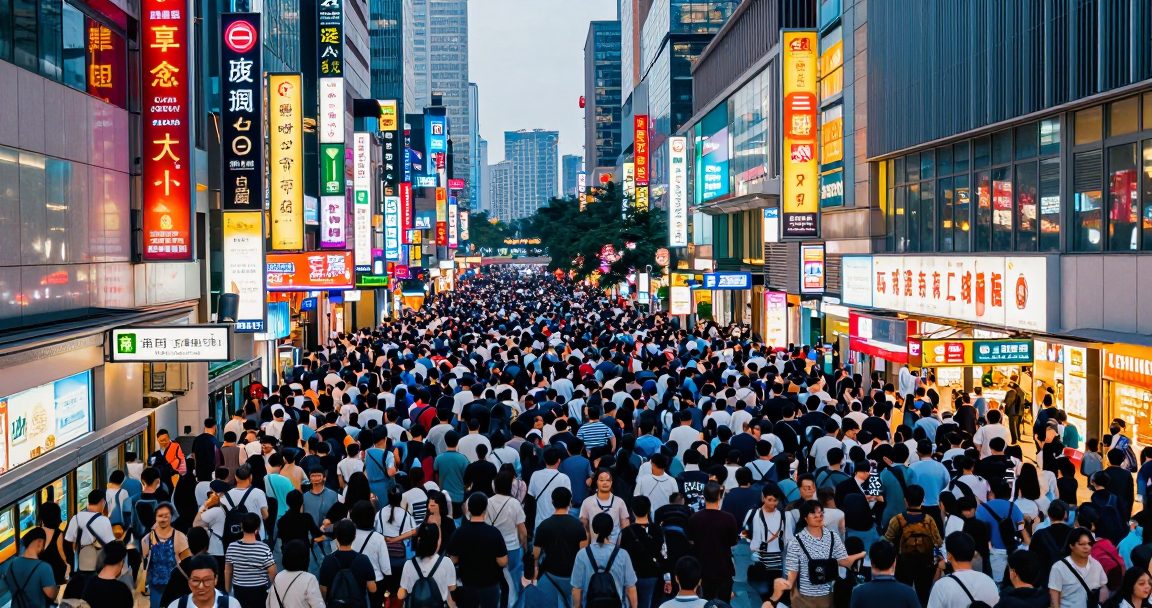
- Shenzhen's population hit 18.25 million at end-2025, a third straight annual rise
- Guangdong led all provinces with +790,000; Beijing shrank by 32,000
- The new five-year plan targets RMB 2.3 trillion in strategic emerging industries by 2030
China's national population keeps shrinking, yet people and money still pour into a handful of cities — and Shenzhen is the magnet. Its 2025 statistical communique shows 18.25 million residents, up 259,000 for a third consecutive annual gain, while Guangdong province added 790,000 — the nation's largest increase — against Beijing's decline of 32,000. The pull is industrial: clusters in next-gen IT, NEVs and high-end medical devices keep absorbing talent, and the new five-year plan doubles down with a RMB 2.3 trillion target for strategic emerging industries by 2030, naming 6G, bio-manufacturing, quantum tech and brain-machine interfaces as future bets. Shenzhen remains the deepest interface for Taiwan's electronics supply chain, so its momentum feeds directly into location decisions — and the Matthew effect of cities in a shrinking population is a script Japan and Taiwan share: pick cities, not countries.
[Summary translation of JETRO business brief] Shenzhen's statistics bureau reported (May 25) a year-end 2025 resident population of 18,248,500 — up 259,000, a third straight annual increase with widening gains. Guangdong led all provinces with +790,000, followed by Zhejiang (+310,000), Xinjiang (+160,000) and Hainan (+70,000); within Guangdong, Shenzhen's gain topped Dongguan (+229,600) and Guangzhou (+123,000), while among tier-1 cities Shanghai added 51,500 and Beijing lost 32,000. Drivers cited include job growth from industrial agglomeration and talent-retention policies. Shenzhen's 15th Five-Year Plan outline (May 26, 2026) targets strategic emerging industries' value-added of over RMB 2.3 trillion by 2030, strengthening next-gen IT, NEVs, new energy and high-end medical devices, shoring up biopharma and advanced materials, and cultivating future industries including 6G, bio-manufacturing, quantum technology and brain-machine interfaces. (Source: JETRO, Guangzhou, June 11, 2026)