Japan’s Tourism Plan Aims for 60 Million Visitors by 2030A · FULL TRANSLATION
- 2030 Target: 60 million visitors and ¥15 trillion by 2030, with repeat tourists comprising two-thirds of the visitor pool
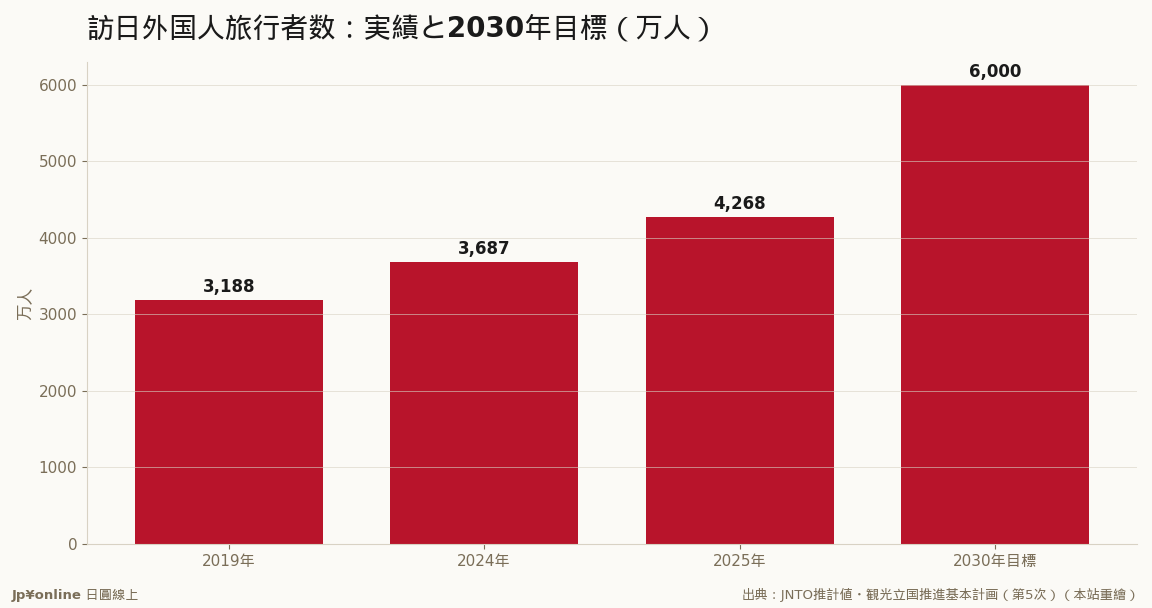
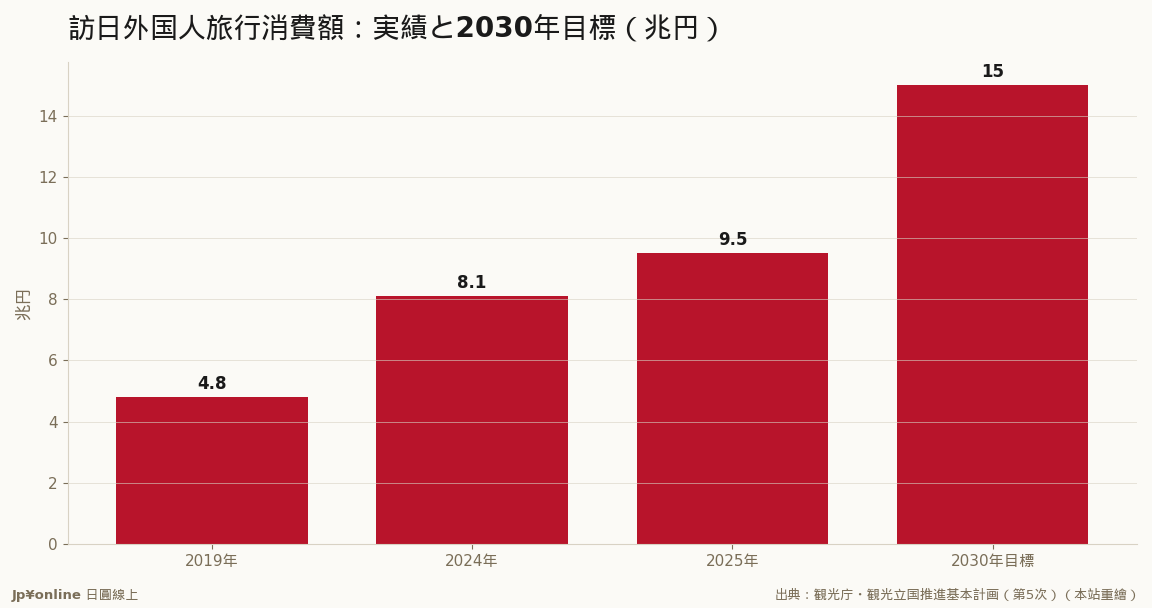
- Achievement Rates: 42.68 million visitors and ¥9.5 trillion (as of January 2026)
- Revisit Strategy: Increase annual growth to about 7% by focusing on repeat visitors
- Economic Impact: Economic benefits estimated at ¥19 trillion, making tourism the second-largest export sector after automotive
- Counterarguments: Uncertain geopolitical and exchange rate factors pose risks; slow progress in achieving higher spending targets
- Operational Focus: Priority regions like Hokkaido, Shikoku, and Kyushu will see increased policy support
The Fifth Basic Plan to Promote Japan as a Nation of Tourism reaffirms the target of 60 million visitors and ¥15 trillion in spending by 2030. However, the strategy is significantly revised: relying on repeat tourists for numbers (two-thirds of visitors in 2030), increasing average spend per visitor (up to ¥250,000) and expanding into regional areas (with an additional 130 million overnight stays outside the Greater Tokyo Area). The existing 42.68 million visitors and ¥9.5 trillion in spending represent a 71% and 63% achievement rate respectively; by 2030, there are still four more million needed for numbers and nearly six more trillion for revenue.
**Conclusion:** The Fifth Basic Plan to Promote Japan as a Nation of Tourism was finalized in March 2026. Despite the unchanged targets—60 million visitors by 2030, with spending reaching ¥15 trillion—the strategy has been comprehensively revised. The existing figures show that while 42.68 million visitors and ¥9.5 trillion have already been achieved (as of January 2026), there remains a need to increase both numbers and revenue by over 40% in the next five years. The new strategy emphasizes repeat tourism, higher spending per visitor, and expanding into regional areas.
**Breaking Down the Strategy:** Three main challenges: increasing visitors at an annual rate of about 7%, focusing on repeat tourists; boosting average spending to ¥250,000 by leveraging more expensive stays; and encouraging visits outside central Tokyo. The plan aims to address over-tourism by diversifying tourist destinations.
**Why Repeat Tourists and Regional Expansion:** To manage the carrying capacity of major cities like Tokyo, Kyoto, and Osaka, the strategy focuses on repeat visitors who spread out their travels across various regions, leading to a more balanced distribution of tourism. This shift in focus ensures that the economic impact of the tourism industry remains strong.
**Counterarguments:** Achieving the target is fraught with risks, including geopolitical changes or fluctuations in exchange rates that could affect air travel capacity and Chinese visitor numbers. The plan aims to increase spending by 250,000 yen per person, but progress has been slow, and there are significant gaps in providing high-value experiences. Additionally, regional areas need more human resources, which can be scarce.
**Historical Context:** Japan’s inbound tourism grew from just over 5 million visitors in 2003 to nearly 43 million by 2025, with a target of 60 million by 2030. The economic impact of tourism is expected to surpass semiconductor exports, making it the second-largest foreign revenue generator.
**Practical Implications for Taiwanese Operators:** Focus on regional areas like Hokkaido, Shikoku, and Kyushu, where repeat tourist routes are popular; prioritize high-value experiences such as car tours, cultural activities, and ski trips; and anticipate increasing support from government grants for tourism infrastructure.