What Japan's Maglev Stations Can Learn From Taiwan's Hsinchu HSR Hub
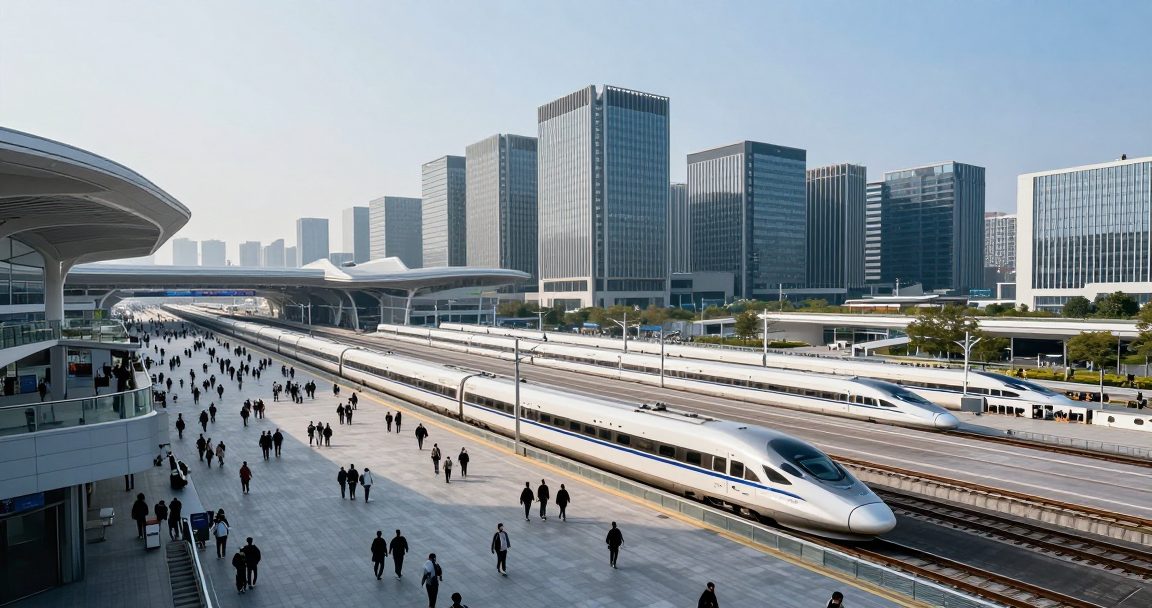
- Taiwan's high-speed rail drove regional growth, with Hsinchu modeled on Shin-Yokohama
- Semiconductor and advanced-industry clusters turned the station into an economic engine
- Japan's maglev intermediate-station planning is now studying Taiwan
- For property buyers, it's a live lesson in station-district land and commercial value
For readers eyeing cross-border property or regional development, this report flips the usual script: instead of Taiwan learning from Japan, Japan is studying Taiwan's Hsinchu HSR station to plan maglev intermediate stations.
The core question is how a station becomes an economic engine, not just a stop. Backed by a science park and chip cluster, Hsinchu's station — modeled on Shin-Yokohama — grew into a commercial and residential hotspot as advanced industry poured in. Japan's maglev mid-points sit in lower-density inland areas and fear becoming hollow 'pass-through' shells.
The investment lesson is direct: station-district land value depends on bringing in industry and jobs, not merely on the rail line. Transit alone without an industrial anchor often yields white elephants. Track which mid-stations are genuinely tied to industrial plans.
Watch maglev station industrial recruitment, local land-use plans, and whether the Hsinchu model can be replicated in Japan's differently-aged inland regions.