Tokyo Kaisendon 2026: Nine Seafood-Bowl Picks From Toyosu Market Veterans to a Nihonbashi Queue Legend and a Bluefin Specialist
- Sort three tiers: (1) Market-direct halls (Kaisendon Ooedo, Toyosu, century-old, 40-plus bowls / Nakaya, Toyosu, best value, uni & salmon roe ~2,000 yen / Tsukiji Dontaku, outer market, limited 'nakaochi' tuna bowl 1,150 yen); (2) Downtown artisans & bluefin talk-of-town (Tsujihan, Nihonbashi, 'zeitaku' bowl two ways with sea-bream tea-rice finish, from 1,250 yen, tourist-favorite / Seagen, Tsukiji, Yamayuki bluefin, 'ultimate maguro bowl' 3,800 yen with free rice refills / Tsukiji Itadori Uogashi Senryo, originator of seafood hitsumabushi, one bowl three ways); (3) Downtown queues & convenient districts (Noguchi Sengyoten, Honjo-Azumabashi, 'Tabelog 100' diner, wholesaler-run heaped 'Asaichi Tsukiji bowl' / Magurotei, Akihabara, ~10-item mega bowl 2,300 yen / Takamaru Sengyoten, Shinjuku west exit, fish-shop-run, lunch 'three-tub set').
- Sort provenance first: Toyosu 'market' shops (Ooedo, Nakaya) are mostly wholesaler-run, open ~5:00-6:30, peak freshness but require early rising and queuing, closed on market holidays; the Tsukiji 'outer market' (Dontaku, Itadori) keeps the tourist buzz, more choice, wider price spread, often closing by afternoon.
- Three formats: brisk market diners (Ooedo, Nakaya, Dontaku) / queue-magnet specialty bowls (Tsujihan, Seagen, Itadori, Noguchi) / single-ingredient artisans (Seagen = bluefin, Itadori's Uni-Tora = sea urchin). 'One bowl, multiple ways': Tsujihan's two-way sea-bream tea-rice, Itadori's three-way seafood hitsumabushi.
- Wide price range: limited/lunch bowls ~1,150-2,500 yen (Dontaku nakaochi 1,150 / Noguchi ~1,000s / Tsujihan ume 1,250 / Takamaru lunch); market/talk-of-town bowls ~2,000-2,800 yen (Nakaya ~2,000 / Ooedo / Magurotei 2,300 / Itadori hitsumabushi); luxury/top bowls ~3,600-4,200 yen (Tsujihan tokujo 3,600 / Seagen ultimate maguro 3,800 / Noguchi's lunch-only two-tier 'Tsukiji-jogai bowl' 4,200). Decide the occasion first.
- For Taiwanese readers: for Toyosu freshness in one stop with an early start, Kaisendon Ooedo; for the cheapest in Toyosu, Nakaya; for a 1,000-yen-plus tuna bowl in the outer market, Tsukiji Dontaku; to skip the market and eat lavishly-yet-affordably near Nihonbashi/Tokyo Station with a two-way finish, Tsujihan; to focus on top bluefin, Seagen; for a ceremonial multi-way bowl in the outer market, Itadori; for a heaped, great-value downtown bowl you'll queue for, Noguchi Sengyoten; for sheer volume after Akihabara, Magurotei; if you're staying in Shinjuku and want lunch close by, Takamaru Sengyoten.
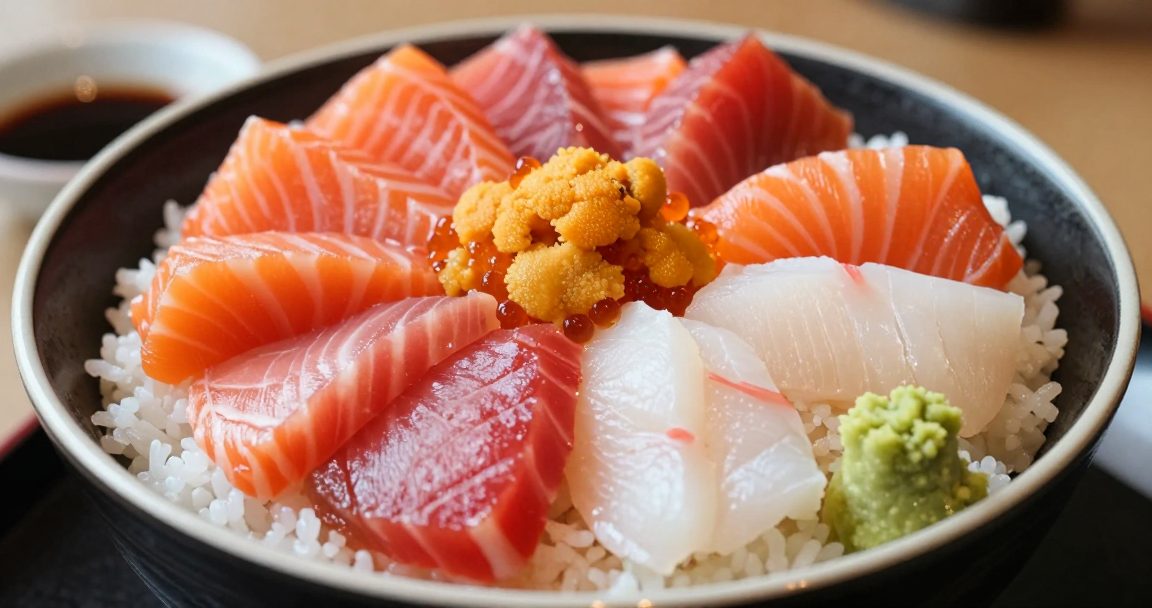
Kaisendon—a bowl of rice crowned with fresh sashimi—is one of the safest dishes on a Japan trip and yet one of the easiest to get wrong by choosing the wrong place. The same bowl eaten at Toyosu Market versus a random tourist spot can differ enormously in freshness, volume and price. For Taiwanese travelers, learning Tokyo's kaisendon landscape first—then matching a shop to your itinerary and budget—keeps you from overpaying for a letdown.
Sort a few things first. One: provenance. Toyosu Market (the old inner Tsukiji market, relocated in 2018) is home to wholesaler-run shops that open before dawn with the day's auctioned catch—peak freshness, but you must rise early and queue. The old Tsukiji left behind a lively 'outer market' with lots of choice and a wide quality-and-price spread. Two: format—brisk market diners, queue-magnet specialty bowls, and artisan shops devoted to a single ingredient (bluefin, sea urchin). Three: budget, from a 1,000-yen-plus limited bowl to a 3,000-4,000-yen luxury bowl; decide the occasion first.
The nine here split into three tiers. First, market-direct halls: Kaisendon Ooedo at Toyosu (a century-old veteran with 40-plus bowls), Nakaya (the best value inside Toyosu), and Tsukiji Donsho/Dontaku (a 1,150-yen limited tuna bowl in the outer market). Second, downtown artisans and bluefin talk-of-the-town: Tsujihan in Nihonbashi (a queue legend with a two-way 'sea-bream tea-rice' finish), Seagen in Tsukiji (Yamayuki bluefin specialist), and Tsukiji Itadori Uogashi Senryo (originator of seafood 'hitsumabushi'). Third, downtown queues and convenient nightlife districts: Noguchi Sengyoten near Honjo-Azumabashi (a 'Tabelog 100' diner, wholesaler-run, heaped bowls), Magurotei in Akihabara (a mega-portion bowl), and Takamaru Sengyoten by Shinjuku's west exit (a fish-shop-run izakaya with a generous lunch bowl).
Below runs from a 1,000-yen-plus limited bowl to a 3,800-yen top bluefin bowl—pick one by which district you're in and how much you'll spend. (Prices are estimates; check each shop's current menu.)
Sort kaisendon by provenance, format and three tiers before you choose. On provenance, the old inner Tsukiji market relocated to Toyosu in 2018, so the fiercest market freshness now sits at Toyosu—shops mostly run by seafood wholesalers, open before dawn with that day's auctioned catch—while old Tsukiji keeps a lively 'outer market' with more choice but a wider quality-and-price spread. On format, there are three lanes: brisk market diners, queue-magnet specialty bowls, and artisan shops devoted to a single ingredient such as bluefin or sea urchin.
Among the market-direct halls, Kaisendon Ooedo inside Toyosu is a century-old veteran with 40-plus bowls—the most direct way to taste Toyosu freshness in one stop, sit down before noon after touring the market, with plenty of choice and generous portions. Also in Toyosu, Nakaya is widely seen as the best value: eleven bowls averaging around 2,000 yen yet topped with uni and salmon roe that cost far more elsewhere, thanks to wholesaler sourcing. In the Tsukiji outer market, Tsukiji Dontaku makes affordability sincere—its limited 'raw nakaochi bowl' is just 1,150 yen, heaping tuna trimmings over rice, one of the few outer-market ways to eat tuna for just over 1,000 yen.
Among downtown artisans and bluefin talk-of-the-town, you don't have to rise early to eat well. Tsujihan in Nihonbashi turned kaisendon into a queue legend that even foreign tourists name—its 'zeitaku' bowl is heaped into a mound, then halfway through you pour in dashi for a 'sea-bream tea-rice' finish, two ways in one bowl from 1,250 yen up. Seagen in Tsukiji is supplied by Japan's top tuna wholesaler 'Yamayuki'; its 'ultimate Seagen maguro bowl' layers akami, chutoro and otoro with free rice refills—a pilgrimage for bluefin lovers. Itadori (Uogashi Senryo) in the outer market is the originator of seafood 'hitsumabushi,' arranging twelve kinds of seafood into a 'jewel box of Tsukiji' eaten three ways (as is, mixed with uni, then as tea-rice); its sibling 'Uni-Tora' is the outer market's only sea-urchin specialist.
Among downtown queues and convenient districts, there are value picks too. Noguchi Sengyoten near Honjo-Azumabashi (the Skytree area) is a wholesaler-run, 'Tabelog 100' diner whose 'Asaichi Tsukiji bowl' heaps about fifteen kinds of seafood for just over 1,000 yen, with a lavish lunch-only two-tier 'Tsukiji-jogai bowl.' Magurotei in Akihabara runs the mega-portion route—about ten kinds piled overflowing for 2,300 yen, great for big eaters. Takamaru Sengyoten by Shinjuku's west exit is a fish-shop-run izakaya whose lunch bowls pile on thick-cut sashimi without restraint, its 'three-tub set' generous in both volume and look, with the big advantage of being right at Shinjuku's west exit. (Sources: Tabelog Tokyo kaisendon rankings and roundups, official Toyosu-gourmet shop listings, shop info from Hot Pepper, Retty, Gnavi and Jalan, the official sites of Kaisendon Ooedo, Seagen, Tsujihan and Itadori, and Wikipedia on kaisendon, Toyosu Market and Tsukiji Market.)
 Scan for map
 Scan for map
 Scan for map
 Scan for map
 Scan for map
 Scan for map
 Scan for map
 Scan for map
 Scan for map