japan-quantifies-cruise-call-economics-22000-yen-average-spending-per-passengerA · FULL TRANSLATION
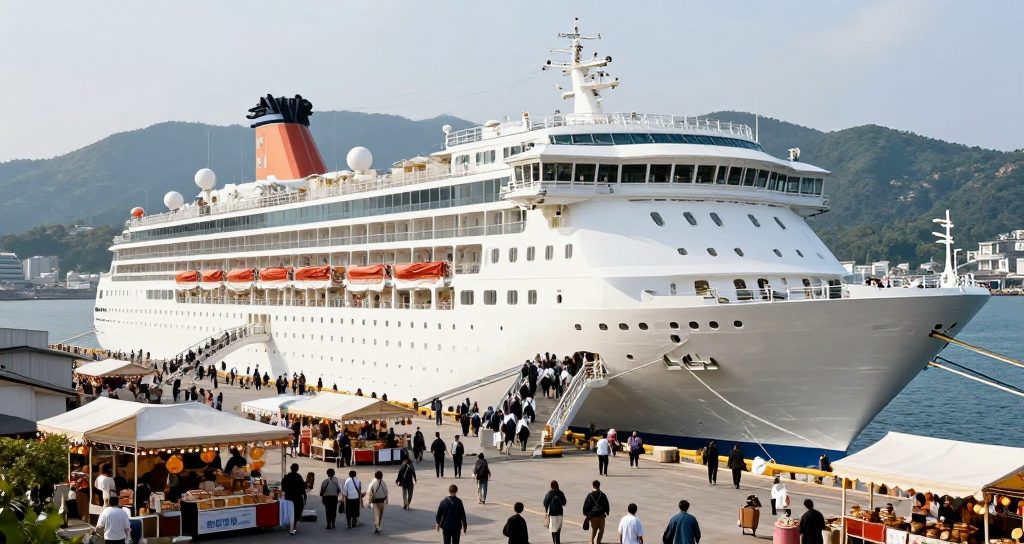
- MLIT visualized cruise-call economics: passengers spend about 22,000 yen each on average
- Port managers can now estimate local economic effects with a standard method
- It arms regional ports with data for route bids and facility investment
- Cruise shore spending is a rare growth increment for regional tourism
Regional ports bidding for cruise calls finally have an accounting tool. Japan's transport ministry quantified cruise-call economics — passengers spend roughly 22,000 yen each ashore on average — and published a method letting port managers estimate local effects themselves. A 4,000-passenger call thus pencils out near 88 million yen of shore spending, arithmetic that can now enter council budgets and berth negotiations. As Japan's inbound economy shifts to a price dividend, cruise shore spending is one of the few expanding increments for regional tourism. Taiwan, a key source market and port of call, is directly linked to Kyushu and Okinawa facility investments.
Summary of MLIT's July 15 release: the ministry has 'visualized' the economic effects of cruise ship port calls. Surveys put average spending by cruise passengers at roughly 22,000 yen per person at ports of call. MLIT also compiled an estimation method enabling individual port managers to calculate local economic effects themselves, supporting route attraction and facility investment decisions. See the original release for methodology and data details.