Japan's FSA Maps How Banks Price Typhoon and Flood RiskA · FULL TRANSLATION
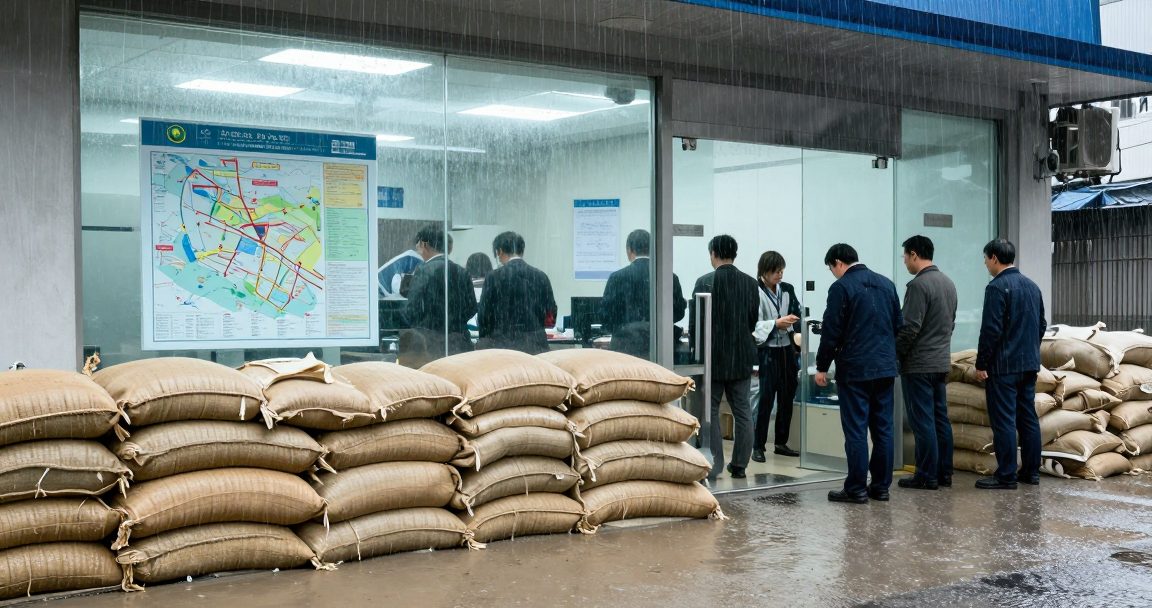
- The FSA published a survey of financial institutions' storm and flood risk practices
- Banks broadly treat wind and water disasters as key management risks
- Risk analysis increasingly feeds lending and investment decisions
- Linking hazard maps to collateral valuation is the next frontier
Japan's Financial Services Agency published a review of how financial institutions manage storm and flood risk, the most tangible physical climate risk in a typhoon-prone archipelago. Findings: surveyed institutions broadly recognize wind and water disasters as material management risks, are refining risk analytics and applying them to lending and investment decisions, and are updating business continuity plans based on actual disaster experience.
The signal matters more than the summary: since its 2022 framework on climate response, the FSA has moved from disclosure principles toward practical supervision. The logical next step—linking municipal flood hazard maps to collateral valuation—would institutionalize discounts on properties in high-risk zones, affecting loan terms and resale liquidity.
Property buyers in Japan should treat hazard maps, freely published by municipalities, as core due diligence. Details per the FSA's original publication.
Japan's FSA published 'Trends and Issues in Financial Institutions' Responses to Wind and Flood Risk' on July 17. Since formulating its Basic Approach to Climate Response for Financial Institutions in July 2022, the agency has tracked implementation; this survey examines loss risks from wind and water disasters specifically.
Findings: surveyed institutions broadly recognize climate-related and large-scale natural disaster risks, including wind and flood risk, among their key management risks. Risk analysis is becoming more sophisticated and is increasingly applied to investment and lending decisions; customer support aligned with each institution's business model is progressing; and institutions are revising their own business continuity plans and adaptation measures based on disaster response experience.
The FSA stated it will continue monitoring institutions' climate risk management and customer support, taking into account that appropriate approaches differ by institution size and characteristics.