Itochu Urban Development Merges with JR East Real Estate as Tokyo Land Scramble Forces Consolidation
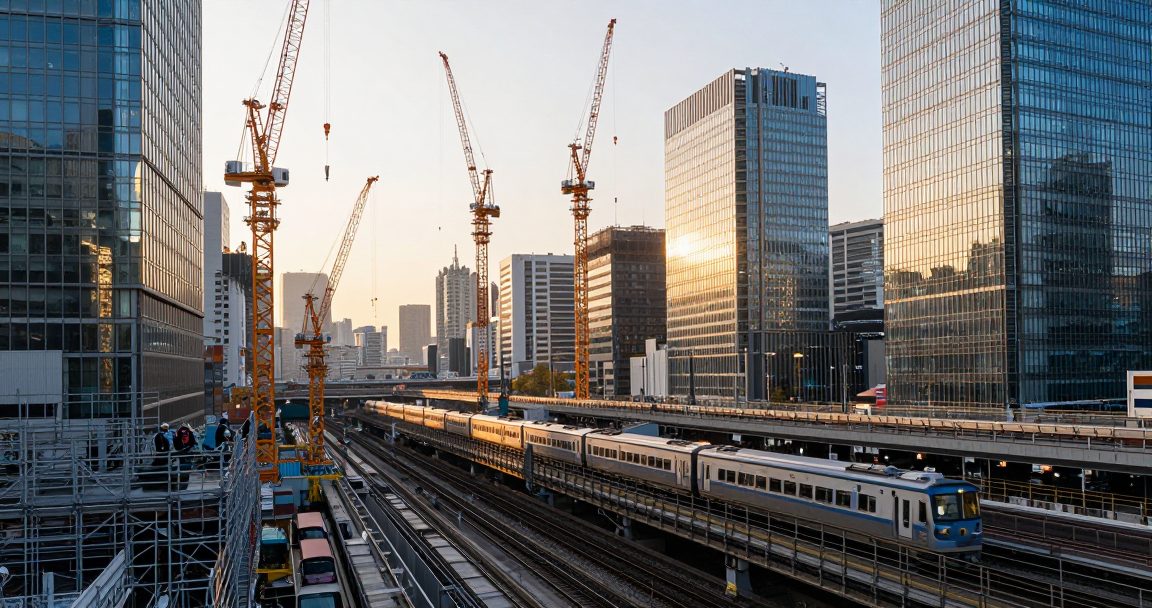
- New joint company combines Itochu's CREVIA developer with JR East's property arm
- Soaring capital-area land prices made site acquisition the industry bottleneck
- Easing 'asset efficiency' constraints unlocks larger development scale
- Rail-owned station-front land meets trading-house development capability
- Supply-side consolidation reinforces the shift of buyers toward used condos
Tokyo home prices sit at record highs, yet developers are the ones capitulating—not on price, but on land. Itochu Urban Development, known for its high-end CREVIA condominiums, will integrate with JR East's real-estate business in a new company combining the trading house's development capability with the railway's irreplaceable station-front land bank.
The logic is textbook vertical integration. Developers can no longer win central Tokyo sites at auction economics; railways own land nobody else can buy but face asset-efficiency constraints that cap their development spending. Merging the two balance sheets unlocks both bottlenecks. It also marks a new phase in a broader shift: with prime greenfield sites nearly exhausted and construction costs stubbornly high, competition has moved upstream from selling homes to securing raw land.
For buyers, don't expect cheaper housing. New supply from station-front sites skews premium, which reinforces—rather than relieves—the structure pushing demand into the used-condo market, where 23-ward prices already average 127 million yen per 70 sqm. For investors in Japanese property stocks and REITs, land-sourcing capability is replacing sales velocity as the core valuation variable. Watch the new company's development pipeline, copycat alliances among other railways and trading houses, and capital-area new-supply trends.