Tokyo Shotengai Food Walks 2026: Five Shopping Streets, Ten Stalls — a 10-Yen Chicken Ball in Jujo, 400 Shops Along Togoshi Ginza, and the Oden Made Famous by 'Solitary Gourmet' in Sunamachi
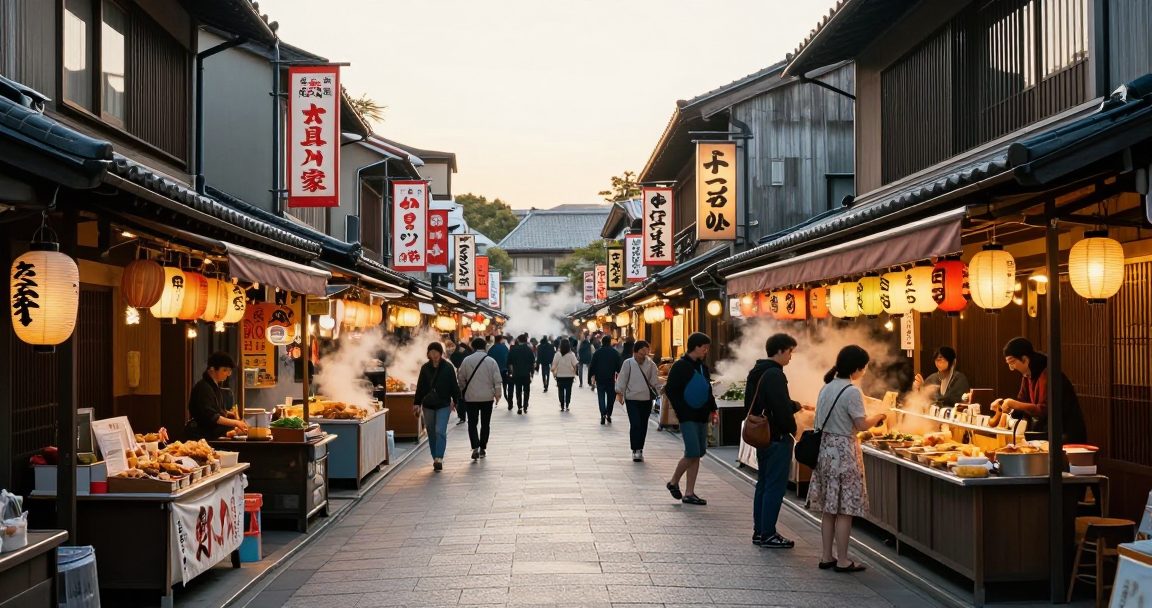
- The price gap: tourist-zone fried snacks at 500-800 yen versus 100-yen shotengai croquettes and Jujo's 10-yen chicken ball — local daily shoppers keep prices honest
- Five routes, ten stalls: Togoshi Ginza (1.3 km, ~400 shops: Goto's oden croquette, Nakatsu Karaage Kei, Ryuki's grilled soup dumplings), Sunamachi Ginza (670 m, ~180 shops: Masuei's oden, Takezawa's yakitori, Umemura's shio udon), Yanaka Ginza (170 m: Niku no Suzuki menchi, cat-tail donuts), Jujo Ginza's arcade (Toridai), and Kichijoji Sun Road (Satou's 5,000-a-day menchi-katsu)
- History hook: Togoshi Ginza took the 'Ginza' name in 1927, the first in Japan; Sunamachi Ginza dates to 1932; 'Solitary Gourmet' turned Sunamachi into a pilgrimage
- Etiquette: eat in front of the stall, not while walking (Yanaka Ginza asks explicitly); return trash to the shop; carry cash
- Timing: delis sell out by evening — hit the 3:00-5:30 p.m. dinner-shopping peak, then catch sunset at Yuyake Dandan
- Access: Togoshi-Ginza Station (Tokyu Ikegami Line), Nishi-Ojima/Minami-Sunamachi plus bus, Nippori Station on foot, JR Jujo Station, JR Kichijoji Station north exit
Shotengai — Tokyo's neighborhood shopping streets — are where the city actually eats. While a fried snack in a tourist zone runs 500 to 800 yen, shotengai croquettes still hover around 100, and one chicken ball in Jujo costs 10 yen before tax, because the customers are locals buying tonight's side dishes, not tourists. This guide walks five streets and ten stalls: Togoshi Ginza, at 1.3 kilometers and roughly 400 shops, is among Tokyo's longest — and was the first street in Japan to borrow the 'Ginza' name, back in 1927. Sunamachi Ginza packs about 180 shops into 670 meters, with the oden shop made famous by the TV series 'Solitary Gourmet.' Yanaka Ginza squeezes 70 shops into 170 photogenic meters below the Yuyake Dandan steps. Jujo Ginza is Kita Ward's covered arcade, rain-proof and home of the 10-yen chicken ball. And Kichijoji's Sun Road area sells about 5,000 menchi-katsu a day at a single butcher's counter. Three field rules: carry coins and small bills, since some old shops take no cashless payment; eat in front of the stall rather than while walking — Yanaka Ginza explicitly asks visitors not to walk and eat — and hand your trash back to the shop; and go between 3:00 and 5:30 p.m., the dinner-shopping peak, when the street is at full volume and the deli cases are still stocked.
Route one, Togoshi Ginza in Shinagawa: straight off the Tokyu Ikegami Line station, three merchant associations form a 1.3-kilometer line of about 400 shops that coalesced after the 1923 earthquake and took the Ginza name in 1927 — every '——Ginza' street in Japan traces back here. Goto Kamaboko-ten, an oden-ingredient specialist from around 1960, sells its signature oden croquette for 108 yen with more than 30 kinds of fresh-fried fishcake on the counter; Nakatsu Karaage Kei brings award-winning Oita-style fried chicken; Ryuki grills soup dumplings with crisped bottoms. Route two, Sunamachi Ginza in Koto: 670 meters, about 180 shops, founded in 1932, the densest deli street in Tokyo. Masuei Kamaboko-ten's oden pot draws year-round lines since 'Solitary Gourmet' aired; Takezawa Shoten's charcoal yakitori runs 100 to 200 yen a skewer; Umemura's shio udon is the local childhood taste. Route three, Yanaka Ginza in Taito: five minutes from Nippori Station, best entered from the Yuyake Dandan steps at sunset. Niku no Suzuki's menchi-katsu, around 230 yen, blends wagyu with domestic beef and pork and sells 500-plus on busy days; Yanaka Shippoya bakes donuts shaped like cats' tails. Route four, Jujo Ginza in Kita: a covered arcade by JR Jujo Station where Toridai, an egg shop turned poultry specialist founded in 1962, fries 6,000 to 7,000 chicken balls a day and sells them at 10 yen apiece. Route five, Kichijoji: Satou, the wagyu butcher on Sun Road, sells about 5,000 of its round menchi-katsu daily at 250 yen each — the queue itself is a Kichijoji landmark. Sources: Tokyu Corporation, GO TOKYO, Goto Kamaboko official, Kichijoji Satou official, Tabelog, OnTrip JAL, Jalan News, Tokyo Lucci, Haraheri, Mynavi News, 4travel.
 Scan for map
 Scan for map
 Scan for map
 Scan for map
 Scan for map
 Scan for map
 Scan for map
 Scan for map
 Scan for map
 Scan for map