Gyoza no Manshu: How a ¥10 Billion Saitama Chain Holds Its Price Point
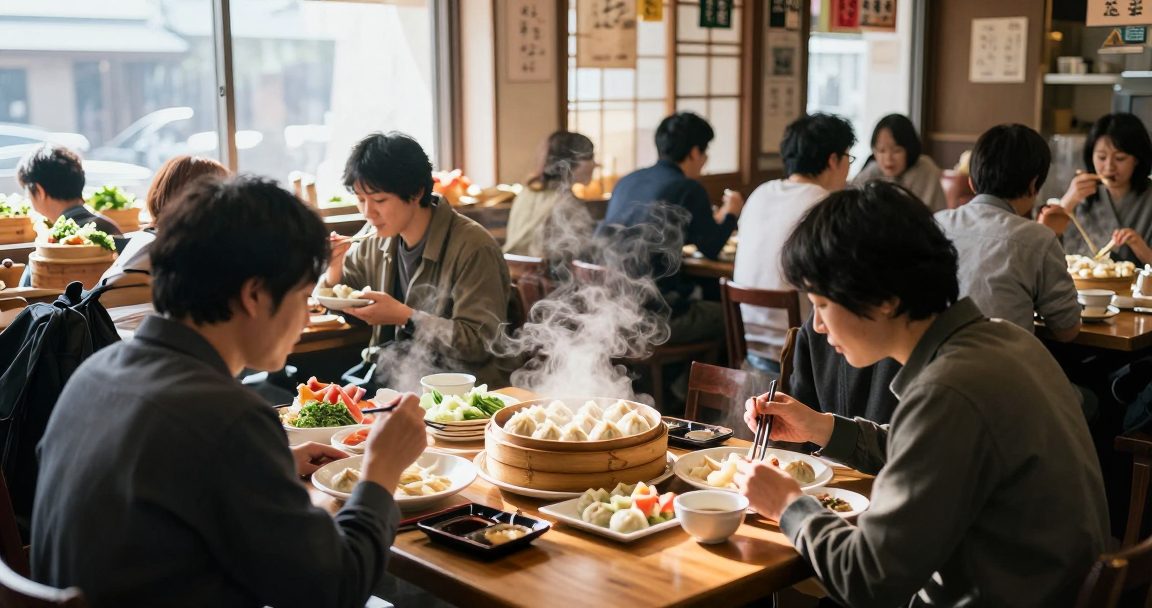
- Gyozas no Manshu is known for its slogan '30% more delicious!'
- The chain generates over 10 billion yen in annual revenue.
- It emphasizes domestic ingredients and stable business philosophy.
- Started in Saitama, it has expanded as a Chinese cuisine chain nationwide.
- Combines creative marketing with localized strategies for growth.
In a market where both ingredient and labour costs are rising, chains that hold their price point are rare — and Gyoza no Manshu, a Saitama-based Chinese restaurant chain, does it at roughly ¥10 billion in annual revenue.
Toyo Keizai reports the chain is long known for its "3-wari umai" slogan and has grown on steady management and a commitment to domestically sourced ingredients. Refer to the original for details. Ten billion yen is mid-sized for Japanese food service, but sustaining it through regional depth rather than national coverage is itself the strategy.
The trade-off is worth understanding. Committing to domestic ingredients caps costs to agricultural prices, which becomes an advantage when a weak yen pushes up imported inputs — competitors are forced to reprice while this operator is not. The cost is slower expansion, since cheap imported inputs cannot be used to buy scale.
That is density-first rather than coverage-first: concentrating logistics, central kitchen capacity and customer base within a limited area spreads delivery cost, not ingredient cost.
Operators entering Japan often do the reverse — secure sites first, sort out supply chains later — and find every store carrying standalone logistics costs.
Watch whether expansion stays within the existing region, and how far prices move as input costs rise.