Nearly Nine in Ten Unaware of Japan's Cliff Ordinance Before BuildingA · FULL TRANSLATION
- A survey finds nearly 90% of respondents unaware of Japan's cliff ordinance.
- Land near cliffs offers views but faces strict building restrictions.
- Building or repairing a retaining wall can cost a large sum.
- Heirs often do not know how far they may build, or whom to consult.
For anyone buying land in Japan to build on, or holding inherited Japanese property, this survey points at the risk most easily skipped and most expensive to discover: land can be perfectly legal and still not let you build what you intend. Nearly nine in ten respondents had never heard of the cliff ordinance.
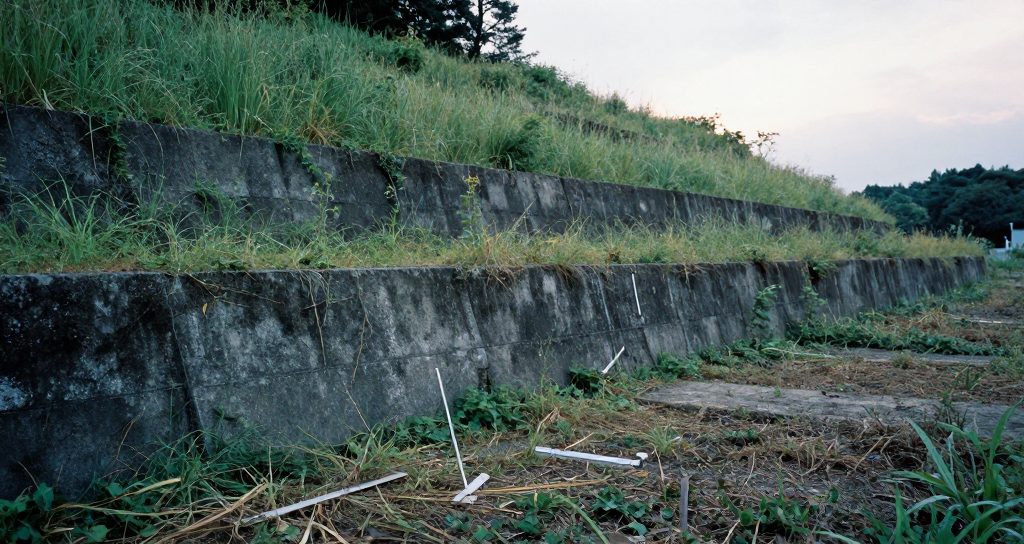
Cliffside plots sell on the obvious: a view, and a price below comparable flat land nearby. The cost sits in the rules. Building within a defined distance of a slope faces strict limits, and a retaining wall may be required before anything else. Wall construction and repair run into serious money that never appears on the asking price, and an existing old wall can be worse, since it may not meet current standards.
The trap for foreign buyers is assuming Japanese building rules are uniform nationwide. These are local ordinances; the same slope can produce different answers in different municipalities.
Three checks belong between viewing and signing: confirm with the municipality whether the plot falls under the ordinance, have a local architect assess the wall and buildable area, and put the possible wall cost into your acquisition budget.
Dream Planning Co., Ltd. (Naka-ku, Yokohama; CEO Tatsuhito Takahashi), which runs the real-estate advice site URUHOME, surveyed 500 people interested in real estate about their awareness of Japan's "gake jorei" (cliff ordinance). The online survey ran from June 5 to July 4, 2026, with 231 female (about 46%) and 269 male (about 54%) respondents, aged 20s: 48 (9.6%), 30s: 158 (31.6%), 40s: 168 (33.6%), 50s: 90 (18.0%), 60s: 33 (6.6%), and 70 or older: 3 (0.6%).
Asked how well they knew the term, 436 respondents (87.2%) said they did not know it at all. Only 36 (7.2%) said they knew it, and 28 (5.6%) gave a non-committal answer; even combined, the latter two come to just 12.8%.
In a more detailed question, "never even heard the name" came first with 282 responses (56.4%), followed by "never heard of it and not interested" at 96 (19.2%), "have heard the name only" at 58 (11.6%), "have heard that buildings face restrictions above or below a cliff" at 22 (4.4%), "know the name but not the meaning" at 16 (3.2%), "know that a retaining or protective wall is required" at 11 (2.2%), and "know roughly that an ordinance on cliffs exists" at 9 (1.8%). Three respondents each (0.6%) said they understood their municipality's rules and the angle of repose in detail, or believed the rule applies only above or only below a cliff.
The release notes that cliffside land offers good views but comes with strict building limits under the ordinance, and that installing or repairing retaining walls can be costly. Buying such a property without knowing the rule can lead to unexpected expenses or a house that cannot be built as planned, which is why prior checks and professional advice matter. Anyone citing the results or images is asked to link to the URUHOME page publishing the survey.