Thirty Deaths in Seven Years Involving Wheelchair Transport Vehicles
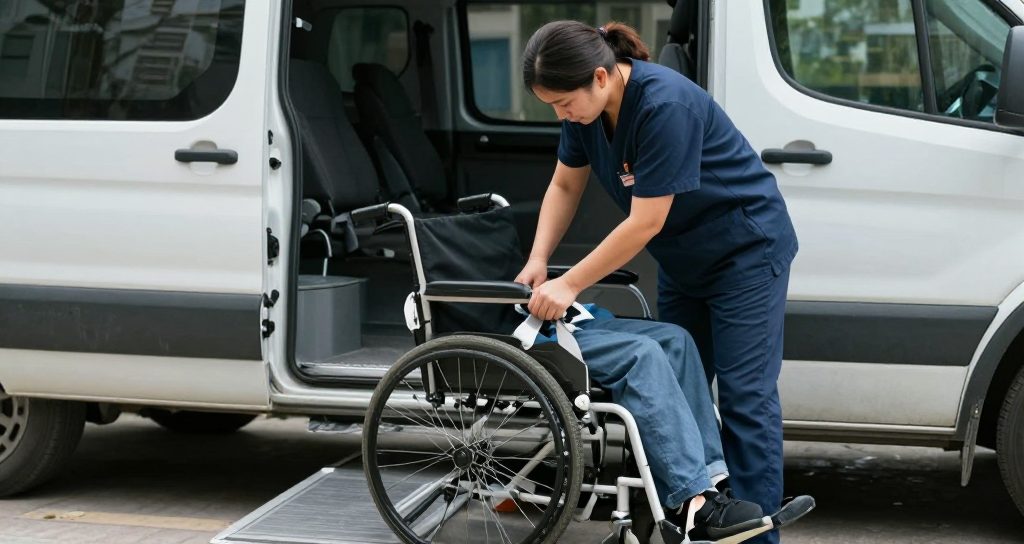
- Japan's consumer accident investigation body counted 30 deaths in seven years involving wheelchair transport vehicles.
- Incidents cluster around securing wheelchairs and boarding.
- Care and transport operators face pressure to review procedures.
Thirty deaths in seven years deserves attention because of where they happened: in vehicles specifically built to carry elderly and disabled passengers. Japan's consumer accident investigation body examining the pattern signals a process problem rather than isolated negligence.
Incidents concentrate not in driving but in boarding and securing. A wheelchair is not a crash-rated seat, so if any part of the strapping routine is skipped, braking or cornering can shift it. Ramp angle, the height gap between vehicle and kerb, and whether one or two staff handle the transfer all change the risk. These are procedural details, so new equipment alone does not fix them.
The context is scale. As care transport expands, staffing tightens and trip times compress, and the first steps sacrificed are the ones that take time and show no visible output — securing and checking.
Ask providers about their strapping standard and staffing per transfer. Watch for formal guidance, changes in training frequency, and whether incident counts fall.