The ¥221,000 Ceiling: Japan's Per-Visitor Spending Stalls — Europeans at ¥400K Are the AnswerA · FULL TRANSLATION
- Per-visitor spending: ¥221,363, down 0.6% — flat around ¥220K for several quarters
- Top three: France ¥408K, Australia ¥404K, Germany ¥399K
- Korea sits near ¥104K (down 7.8%): high volume, low spend
- Tokyo's 2030 goal of ¥15T consumption requires raising unit price, not just headcount
Record arrivals, record total spending — but the number on page three didn't set a record: ¥221K per head, down 0.6%. Japan's next tourism battle is not at immigration counters; it's getting each visitor to stay one more night.
Japan's tourism volume is booming, but price is stuck: ¥221,363 per visitor, slightly down. Whoever solves the unit-price equation owns the next five years.
Why the ceiling? Market mix. The two biggest source markets — Korea (~¥104K per head, down 7.8%) and Taiwan (~¥195K) — are short-haul: three-hour flights, three-day stays, several trips a year. The per-capita podium is all long-haul: France ¥408K, Australia ¥404K, Germany ¥399K — fly far, stay two weeks, spend deep.
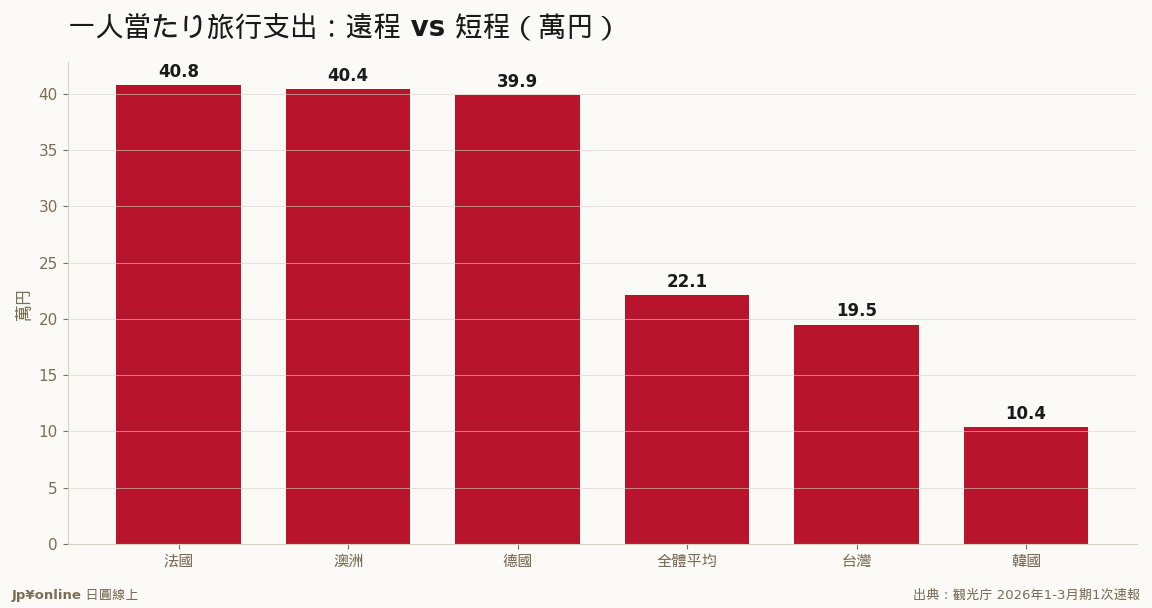
The government's arithmetic: 60 million visitors and ¥15 trillion in spending by 2030 implies ¥250K per head. The gap can only close three ways — grow the long-haul mix (France's record April was exactly that), upgrade short-haul travelers from drugstores to ryokan and regional tours, and build ultra-high-ticket niches: ski, golf, medical tourism, long stays.
For entrepreneurs, 'raising unit price' is the business plan: premium minpaku, private chefs, ski schools, chartered regional tours — services that move a guest from ¥100K to ¥200K sit in the tailwind of both policy and market.