May Inbound Visits to Japan: 3.6% Year-on-Year Drop but 19 Markets Hit New May RecordsA · FULL TRANSLATION
- Inbound visitors in May 2026: 355,990, -3.6% year-on-year (cherry blossom and summer vacation season + high base year 2025 + reduced flights from some markets)
- 19 markets including South Korea, Taiwan, USA, Malaysia hit new May records; Middle East and India set single month highs
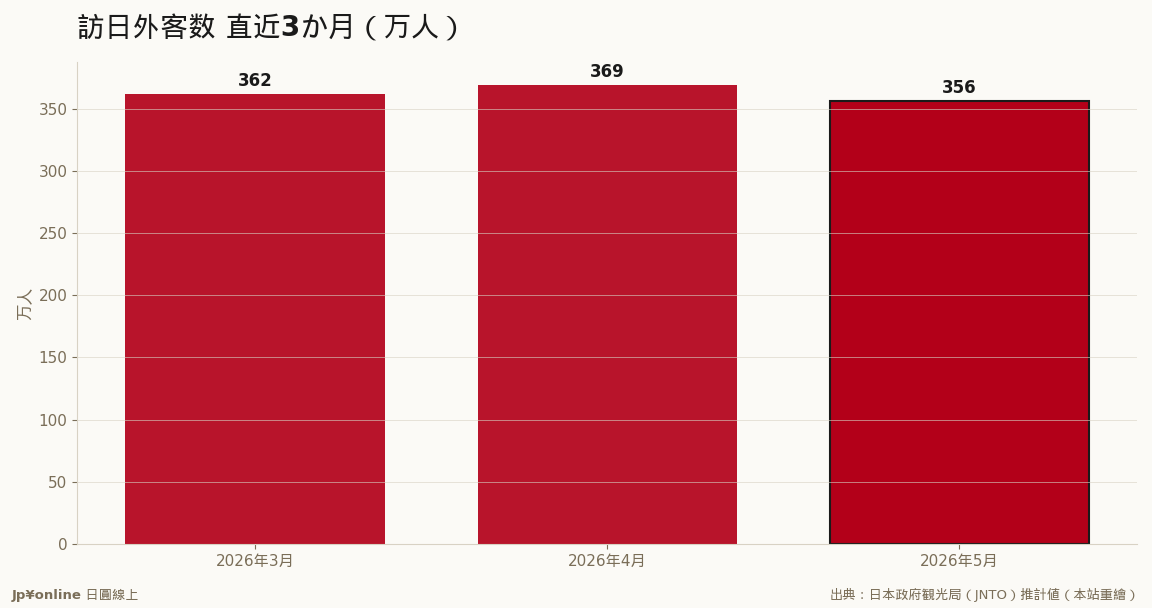
- March to May numbers: March 361,900 / April 369,200 (highest for 2026, -5.5%) / May 356,000 (-3.6%)
- Increase in markets this month: East Asia South Korea and Taiwan, Southeast Asia Malaysia and Singapore, Europe/Australia USA and Germany – mature travelers driving demand through holidays
- Unique perspective: Divergence between total numbers falling vs structural growth high = sources diversifying from concentrated East Asian countries to multiple points; assess health of a tourism destination by top five markets' share
JNTO reported on June 17, 2026, that inbound visitors in May numbered 3,559,900, a year-over-year decrease of 3.6%. Although this may appear as a decline, the same data shows record-breaking numbers for 19 markets including South Korea, Taiwan, USA, Malaysia, Middle East and India, marking new highs since their respective years. May is naturally at a low point in terms of demand due to the overlap with cherry blossom season and summer break, coupled with a higher base year in 2025 and reduced flights from some markets that further depressed total numbers. For March, April, and May: March (361,900), April (369,200 - highest single month for 2026, -5.5%), May (356,000, -3.6%). Markets with increased visitation include South Korea, Taiwan, Malaysia, Singapore, USA and Germany, driven by holidays and school vacations. Exclusive perspective: total numbers versus structural growth – while a few large markets are dragging down the average due to high base years or reduced flights, 19 markets set new May records representing diversification of sources from East Asia to multiple points. The more sources that spread out, the less susceptible an individual market is to external factors like political changes and currency fluctuations.
【Why Taiwanese Readers Should Care】The Japan National Tourism Organization (JNTO) reported on June 17, 2026, that inbound visitors in May were 355,990 people, a year-over-year decrease of 3.6%. This might seem like a decline but the same data shows record-breaking numbers for South Korea, Taiwan, USA, Malaysia and more, including new highs from Middle East and India. A drop in total numbers with high structural growth is key to understanding Japan's accommodation and consumption market trends – Taiwanese readers doing business or planning trips should focus on 'why the totals are down but who is actually up' rather than being scared by a negative number.
【Decoding the Numbers】May, sandwiched between cherry blossom season and summer break, naturally sees a drop in inbound demand. The base year for May 2025 was particularly high, putting pressure on this year's numbers. Over the past three months: March (361,900), April (369,200 - highest single month for 2026, -5.5%), May (356,000, -3.6%). The continuous decline in these months is mainly due to a higher base year and reduced flights from some markets dragging down the total.
【A Unique Methodological Perspective: Look at Market Diversification】The report's most valuable insight lies in the divergence between total numbers and structural growth. While the overall decrease of 3.6% is driven by a few large markets (affected by high base years or reduced flights), 19 markets set new May records, with Middle East and India hitting single month highs. This indicates that tourist sources are diversifying from concentrated major East Asian countries to multiple points. For businesses, this is more meaningful: as sources become more diversified, the impact of political changes, currency fluctuations, and flight schedules in a single market diminishes. To assess the health of a tourism destination, focus on whether its top five markets' share is increasing or decreasing – a decrease suggests a strengthening foundation.
【Summary of Month-on-Month Changes】This month's increases show clear trends: markets from East Asia like South Korea and Taiwan, Southeast Asia including Malaysia and Singapore, and Europe/Australia such as USA and Germany are all seeing growth driven by holidays and school vacations pushing these markets to new May highs. Markets that were dragged down mainly had reduced flights or particularly high base years last year. In other words, in low-demand months, mature travelers find their own reasons to visit Japan.
【Practical Advice for Taiwanese Readers】First, May is a high CP value window for visiting Japan – avoid peak April and summer vacation periods where accommodation and airfares are cheaper, offering better travel quality. Second, if operating in hospitality or retail, don't interpret single-month year-over-year decreases as decline; focus on whether your primary customer base is within the 19 markets that set new records (Taiwan included), providing a stable baseline for frequent visitors. Third, monitor flight schedules – the reduction in some markets this month directly correlates with reduced flights. Flight increases and reductions are a more reliable leading indicator than weather.
【Next Steps】Watch if summer peak season from July to August can reverse the downturn and narrow or turn positive on year-over-year numbers; track the momentum of the Chinese market's return, which is the largest variable affecting total numbers; observe whether the list of 19 markets with record-breaking figures continues to grow – a longer list suggests a more stable foundation for Japan's tourism business.