Japan’s February Core CPI Falls Below 2% for First Time in 3 Years 11 MonthsA · FULL TRANSLATION
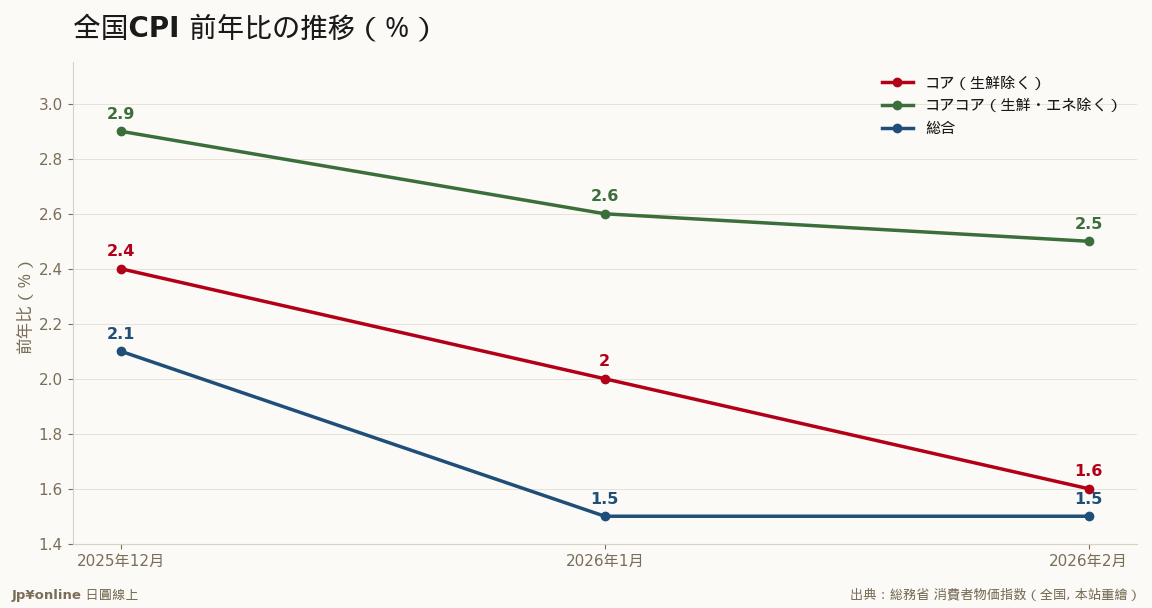
Japan's nationwide core consumer price index (excluding fresh food) fell to +1.6% year-over-year (YoY) in February 2026, a sharp decrease from the previous month’s +2.0%, marking the first time since March 2022 that it has fallen below 2%. The overall CPI is up by +1.5%. However, the core-core index (excluding energy), as defined by the Bank of Japan, still hovers at +2.5% (up from +2.6% in January). The slowdown was mainly driven by energy: subsidies for electricity and gas resumed with requests from February, contributing -0.38 percentage points to the year-on-year change in urban utilities compared to -0.11 in January. Gasoline prices dropped 14.9% due to the cancellation of a temporary tax rate. Food (excluding fresh items) increased by +5.7% (down from +6.2% in January), showing a slowdown for the seventh consecutive month, with rice prices declining from +27.9% to +17.1%. The subsidy is limited to requests from February to April and will be reduced after April, with high oil prices and a weak yen posing challenges.
【Why Taiwanese Readers Should Care】Japan's nationwide core CPI (excluding fresh food) fell to +1.6% YoY in February 2026, down sharply from the previous month’s +2.0%. This marks the first time since March 2022 that it has fallen below 2%. However, this slowdown should not be interpreted as a cooling of inflation—what is being suppressed are subsidies for energy while essential food prices remain sticky.
【Breaking Down the Numbers】When you look at all three lines together, you see why. The overall CPI is +1.5%, core CPI is +1.6%, but the core-core index (excluding both fresh items and energy), as defined by the Bank of Japan, remains at +2.5% (up from 2.6% in January). Energy was the main driver of this slowdown: subsidies for electricity and gas resumed with February requests, contributing -0.38 percentage points to urban utilities’ year-on-year change, compared to -0.11 in January. Gasoline prices dropped by -14.9% due to the cancellation of a temporary tax rate.
【A Unique Analytical Perspective: Focus on Core-Core】The key takeaway from this data is that policymakers should distinguish between what can be suppressed (energy) and what cannot (domestic services and food). The core CPI falling below 2% is merely an artificial phenomenon created by subsidies; the core-core index at +2.5% reflects the real underlying inflation pressure, largely unaffected by policy interventions. Food prices excluding fresh items increased to +5.7%, continuing a slowdown for seven consecutive months with rice prices dropping from +27.9% in January to +17.1% in February. In short, headline inflation may be cooling temporarily, but core inflation remains sticky.
【Impact on the Yen and Mortgages】This month's slowdown will temporarily cool expectations of rate hikes, leading to a weaker yen term-wise for now and providing a temporary reprieve for those with variable-rate mortgages. However, this is a