January Data Reveals Stagnant Prices and Slowing Sales in Greater Tokyo’s New CondosA · FULL TRANSLATION
- January 2026 data: average new apartment unit at 83.83 million yen and 124.9 ten-thousand yen per square meter (both up for nine consecutive months); only 628 units sold in January
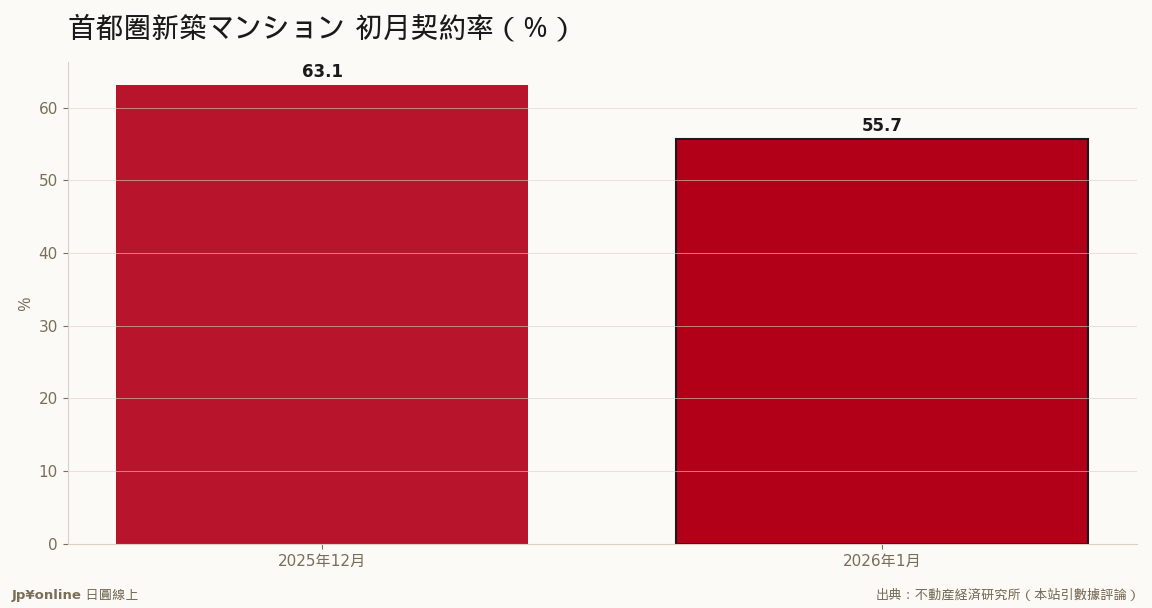
- Initial contract rate fell to 55.7% from December’s 63.1%, remaining well below the economic turning point of 70%
- Prices remain high as developers push higher-priced units, reluctant to lower prices despite rising costs
- Contract rates are an earlier indicator than price trends; low initial contract rates signal cooling markets faster than price changes can reflect
The Real Estate Economic Institute reported that the average price of new apartments in Greater Tokyo hit 83,830,000 yen per unit and 124.9 ten-thousand yen per square meter in January 2026—both rising for nine consecutive months. However, the initial contract rate dropped to 55.7% from December’s 63.1%, remaining far below the economic turning point of 70%. January is a low season for supply, with only 628 units sold. The low initial contract rate indicates sellers are struggling to sell. While prices continue to rise due to rising land costs and labor expenses, developers are hesitant to lower prices, contributing to weaker sales.
Why Taiwanese Readers Should Care: In January 2026, the Real Estate Economic Institute reported that new apartment prices in Greater Tokyo hit 83.83 million yen per unit and 124.9 ten-thousand yen per square meter—both rising for nine consecutive months. However, the initial contract rate fell to 55.7% from December’s 63.1%, remaining far below the economic turning point of 70%. This signals a cooling market, especially for those considering property in Tokyo.
[Breaking Down the Numbers]: January is low season for new apartment supply with only 628 units sold—small quantities and high volatility mean this data should be taken with a grain of salt. The key metric to watch is 'sales momentum': at 55.7%, it means on average, one unit out of two in newly launched projects is not sold in the first month. Prices remain stubbornly high as developers push higher-priced units, unwilling to lower prices despite rising land and labor costs. This has created a pattern of limited sales.
[Unique Perspective]: Contract rates are an earlier indicator than price trends. As developers hold back on sales, new apartment prices lag behind consumer sentiment changes. When contract rates consistently fall below 70%, it signals that the market is cooling faster than price adjustments can reflect. Thus, 55.7% better reflects market realities than the high price of 83.83 million yen.
[Practical Advice for Taiwanese Readers]: Do not use the Greater Tokyo average as a purchase benchmark—23 wards inflate this number significantly while surrounding prefectures offer lower prices. Use initial contract rates and inventory levels to gauge cooling markets; January data should be watched over two or three months to confirm trends.
What to Watch Next: First, monitor whether contract rates can recover above 70% during the spring peak (February-March); failing to do so confirms weakening demand. Second, observe ongoing increases in stock numbers as stagnant prices may precede price reductions. Lastly, monitor rising mortgage interest rates under Japan’s interest cycle to see if they further compress buyer willingness.