Tokyo 23 Wards’ Family-Type Pre-Owned Apartment Demand Price Hits Over 100 Million Yen for the First TimeA · FULL TRANSLATION
- Demand price in Tokyo 23 wards hits over 100 million yen, year-over-year increase by 150.6% (LIFULL May 2026)
- Listing price drops to 116.94 million yen, month-over-month decrease of 1.7%
- All categories show double-digit growth: 32.2% in listings, 50.6% in demand prices, 17.7% and 13.7% for central Tokyo
- Price gap between asking and demand narrows to about 14%, indicating a very competitive market with limited seller flexibility
- Breaking the 100 million yen barrier means long-term commitment required for investment; budget-limited buyers should look outside core areas
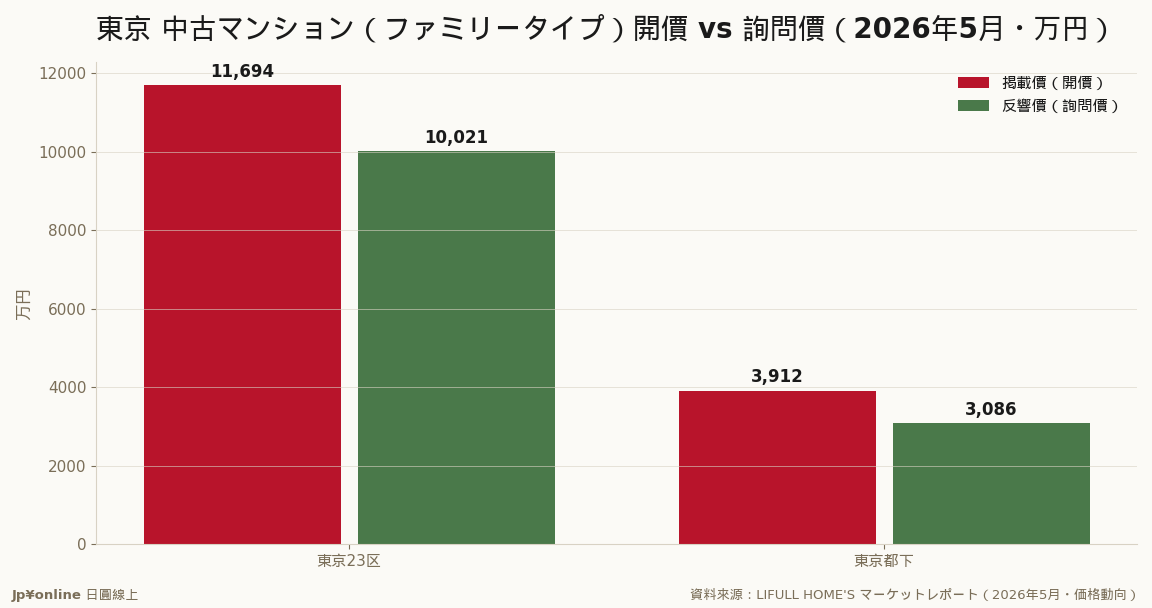
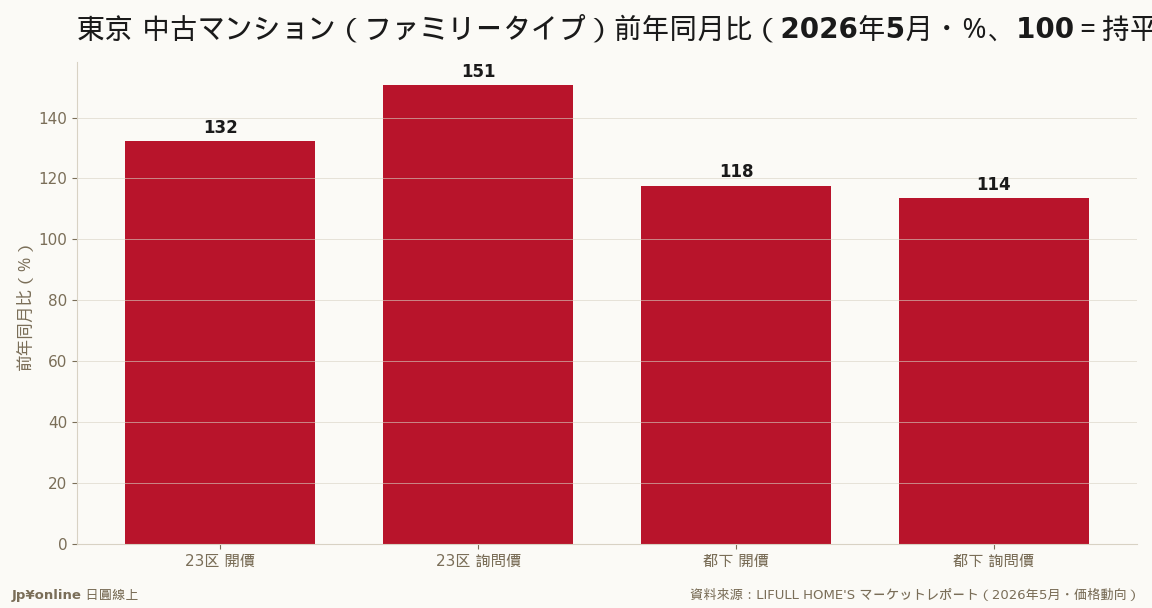
LIFULL HOME'S latest May 2026 market report shows that the demand price (buyer's actual inquiry range) of family-type (2DK and above) pre-owned apartments in Tokyo’s 23 wards reached 12.1 million yen, a year-over-year increase of 150.6% and month-over-month rise by 113.7%. This is the first time since tracking that the demand price has surpassed 100 million yen, setting a new historical high. The listing price (seller’s asking price) for family-type apartments in the same area was 116.94 million yen, a month-over-month decrease of 1.7%. This forms an interesting divergence where buyer demand is pushing prices higher while seller asking prices are falling—reflecting a cooling market from sellers but rising demand from buyers. In Tokyo’s 23 wards, the listing price stands at 39.12 million yen and the demand price at 30.86 million yen, marking new highs. When compared to the same month last year, the listing prices in 23 wards increased by 32.2%, while the demand prices surged by an impressive 50.6%. The central Tokyo areas saw listings increase by 17.7% and inquiries by 13.7%. These figures indicate strong double-digit growth for all categories, with the highest increase in demand prices being particularly noteworthy.
【Why Taiwanese Investors Should Care】LIFULL HOME'S is one of Japan’s largest real estate information platforms. Its monthly market report distinguishes between actual listings (seller asking price) and inquiries from buyers (buyer's interest range). For Taiwanese investors considering property in Tokyo, this report provides both the seller's asking prices and buyer demand ranges, allowing for a clear understanding of negotiation space and market sentiment.
【Key Figures: First Demand Price Over 100 Million Yen】In May 2026, family-type (2DK and above) pre-owned apartments in Tokyo’s 23 wards had an asking price of 116.94 million yen, a month-over-month decrease by 1.7%, but the demand price was at 12.1 million yen, which is up 113.7% from the previous month and 150.6% year-over-year. This marks the first time in tracking that the demand price has surpassed 100 million yen, setting a new historical high. The divergence between seller asking prices cooling off while buyer interest pushes past 100 million yen is particularly noteworthy.
【How Much Have Prices Risen: Double-Digit Growth in All Categories】When compared to the same month last year, family-type listings in Tokyo’s 23 wards increased by 32.2%, demand prices rose by a striking 50.6%, central Tokyo listings by 17.7%, and demand prices by 13.7%. These figures all show double-digit growth with the highest increase being in the 23 wards' demand price at 50.6%. This indicates that buyers are now interested in properties valued over 100 million yen, which was not a common interest just one year ago.
【Implications for Taiwanese Investors】Firstly, the narrowing gap between asking and demand prices (about 14% in the 23 wards) suggests a very heated market with limited seller flexibility. Negotiating lower prices is more challenging compared to last year. Secondly, crossing this price point at 100 million yen means that buying at such levels requires long-term commitment. Thirdly, the difference in growth rates between central Tokyo and the rest of Tokyo (32.2% vs 17.7%) highlights that buyers with limited budgets may want to look for properties outside the core areas where appreciation potential is more moderate but still significant.
【What to Watch Next】Monitor whether listing prices from March high points continue to fall, potentially dragging down demand price inquiries; determine if this was a one-time spike or has solidified into a new trend. Cross-reference with official government indices and regional REINS data for a comprehensive understanding of real market trends. (LIFULL’s statistics are based on private listings and may differ slightly from actual transaction prices.)