Taiwan and South Korea Hold Over 63% of Chip Front-End OutputA · FULL TRANSLATION
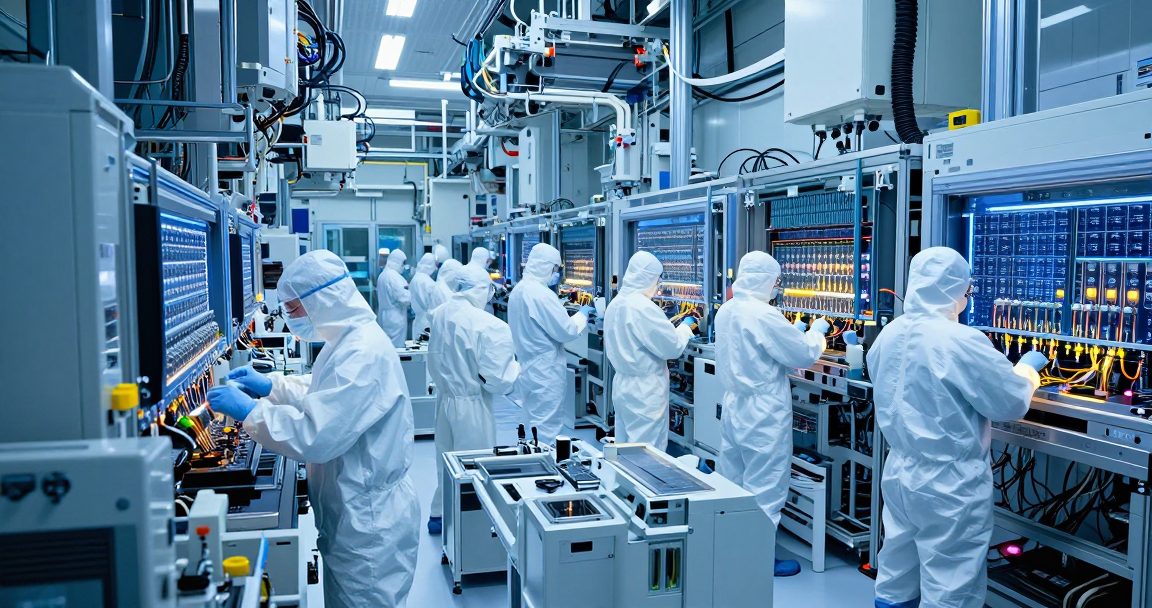
- Consultancy Kearney says Taiwan and South Korea hold over 63% of front-end chip output.
- The paper breaks site selection into business environment, incentives and operating cost.
- AI-driven HPC demand accelerates the push for localized, diversified capacity.
- Concentration in Taiwan and Korea is seen as a geopolitical supply-chain risk.
- For Taiwan, it highlights both its pivotal role and a long-term shift of capacity abroad.
A new Kearney paper quantifies something often said but rarely measured: over 63% of semiconductor front-end capacity, the hardest, most capital-intensive step, sits in Taiwan and South Korea. Front-end fabs cost tens of billions and rely on years of yield know-how, so capacity concentrates among a handful of players.
The paper breaks site selection into three factors: business environment, policy incentives, and operating cost. That framework explains why the US, Japan and Europe are spending heavily to attract fabs, not just for industry but to spread risk. As AI makes advanced chips a matter of national security, the danger of two baskets holding the world's eggs is magnified, turning localization into policy. For Taiwan this is a double mirror: proof of its irreplaceable role, and a warning that capacity migration, talent poaching and subsidy wars are the next decade's normal.
Kearney (A.T. Kearney, Tokyo; Japan head: Takefumi Harigaya) published a paper organizing the factors behind the location of semiconductor front-end manufacturing sites, i.e. fabs, from three perspectives: business environment, incentives, and operating cost.
The paper notes that front-end manufacturing capacity is highly concentrated, with Taiwan and South Korea together accounting for more than 63%. Amid AI proliferation and surging high-performance computing demand, advanced-node capacity is especially tight, and this geographic concentration is seen as a supply-chain risk.
Kearney argues that as countries pursue localized capacity for economic-security reasons, the diversification of chip manufacturing sites will deepen. Building a more resilient supply network while preserving cost competitiveness will be a shared challenge for governments and industry alike.