Japan's Nominal GDP Surpasses 3% for Two Consecutive Quarters, Outpacing Real Growth by Nearly Twice - Inflation Divides Gainers and LosersA · FULL TRANSLATION
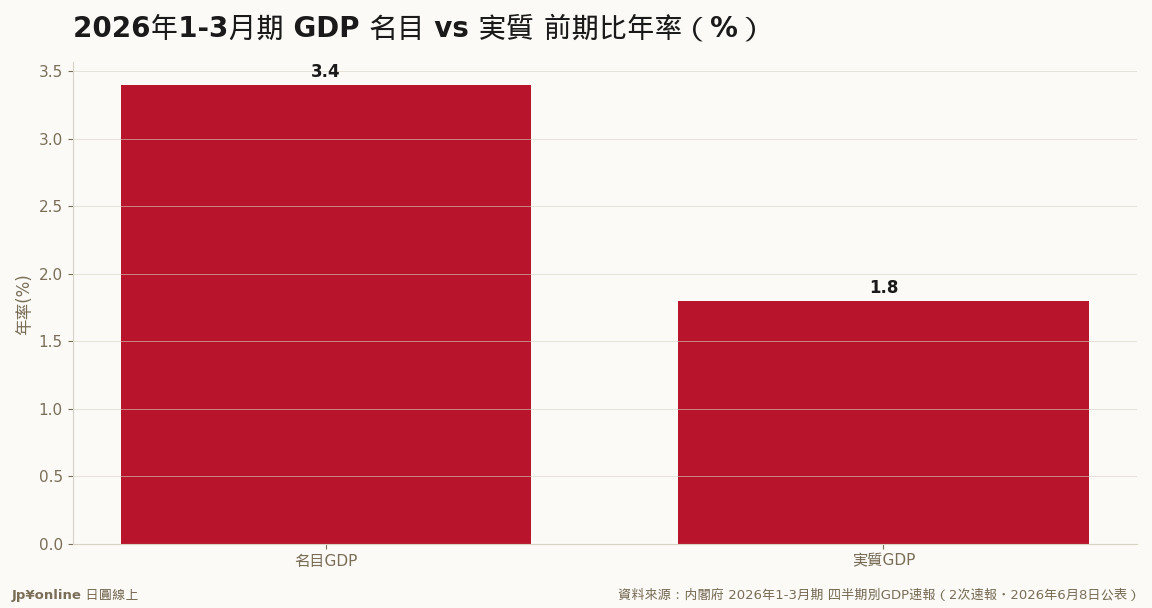
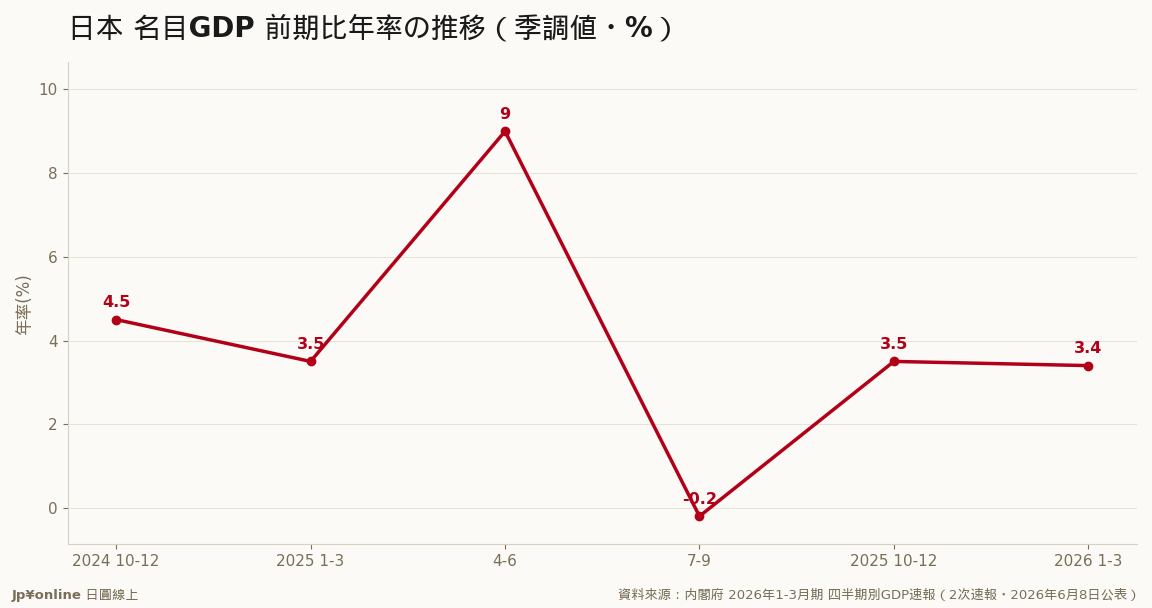
- Q1 2026 Nominal GDP at 677.2 trillion yen, period-on-period +0.8%, annualized +3.4% = two consecutive quarters over 3%; real growth +1.8%
- Nominal outpaces real by nearly twice, difference of about 1.6 percentage points due to inflation (GDP deflator)
- Inflation gainers: government, holders of physical assets and fixed-rate debtors, companies with pricing power; losers: low-real-wage earners, retirees on fixed annuities, cash savers
- Equipment investment revised from +0.3% in first estimate to -0.7% (quarterly reaction), supported by external demand and consumption; deflator up period-on-period 0.3%, lowest quarterly increase since four quarters ago = inflation decelerating but still high
- For Taiwan: Nominal consecutive quarters over 3% indicate sustained inflationary environment; cash and low-interest savings are stealth losers, physical assets and pricing power beneficiaries; watch real wage catch-up speed
The second estimate of Japan’s Q1 2026 GDP (announced on June 8) reveals a more significant number than the ‘real annualized +1.8%’: nominal GDP reached 677.2 trillion yen, a period-on-period increase of +0.8%, and an annualized growth rate of +3.4%. It has surpassed 3% for two consecutive quarters. The nominal growth outpaces real growth by nearly twice, the gap being inflation. Beneficiaries include: the government (taxes increase with nominal expansion), holders of physical assets and fixed-rate debtors (assets revalued, debts diluted by inflation), and companies with pricing power; losers are those with real wages lagging, retirees on fixed annuities, and those keeping money in cash savings accounts. Equipment investment was revised down from +0.3% in the first estimate to -0.7%, a reaction from the previous quarter’s surge, supported by external demand and consumption. The GDP deflator increased period-on-period by 0.3%, the lowest quarterly increase since four quarters ago – inflation decelerating but still high. For the BoJ, such an environment of real sluggishness, nominal heat, and sticky but decelerating inflation is particularly challenging to navigate (source: Cabinet Office, Government Standard Use License).
Conclusion: The second estimate of Japan’s Q1 2026 GDP (announced on June 8) contains a more significant number than the ‘real annualized +1.8%’ – nominal GDP reached 677.2 trillion yen, with a period-on-period increase of +0.8%, and an annualized growth rate of +3.4%, surpassing 3% for two consecutive quarters. Nominal growth outpaces real growth by nearly twice; the difference is inflation which divides people into gainers and losers.
Key Takeaway: 'Real GDP' measures actual production after accounting for price increases, while 'nominal GDP' calculates the face value using current market prices without adjusting for inflation. The gap between these two values represents overall price changes as measured by the GDP deflator. This quarter's nominal annual growth of +3.4% and real annual growth of +1.8% shows a 1.6 percentage point difference entirely due to 'paper inflation' from rising prices.
Who are the beneficiaries of nominal expansion? First, the government – taxes increase in line with nominal GDP, leading to higher consumption tax and income tax revenues, improving fiscal accounts. Second, holders of physical assets (real estate, stocks) and those carrying fixed-rate debt – assets revalued due to inflation, reducing the real burden on debts, effectively helping pay off part of their loans. Third, companies with pricing power that can pass costs onto consumers see revenue growth from nominal expansion. Who are the losers? Those whose real wages lag behind rising prices (salary earners), retirees relying on fixed annuities, and those keeping money in cash or low-interest savings accounts – their purchasing power eroded by inflation.
Another detail to note this quarter: equipment investment was revised down from +0.3% in the first estimate to -0.7%, a reaction after a surge in the previous quarter; external demand and consumption sustained this quarter. Meanwhile, the GDP deflator increased period-on-period by 0.3%, the lowest quarterly increase since four quarters ago – inflation slowing but still high, with nominal expansion above 3%. For the BoJ, such an environment of real sluggishness, nominal heat, sticky yet decelerating inflation is particularly challenging to navigate.
For Taiwanese readers: First, don’t just focus on real GDP growth; two consecutive quarters of +3%+ indicate a sustained inflationary environment – essential background for judging yen, assets, and wages. Second, in an inflationary environment, cash and low-interest savings accounts are stealth losers; physical assets and companies with pricing power benefit relatively – the fundamental position when allocating Japanese assets. Third, nominal expansion boosts government tax revenues and corporate income on paper but real wage increases are key to genuine domestic demand strength. Watch for: continued deflation of GDP or its reversal, real wage catch-up speed, and how the BoJ navigates between nominal heat and real weakness (source: Cabinet Office, Government Standard Use License).