BoJ Tankan: Economic Sentiment Soars, but Future Outlook Drops to New LowsA · FULL TRANSLATION

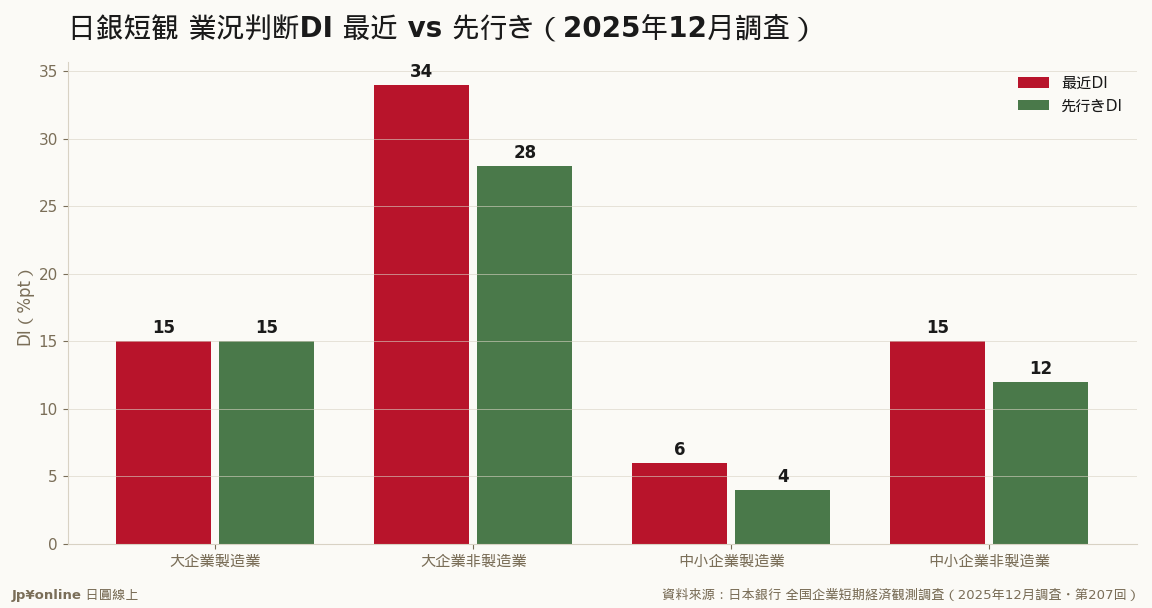
- Manufacturing DI +15 (three consecutive quarters improved)
- Non-manufacturing DI +34 (steady at high levels)
- Small & medium enterprises manufacturing +6 (highest since March 2019), non-manufacturing +15 (above +10 for eleven straight quarters) = broad improvement
- Future outlook deteriorates: Non-manufacturing falls to +28, firms more pessimistic about three months ahead
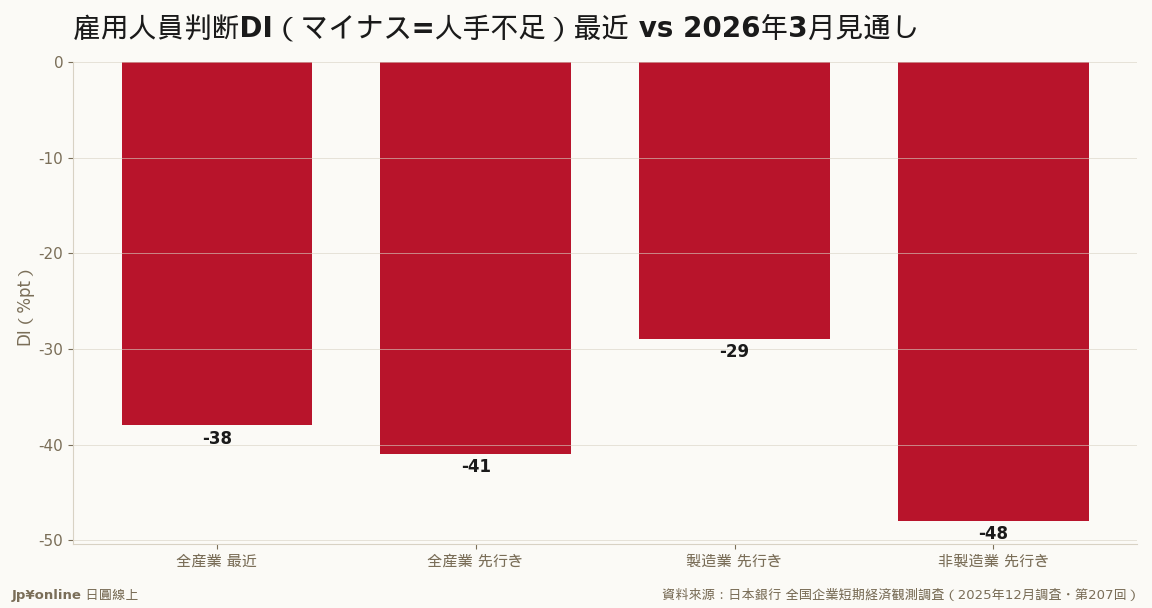
- Labor shortage index -38 overall; expected deterioration to -41 / -29 / -48 for March 2026 = record-high labor shortages
The BoJ Tankan for December 2025 (Round 207) presents a contradictory picture of strong current conditions and weak future outlook. Manufacturing and non-manufacturing sectors report improved business sentiment: manufacturing +15 (three consecutive quarters of improvement), non-manufacturing +34 (steady at high levels). Small and medium enterprises also show optimism, with manufacturing +6 (highest since March 2019) and non-manufacturing +15 (staying above +10 for eleven consecutive quarters). However, the future outlook has deteriorated across all sectors: non-manufacturing fell by 6 points to +28. The most alarming is the labor shortage index (-38 overall, -46 in services), with further deterioration expected to -41/ -29 / -48 for March 2026. Multiple institutions interpret this as a sign that the BoJ may raise interest rates again by year-end.
Conclusion: The BoJ Tankan for December 2025 (Round 207) shows a contradictory picture — current conditions are strong, with manufacturing and small businesses reporting six-year highs; yet future outlook is deteriorating. Markets read this as supporting the BoJ's end-of-year rate hike.
Key Points: The Tankan’s 'Business Sentiment Index' measures the difference between enterprises seeing good vs poor economic conditions, with higher values indicating better sentiment. It divides into current and three-month forward-looking views. Each quarter, the BoJ surveys around 10,000 firms, making it a key hard data point in rate-setting decisions.
Breaking Down Current Conditions: Manufacturing +15 (improving from last round), non-manufacturing steady at +34 (three consecutive quarters above +30). Notably, small and medium enterprises — manufacturing +6 (highest since March 2019) and non-manufacturing +15 (above +10 for eleven straight quarters). The improvement in sentiment is now felt by smaller firms as well.
But the three-month outlook worsens. Manufacturing +15 steady, non-manufacturing -6 to +28 (less optimistic). The most alarming indicator is the labor shortage index (-38 overall, -46 services), already tight; estimates for March 2026 are worse at -41 / -29 / -48. Labor shortages constrain economic headroom.
Reasons: Current stability stems from manufacturing export firms’ profits and non-manufacturing service demand running high in a weak yen environment; the gloomier outlook reflects uncertainties over overseas demand, tariffs, and potential China travel restrictions. Structural youth decline and aging exacerbate labor shortages during economic upturns. This combination of strong current conditions, weak future outlook, and record-high labor shortages is precisely what the BoJ seeks — steady growth, sticky inflation, wage pressures that support rate hikes.
Practical Takeaways for Taiwan: 1) Look beyond headline manufacturing DI to understand both current vs. forward views and small businesses’ sentiment. This round highlights broad improvement with deteriorating future outlook. 2) The survey reinforces the BoJ’s path toward interest rate hikes, impacting yen, mortgage rates, and Japanese stocks — treat as an interest rate wind indicator. 3) Record labor shortages benefit automation, efficiency, staffing agencies, and DX-related firms. Watch forward-looking indicators for further deterioration, and BoJ rate decisions.
Sources: Bank of Japan