Japan’s Inbound Tourism Reaches New High of 42.6836 Million in 2025, but December Growth Slows to 3.7% - Entering the Plateau PhaseA · FULL TRANSLATION

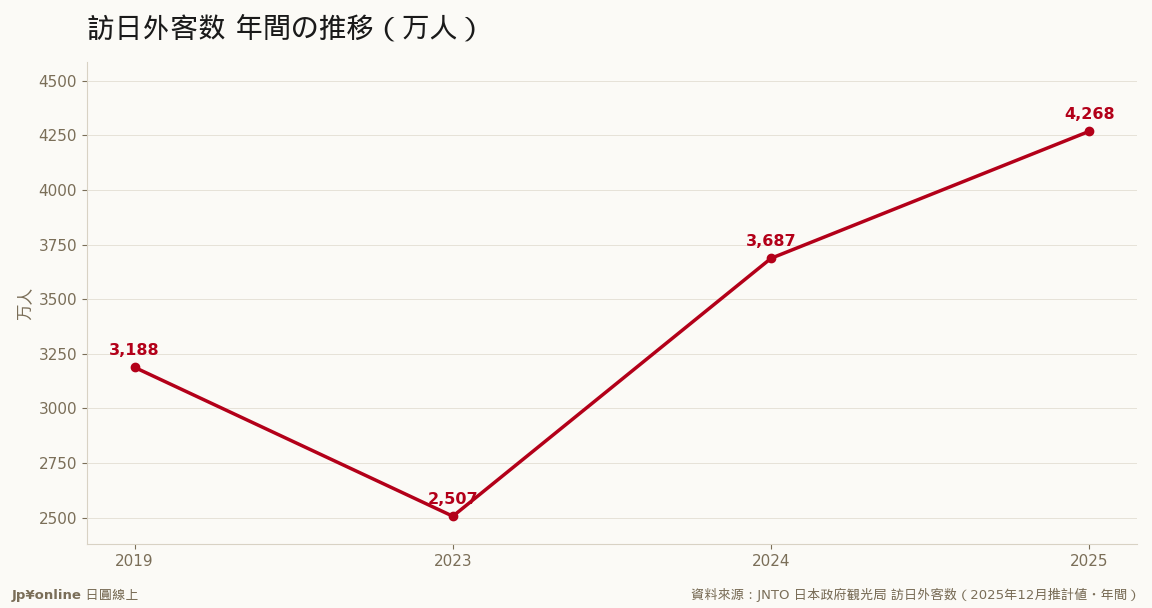
- Inbound tourist numbers reached 42.6836 million in 2025, up 15.8% from 36.87 million in 2024
- December saw only 3.6177 million visitors with a growth of just 3.7%
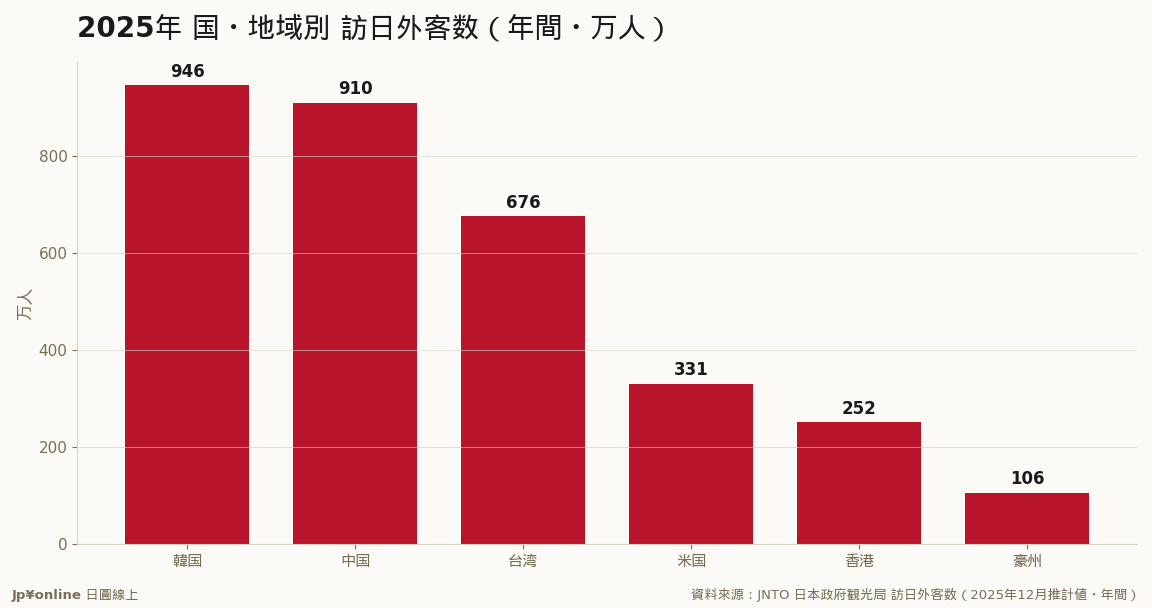
- Top five countries by visitor numbers: South Korea (9.4596 million), China (9.0963 million), Taiwan (676,340 - third largest), US (330,680), Hong Kong (251,730)
- Australia broke the 1 million visitor mark for the first time, becoming Japan's seventh 'million visitor' market; China's share dropped to around 21% as its dominance is being diluted
- Local promotional efforts grew by about 14%, indicating a diversification of sources and spread of tourists outside major cities
JNTO reported on January 21: Japan saw a record-breaking 42.6836 million inbound tourists in 2025, up 15.8% year-over-year from 36.87 million in 2024. However, December alone had only 3.6177 million visitors, with a meager growth of 3.7%. While this was the highest number for any December on record, it marks a slowdown to single-digit growth after a period of explosive expansion.
Conclusion: Japan’s inbound tourism hit a new high of 42.6836 million in 2025, up 15.8% from the previous year when there were 36.87 million visitors. However, December saw just 3.6177 million visits, with a growth rate of only 3.7%, marking the lowest growth since records began and suggesting that inbound tourism is entering a period of slower but sustained growth.
Breaking down the numbers by source: The top five countries in terms of visitors were South Korea (9.4596 million), China (9.0963 million), Taiwan (676,340 - third largest), the US (330,680), and Hong Kong (251,730). Taiwan remained a steady third place with over 676,000 visitors. Another milestone was reached by Australia, which broke the million-person mark for the first time, recording 1.0583 million visits in the year, making it Japan’s seventh ‘million visitor’ market. The share of long-haul European, American, and Australian travelers is increasing.
China’s share dropped to around 21%, indicating a shift from the dominance of Chinese visitors. At the same time, local promotional efforts increased by about 14% for the year, reflecting a movement towards diversification in visitor sources as well as a spread of tourists outside Tokyo and Osaka.