Tokyo New Completed Apartments Supply to Remain at Historical Low in 2026—Supply Glaciation Reveals the Truth Behind High Housing PricesA · FULL TRANSLATION
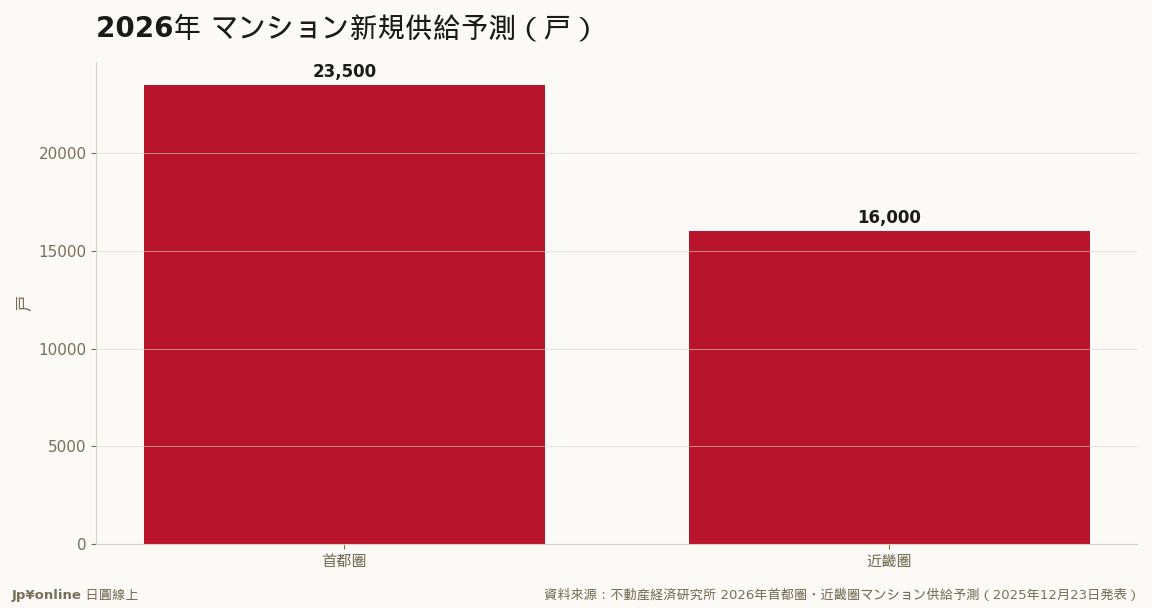
- Greater Tokyo Area 2026 new completed apartment supply forecast at 23,500 units with only a 2.2% year-over-year increase—staying near the lowest level in the past five decades = Supply Glaciation
- Greater Tokyo Area marginally increased due to large-scale projects in city and Chiba; core districts in central Tokyo remain tight on supply
- Kansai region forecast at 16,000 units with a 3.2% year-over-year increase, supported by Osaka Tower and other downtown and suburban tower buildings
- Causes: Rising construction costs, difficulty in obtaining land, developers' tendency to avoid pushing high-priced units; aligns with the 'condominium-for-sale housing starts shrinking month after month' supply-side story
- Taiwanese advice: New completed apartments are scarce driving up prices, do not expect large-scale new projects to reduce prices; buyers will spill over into pre-owned homes and outskirts markets
The Real Estate Economic Institute released its '2026 Supply Forecast' on December 23, 2025, providing a critical note for Tokyo’s real estate market: new completed apartment supply in the Greater Tokyo Area is expected to reach 23,500 units in 2026, with only a 2.2% year-over-year increase—still hovering around the lowest level in the past five decades. The long-term freezing of supplies during a 'glacial period' is the supply-side truth driving up housing prices in Tokyo.
Conclusion: The Real Estate Economic Institute's '2026 Supply Forecast', released on December 23, 2025, provides a crucial insight for Tokyo’s real estate market—new completed apartment supply for the Greater Tokyo Area is expected to reach 23,500 units in 2026 with only a 2.2% year-over-year increase. This level still hovers around the lowest point in the past five decades. The freezing of supplies during a 'glacial period' explains why housing prices remain high in Tokyo.
Explanation: New completed apartments (sales units) are the actual number of new completed apartments launched by developers each year, representing the most direct indicator of supply in the new home market. When annual supply shrinks to historical lows and can only marginally increase, it means that there is a persistent scarcity of new completed apartment units available for purchase; this scarcity supports prices and pushes buyers towards pre-owned homes and outskirts.
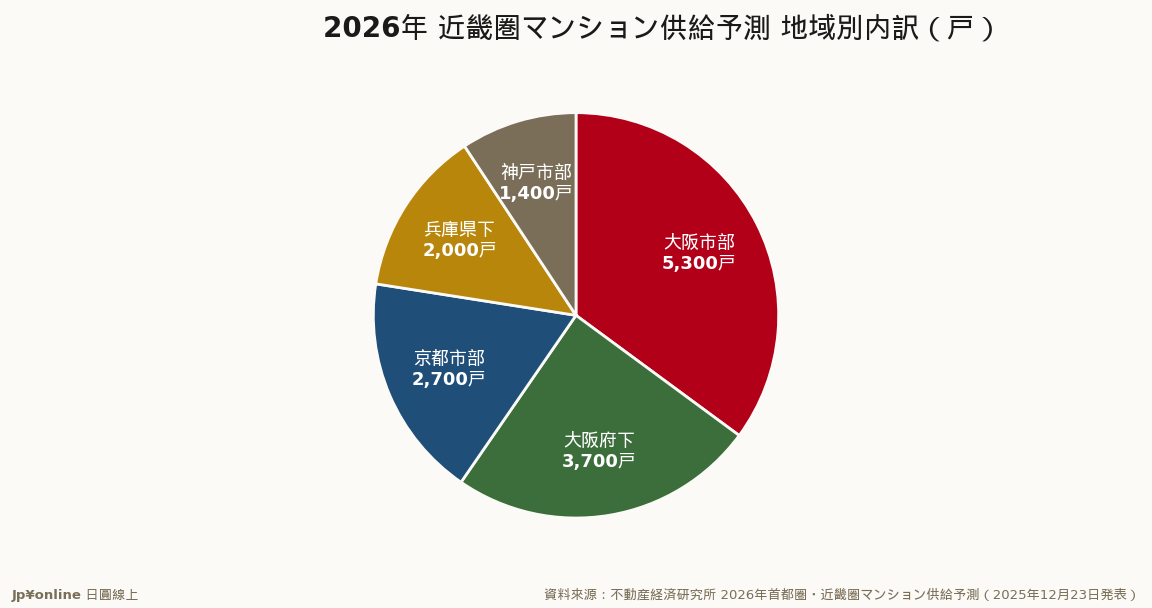
Numbers Breakdown: The Greater Tokyo Area forecasts 23,500 new completed apartments in 2026 with a marginal 2.2% year-over-year increase, mainly driven by large-scale projects in the city and Chiba Prefecture; however, core districts in central Tokyo remain tight on supply. In the Kansai region, the forecast is 16,000 new completed apartments with a 3.2% year-over-year increase, supported by large-scale buildings like the Osaka Tower; the breakdown includes Osaka City (5,300), Osaka Prefecture (3,700), Kyoto City (2,700), Hyogo Prefecture (2,000), and Kobe City (1,400). Both regions share a common characteristic: low supply driven by a few large-scale projects rather than a full market recovery.
Causes: Rising construction costs, difficulty in obtaining land, and developers' tendency to avoid pushing high-priced units are the reasons for maintaining low supply levels. The demand side is supported by both genuine needs and investment; thus, prices naturally rise without significant decline—this aligns with the supply-side story of 'condominium-for-sale housing starts shrinking month after month'.
Practical Advice for Taiwanese Readers: First, due to long-term scarcity and minimal increase in new completed apartments, the structural support driving high housing prices is real; expecting a large number of new units to lower prices is unrealistic. Second, since new homes are scarce and expensive, buyers will spill over into pre-owned homes and outskirts markets, making these areas more active; when searching for properties, do not focus solely on new completed apartments. Third, Kansai's supply is supported by projects like the Osaka Tower; those planning to invest in new units in western Japan can follow the sales rhythm of central tower-type buildings. Monitor: Whether actual sales units match forecasts and whether core areas in central Tokyo will remain tight, as well as how construction costs and interest rates affect developers' willingness to launch new projects.