Japan's Housing Starts Rebound: +33.9% Nationwide in May 2026, but Tokyo Rental Housing Rose Just 5.9%A · FULL TRANSLATION
- May 2026 nationwide new housing starts: 57,877 units, +33.9% year on year; rental housing 25,175 units, +33.3%
- The strong national rebound partly reflects a low base: starts had dipped last year around a Building Standards Act revision
- Tokyo: 9,195 units (+16.0%), well below the national pace; rental housing there rose only +5.9% to 5,192 units
- Rental (kashiya) starts lead rental supply. Tokyo's mild rental supply growth means limited new competition — relatively friendly to existing landlords
The Ministry of Land, Infrastructure, Transport and Tourism's latest housing-starts data (May 2026) shows 57,877 nationwide new housing starts, up a striking 33.9% year on year — seemingly a broad recovery. But read it carefully: starts dipped around the 2025 Building Standards Act revision, creating a low comparison base, so much of this year's jump is base-effect payback rather than a demand surge. Zoom into Tokyo and the picture cools. Tokyo's May starts were 9,195 units, up 16.0%, clearly below the national 33.9%. Owner-occupied homes rose to 957 (+14.5%), while the rental (kashiya) segment most watched by landlords rose just 5.9% to 5,192 units. Rental starts are a leading indicator of rental supply — how many new units will hit the market over the next one to two years. Tokyo's mild rental growth means limited new competitive pressure, relatively friendly to landlords who already own units; conversely, would-be new landlords will not suddenly find a flood of new stock. One caveat: housing starts are volatile month to month and year-on-year figures swing with the prior-year base. Following the trend line and the national-versus-Tokyo gap is more meaningful than any single month's percentage.
First, Tokyo's rental-starts trend. Over the past year-plus, Tokyo kashiya starts have swung roughly between 4,600 and 6,500 units a month, spiking to 8,386 in March 2025 amid a pre-revision rush before falling back. The latest May 2026 figure of 5,192 sits mid-range — no supply blowout.
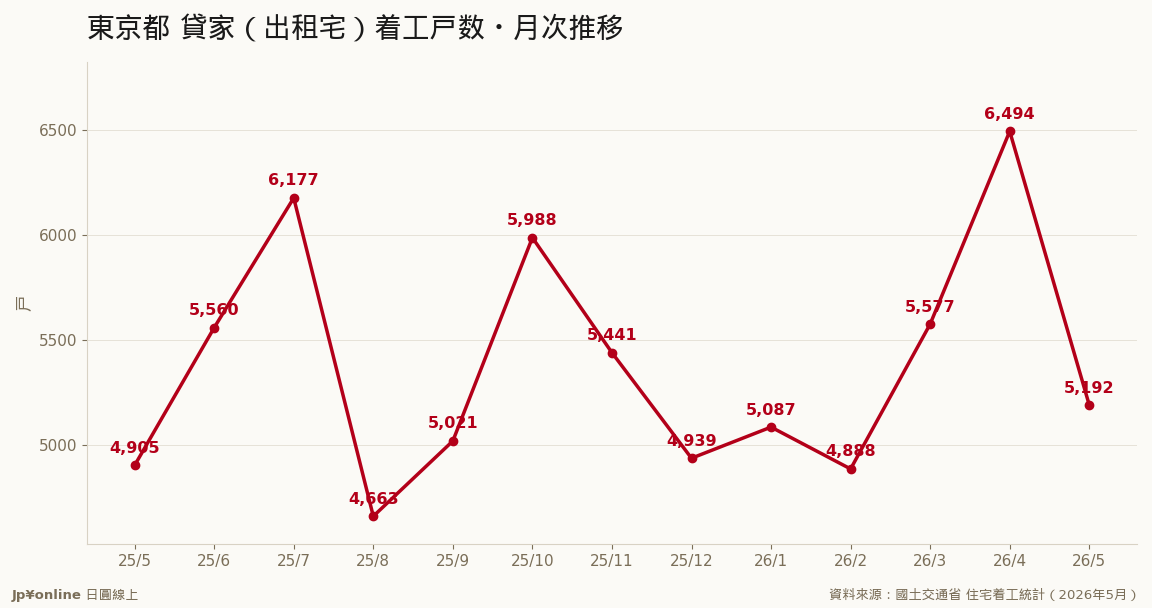
Next, the national-versus-Tokyo year-on-year gap. Nationwide total +33.9%, owner-occupied +31.8%, rental +33.3% — a broad double-digit rebound; Tokyo is far milder at +16.0% total, +14.5% owner-occupied, and just +5.9% rental. The national jump carries a low-base component, while Tokyo's rental supply stays restrained.
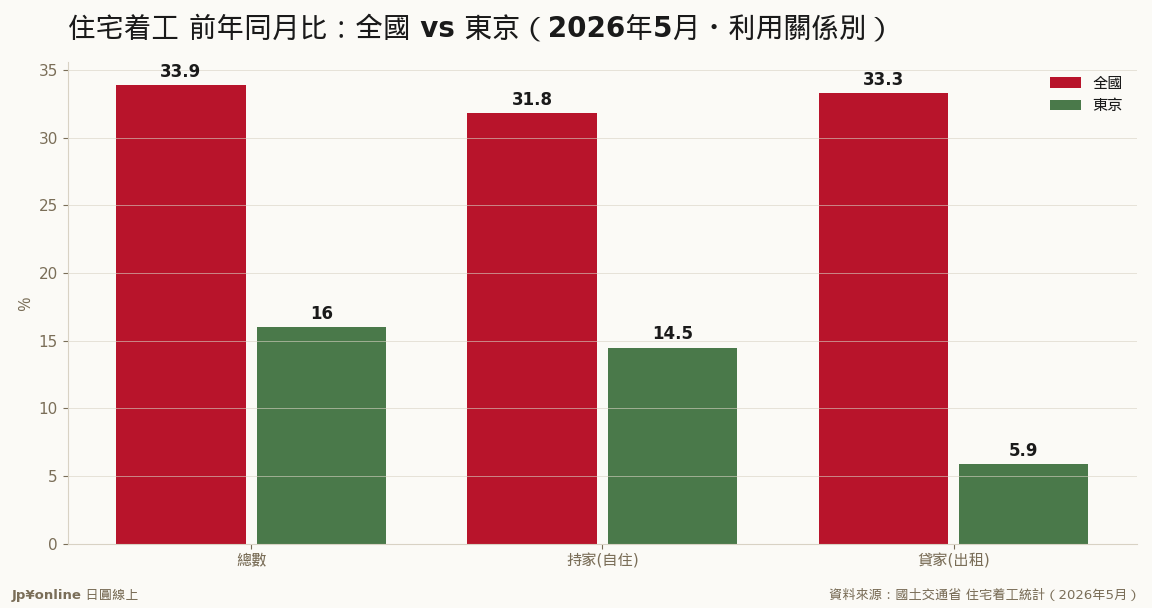
For rental strategy: Tokyo's modest new rental supply means near-term competition will not spike; but do not misread the national +33% headline as a Tokyo overheating — the gap is exactly why the two should be read separately.
[MLIT Housing Starts, May 2026 — Key Figures]
Nationwide new housing starts: 57,877 units (+33.9% YoY). By use: owner-occupied 15,708 (+31.8%), rental 25,175 (+33.3%), company housing 394 (-21.2%).
Tokyo: total 9,195 units (+16.0%). Owner-occupied 957 (+14.5%), rental 5,192 (+5.9%), company housing 8.
By region (total), for reference: Kanto 26,220; Kinki 9,065; Chubu 6,810; Hokkaido 1,930.
Note: this is MLIT's monthly new housing starts release; year-on-year figures are affected by the prior-year base and single-month values are volatile.
(Summary translation of MLIT data, used under the Standard Terms of Use for Public Data v2.0; original figures prevail.)