Who Is Holding Up Tokyo's Population? Decoding May 2026 Flows: Inflows From Other Prefectures Offset Natural DeclineA · FULL TRANSLATION
- Tokyo's population fell by 1,542 in May 2026 — not because people left, but because of natural decline (low births, aging)
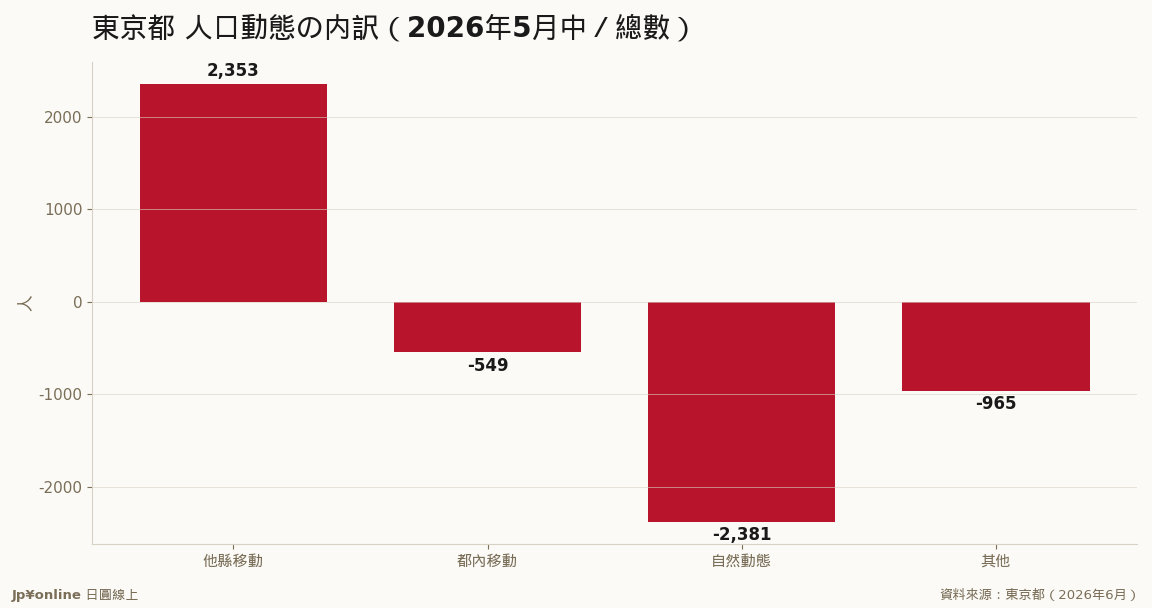
- Net inflow from other prefectures stayed positive at +2,353 (in 30,475, out 28,122); natural change was -2,381 (births 7,892, deaths 10,273)
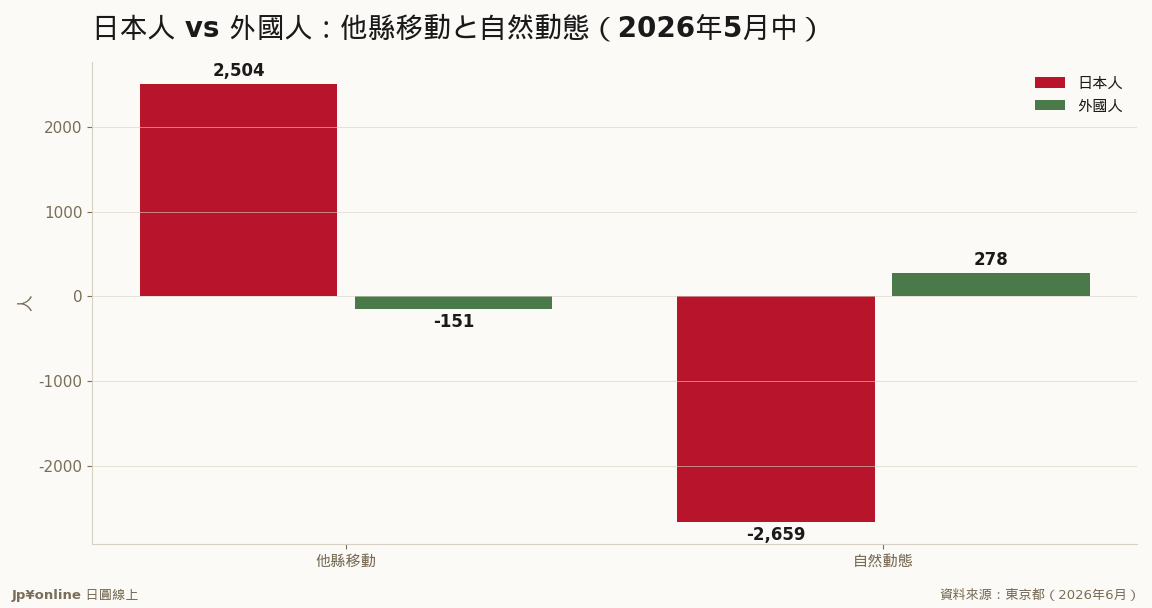
- Japanese and foreign residents moved in opposite ways: Japanese saw net inflow +2,504 but natural decline -2,659; foreign residents had positive natural change +278 yet fell overall due to -1,090 in 'other' administrative changes
- For rentals and property: Tokyo's population base increasingly relies on continued inflows; if they slow, natural decline will pull the total down faster
Tokyo's population 'fell by 1,542' in May 2026, which looks like people leaving — but break down the flows and the truth emerges: Tokyo is still attracting people; the real leak is natural decline. Migration from other prefectures stayed net positive: 30,475 in, 28,122 out, a net +2,353. The city's pull has not faded. The problem is natural change — 7,892 births against 10,273 deaths, a natural loss of 2,381 in a single month. Add intra-Tokyo moves and administrative 'other' factors and the total tips slightly negative. More striking is the Japanese-versus-foreign contrast. Japanese residents leaned on net inflow (+2,504) but natural decline was steeper (-2,659), leaving them negative; foreign residents had positive natural change (+278, a younger age structure) yet fell by 919 overall because of -1,090 in 'other' administrative changes. For property and rental readers, the signal is clear: Tokyo's population base increasingly depends on inflows from other prefectures and abroad to offset local natural decline. Weaken one link in that chain and the total drops faster than the headline suggests.
Start with the four components of total change. What brings people in is inter-prefecture migration, a net +2,353; the biggest bleed is natural change at -2,381; intra-Tokyo moves are -549 and 'other' is -965. Summed, they give the -1,542 monthly result.
Split Japanese and foreign residents and they are near mirror images. Japanese lean on net inflow (+2,504) but cannot offset natural decline (-2,659); foreign residents' natural change is positive (+278), highlighting a younger age structure.
In one line: it is not that no one comes to Tokyo — locals have fewer births and more deaths. What holds the city's population together is inflow from other prefectures and abroad, the key to where future rental demand concentrates.
[Tokyo Population Movement (during May 2026) — Key Figures]
Total: overall change -1,542. Breakdown — inter-prefecture migration: +2,353 (in 30,475, out 28,122); intra-Tokyo migration: -549 (in 34,351, out 34,900); natural change: -2,381 (births 7,892, deaths 10,273); other: -965.
Japanese residents: overall -623. Inter-prefecture +2,504, intra-Tokyo -593, natural -2,659 (births 7,531, deaths 10,190), other +125.
Foreign residents: overall -919. Inter-prefecture -151, intra-Tokyo +44, natural +278 (births 361, deaths 83), other -1,090.
Note: 'other change' includes administrative registration/removal, naturalization, and loss of nationality. Totals are the sum of Japanese and foreign residents.
(This is a summary translation of population-movement figures published by the Tokyo Metropolitan Government; original figures prevail.)