From Near-Abolition to a Million Riders: The V-Shaped Revival of the Hitachinaka Seaside Railway
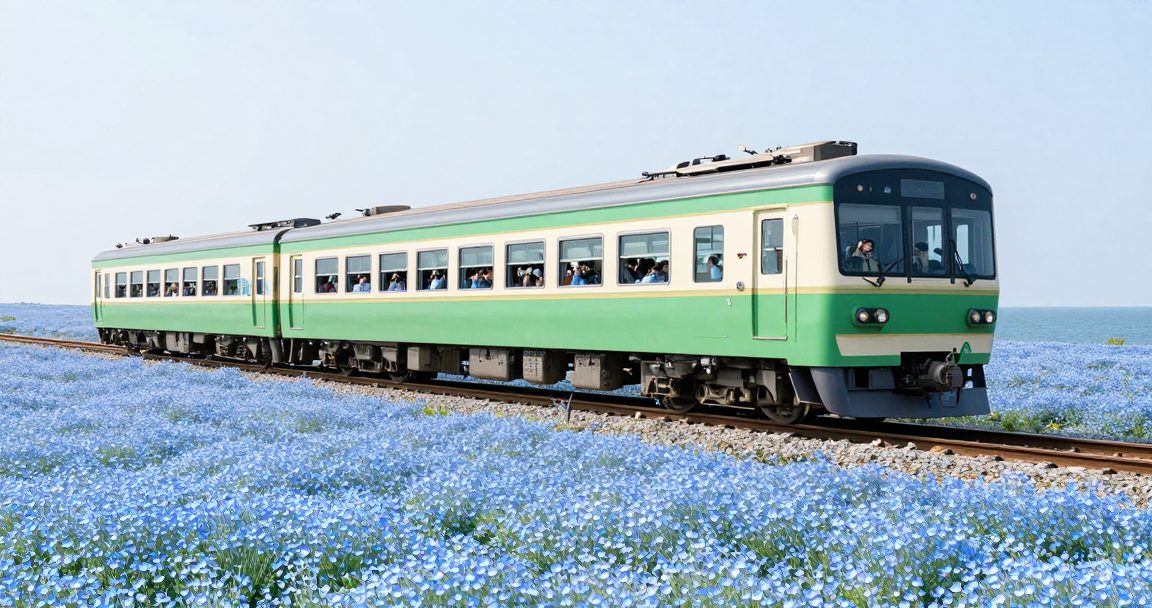
- Ibaraki's 14km Minato Line was once on the brink of closure; annual ridership has now topped one million
- Resident volunteers, a new school-linked station and corporate arrivals along the line created a rare virtuous cycle
- Tourist flows to Hitachi Seaside Park and a planned extension are diversifying the passenger base
- Most rural railways in Japan run deficits, making the Minato Line a national model case
Travelers who visit Hitachi Seaside Park for its blue nemophila fields brush past one of Japan's best comeback stories: the 14-kilometer Hitachinaka Seaside Railway, once slated for the graveyard of rural lines, now carrying over one million riders a year. The formula deserves study because the control group is grim — most regional railways lose money as depopulation and car culture erode commuter traffic, and abolition debates usually end with buses. The Minato Line's revival mixed four ingredients: a publicly recruited president who ran every station like a product, residents who turned saving the railway into a community movement, a new station serving a consolidated school that pumped students into the fare box, and the gravitational pull of Hitachi Seaside Park's millions of annual visitors, which turned an extension plan from fantasy into feasibility study. The scenarios split on that extension: build it and seasonal tourist crowds become structural revenue; delay it and the school-and-commuter base still holds; a fiscal downturn caps growth at the current million. For investors and policymakers alike, the transferable lesson is the trio of professional management, community buy-in and an anchor attraction. A tiny railway overturned its death sentence — but only because all three forces pulled at once.