Official Property Price Index Suspended: Last Data Point Stands at 225.1 for Apartments, 2.25 Times Higher Than in 2010A · FULL TRANSLATION

- Unusual Delay: The January 2026 data point was scheduled to be released on April 30 but was postponed due to 'calculation and verification needs,' with no new date set.
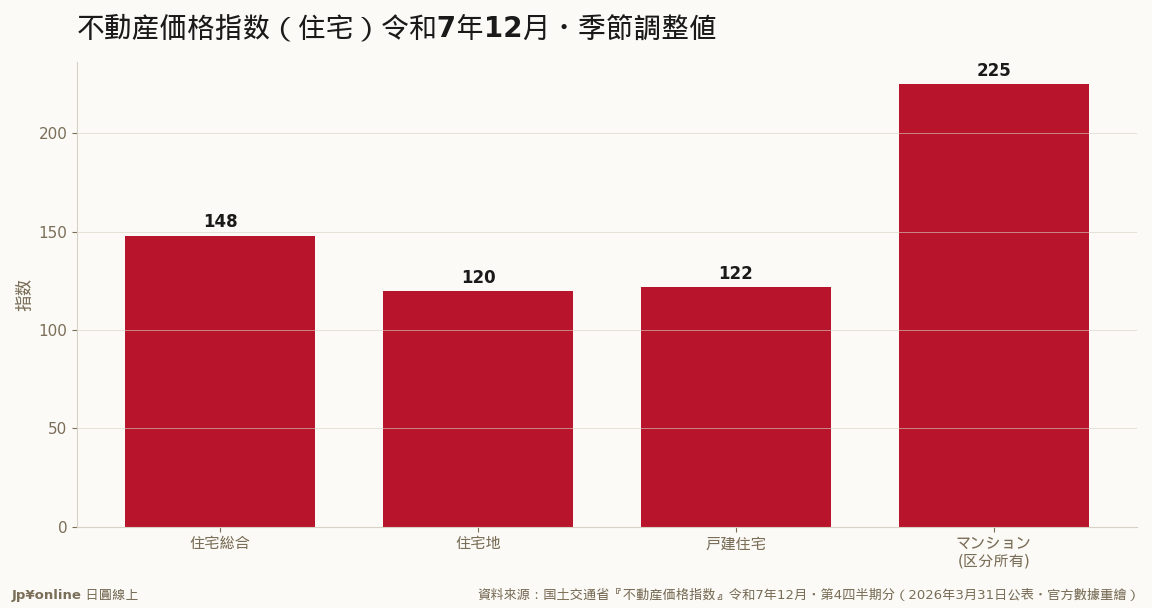
- December (Seasonally Adjusted) Data: National apartment index at 225.1, up 8% year-on-year; residential composite index at 148.0, up 5.2% from the same period last year
- Three Categories of Property Prices: Apartments saw a significant increase, while detached houses and land only increased by about two-thirds over 15 years.
- Commercial Real Estate Q4 Data: Overall commercial real estate index at 146.6, down 0.2% quarter-on-quarter; retail property prices fell sharply by 3.6%, while office and whole-lease property values rose
- Implications for Investors: The suspension of the official data during a critical market turning point could lead to more reliance on private indicators.
Japan's authoritative official property price index has been unexpectedly suspended, with the latest data point from December 2025 still in place. The Ministry of Land, Infrastructure, Transport and Tourism postponed the January 2026 release due to 'calculation and verification needs,' leaving a three-month gap without new data. This pause comes at a critical time for market participants who rely on this index.
Conclusion: Japan's authoritative official property price index has been suspended at the December 2025 data point, where the national apartment index stands at 225.1 (2010=100), a 2.25 times increase over 15 years; while the January 2026 release was postponed due to 'calculation and verification needs,' leaving a three-month gap without new data.
The index is compiled from approximately 300,000 actual transactions each year: adjusting for quality (house age, size, location) using hedonic methods, then standardized to a base of 2010=100. It differs from other indices in its comprehensiveness and official nature.
Breaking down the numbers, the December (seasonally adjusted) data shows that the national composite index is at 148.0, up 0.5% month-on-month; compared to the same period last year, it has risen by about 5.2%. The three categories of property prices have different trajectories: apartments saw a significant increase over 15 years, while detached houses and land only increased by about two-thirds.
The Q4 commercial real estate data shows mixed signals: the overall index is at 146.6, down 0.2% quarter-on-quarter; retail property prices fell sharply by 3.6%, while office and whole-lease property values rose. This suggests a potential shift in market dynamics, especially for those holding retail properties.
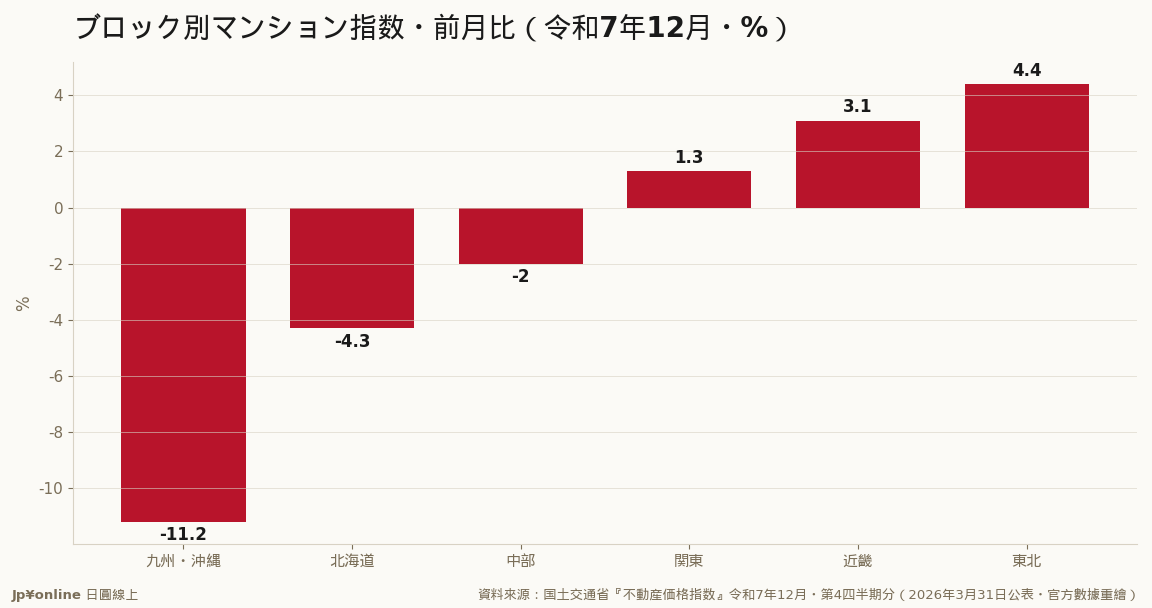
Regional breakdowns show significant variations: the apartment index in various regions shows different trends (e.g., Hokkaido down -4.3%, Kyushu-Okinawa down -11.2%). The suspension of the official data during a critical turning point leaves market participants relying on private indicators, which could lead to more volatility and misinterpretation.
Historical context: This index began in August 2012 and was fully operational from March 2015. The apartment line has increased significantly over the past few years, while detached houses and land have remained relatively stable.
For investors, this suspension during a critical market turning point could lead to more reliance on private indicators. The next steps will be crucial: when the Ministry of Land, Infrastructure, Transport and Tourism announces the new release date; whether the January to March data is released together with an explanation that aligns with REINS data; and the trend in retail property prices.