Japan's Economy-Watcher Outlook DI Jumps 5.0, Biggest Since 2022, on Middle East ReliefA · FULL TRANSLATION
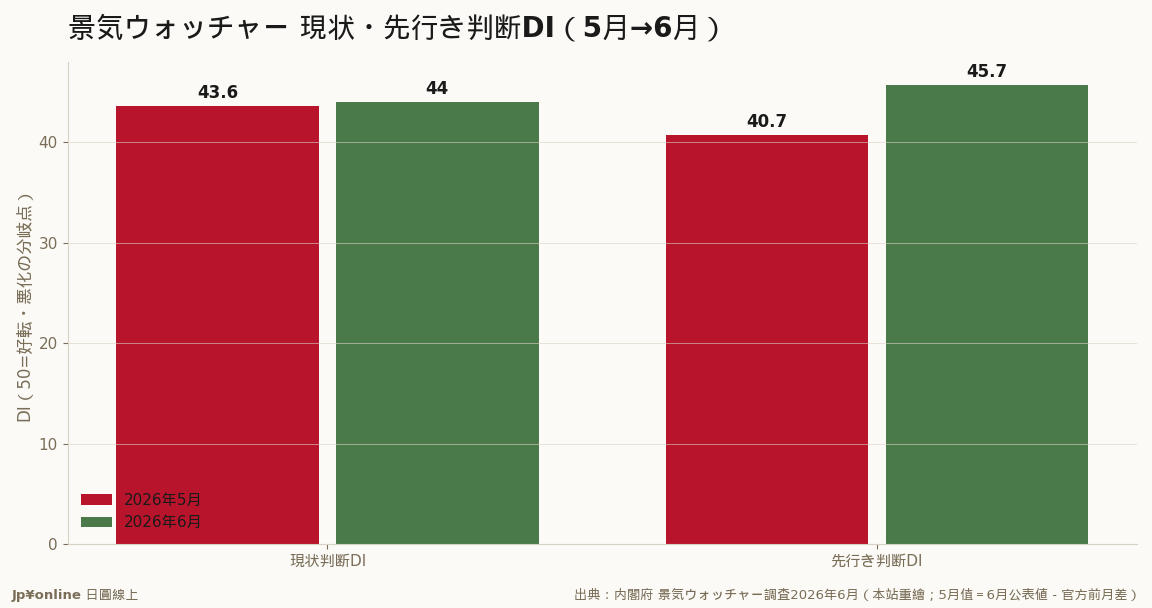
- June current-conditions DI 44.0 (+0.4, up two months); outlook DI 45.7 (+5.0)
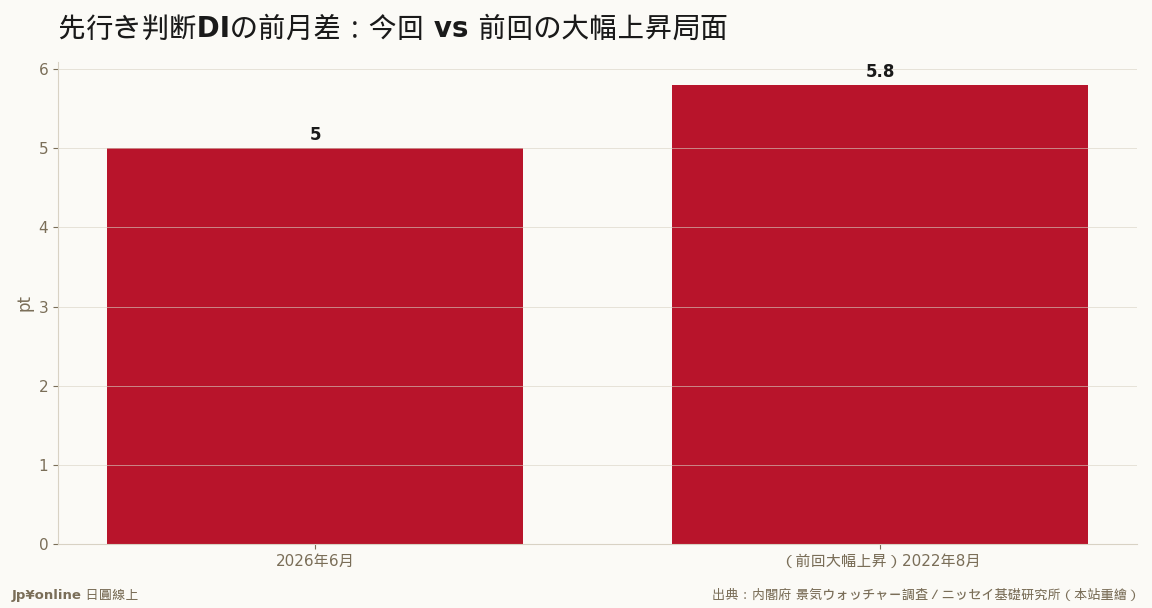
- The +5.0pt outlook gain is the largest since August 2022 (+5.8pt)
- Trigger: a mid-June US-Iran truce memo eased Middle East and oil-price risk
- Split internals: business and employment DIs rose, but household DI slipped
- Cabinet Office upgraded its assessment, yet both DIs remain below 50
The June Cabinet Office Street Sentiment Survey shows a modest increase in current judgment to 44.0, while future outlook jumped by 5.0 points to 45.7—the largest single-month improvement since August 2022. While workers feel more optimistic about the future, it is not due to improved business conditions but rather the easing of Middle Eastern oil price uncertainty following a U.S.-Iran ceasefire agreement in mid-June. However, the Cabinet Office cautions that while tensions have eased, they still persist and any breakdown in negotiations could quickly shift sentiment downward.
[Conclusion] The June Cabinet Office Street Sentiment Survey offers a valuable signal for Taiwanese investors: despite only a slight increase of 0.4 points to 44.0 in current judgment, there was a significant jump of 5.0 points to 45.7 in future outlook—the largest single-month improvement since August 2022 (+5.8 points). This divergence between present and future expectations highlights the current situation: optimism among front-line workers is driven by reduced geopolitical uncertainties rather than improved business conditions.
First, let's break down this survey. The Street Sentiment survey, colloquially known as 'Street Sentiment', involves monthly interviews with approximately 2,000 individuals who are closest to the economy—such as taxi drivers, restaurant staff, retail and department store employees, and manufacturing workers. They rate their perceptions of economic conditions on a scale where positive minus negative equals the DI (Diffusion Index), with 50 being the dividing line between improvement and deterioration. The survey has two key indicators: current judgment is based on present feelings, while future outlook reflects expectations for the next one to three months—this gap often speaks volumes.
The divergence within the current judgment DI is significant. While corporate and employment-related DIs increased, household trend DI declined slightly. This split is crucial because it indicates that while business sentiment has improved, consumer wallets have not followed suit. The recent rise in domestic corporate prices (6.3% year-on-year increase since March 2023) suggests that ongoing price hikes are eroding purchasing power.
The optimism is fragile. The Cabinet Office notes that Middle Eastern tensions remain and future outlook still carries uncertainty; a breakdown in U.S.-Iran negotiations could quickly shift sentiment downward. In other words, the +5.0 point jump in future outlook is based on a temporary agreement rather than actual business performance.
For Taiwanese investors looking to do business or invest in Japan, this survey offers three key takeaways. First, it serves as an early indicator but not confirmation; while future outlook DI has improved, consumer and production data must follow for retail, dining, and tourism stocks to truly benefit. Second, the optimism is contingent on Middle Eastern developments—rather than focusing on survey numbers, tracking oil prices and Hormuz Strait news provides earlier signals of economic trends. Third, the divergence between corporate/employment sentiment and household sentiment suggests that while Japan's recovery benefits supply chains and labor markets, consumer spending remains tepid.