Tokyo's 23 Wards See Condo Sales Plunge 13.2% While Chiba Jumps 14.9%: Mapping the Q2 2026 Buyer Spillover
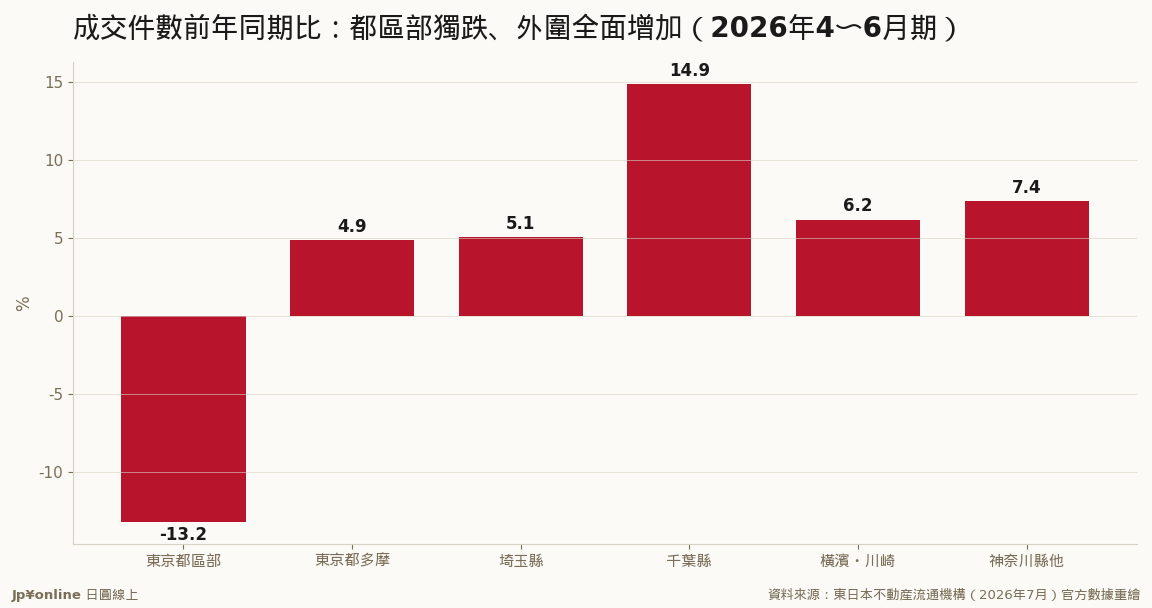
- Greater Tokyo's overall -2.0% sales decline hides a stark split: Tokyo's 23 wards fell 13.2% YoY (4,803 units) while every surrounding area grew—Chiba +14.9%, other Kanagawa +7.4%, Yokohama-Kawasaki +6.2%, Saitama +5.1%, Tama +4.9%
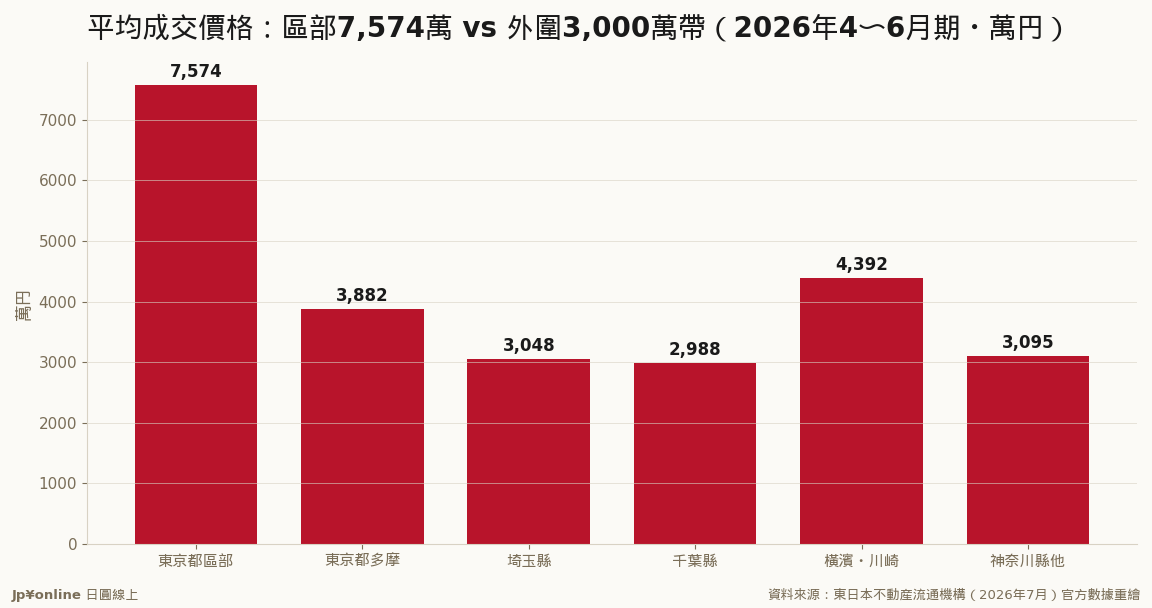
- Ward-area unit prices still rose 5.1% YoY to 1.3622M yen/sqm, a 54th straight quarterly increase, with average contract price at 75.74M yen
- Peripheral areas are catching up on price: Chiba unit prices +9.1%, Tama +8.6%, Yokohama-Kawasaki +7.9%
- The price gradient drives the shift: 75.74M yen in the wards versus 29.88M in Chiba and 30.48M in Saitama
The headline -2.0% for Greater Tokyo conceals two different markets. Tokyo's 23 wards recorded 4,803 contracted sales, down 13.2% year on year—the only major zone in decline. Everywhere else grew: Chiba +14.9%, the rest of Kanagawa +7.4%, Yokohama-Kawasaki +6.2%, Saitama +5.1%, Tama +4.9%. Demand did not vanish; it relocated. The motive is written in the price table. An average ward-area deal costs 75.74 million yen at 1.36 million yen per square meter, while Chiba trades at 29.88 million and Saitama at 30.48 million—under 40% of the ward price for roughly 15 more square meters of space. The periphery is no longer cheap-and-flat either: Chiba unit prices rose 9.1%, Tama 8.6%, Yokohama-Kawasaki 7.9%, all outpacing their historical norms. Two takeaways for investors: the wards have entered a standoff—volume down 13% but prices still up 5.1%, meaning sellers have not blinked yet; and the spillover rally in the suburbs has momentum but depends entirely on the wards staying expensive. Yokohama-Kawasaki, with both scale (2,126 transactions) and price growth, offers the most balanced exposure within the spillover ring.