Japan Launches New Waterfront City Development in 11 LocationsA · FULL TRANSLATION
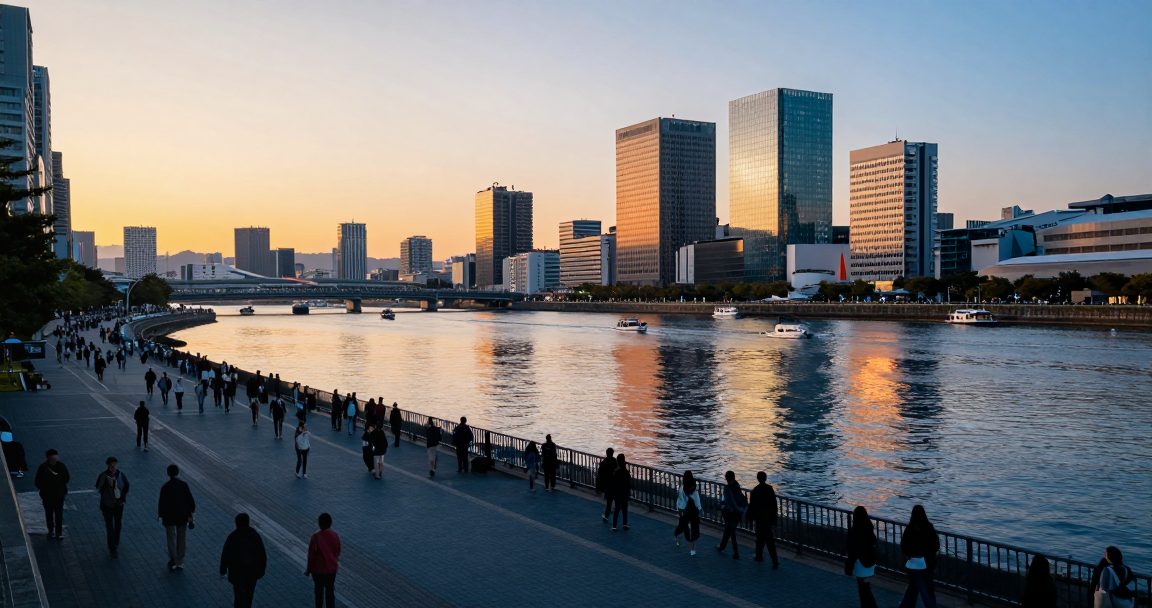
- Eleven new areas in Japan have been registered for 'waterfront city development' initiatives.
- The project was officially announced by Japan's Ministry of Land, Infrastructure, Transport and Tourism.
- The goal is to revitalize rivers and waterfront areas to boost local economy and tourism.
- The plans include residential, commercial, and public infrastructure development.
- The strategy integrates ecological conservation with urban renewal.
In recent years, Taiwan has also actively promoted waterfront city development and local revitalization, such as the Taichung Shuinan and Kaohsiung Love River projects. Japan's recent launch of a waterfront city initiative in 11 locations is not only an example for urban planning and tourism but also highlights the importance of water resource activation in urban development.
Japan's Ministry of Land, Infrastructure, Transport and Tourism has announced that 11 new areas will be integrated into the 'waterfront city development' initiative, combining residential, commercial, and public infrastructure to promote local economic and tourism growth. These projects directly impact local economies and tourism, such as creating job opportunities, attracting investment, and enhancing regional visibility. For Taiwanese tourism operators and local developers, this signals that waterfront-themed tourism and business models may become emerging trends.
Japan has previously implemented similar 'waterfront city' pilot projects, with some areas like Kyoto and Osaka successfully transforming into tourist hotspots. Past experiences show that combining local culture with ecological conservation can not only improve the environment but also generate economic benefits.
If Taiwan is to pursue similar projects, it should closely monitor the progress of these 11 Japanese regions, particularly in terms of funding sources, local participation, and ecological assessments. Additionally, the Japanese Ministry plans to implement the project in phases and continuously evaluate its effectiveness. Taiwanese authorities can observe the timeline and outcomes to use as a reference for local policy development.
Japan's Ministry of Land, Infrastructure, Transport and Tourism recently announced that 11 new areas across the country have officially joined the 'waterfront city development' initiative. The project aims to revitalize rivers and waterfront areas through integrated planning of residential, commercial, and public infrastructure to boost local economies and tourism. The newly registered regions will combine ecological conservation with urban renewal strategies, and are expected to become key examples for future local revitalization in Japan. The ministry stated that the activation of water resources can not only improve environmental quality but also enhance residents' convenience and attract investment. The project is expected to be implemented in phases, with ongoing evaluations to serve as a reference model for nationwide promotion.