Japan Streamlines Disaster Assessment to Accelerate Post-Earthquake RecoveryA · FULL TRANSLATION
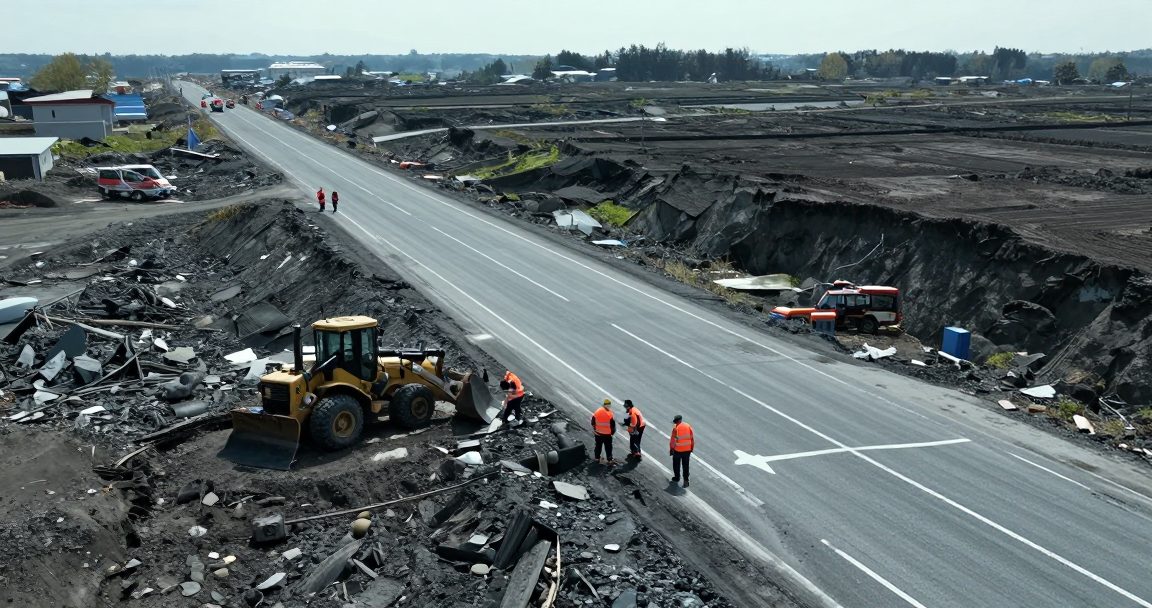
- The Ministry of Land, Infrastructure, Transport and Tourism announced simplified procedures for disaster assessments.
- The new measures target roads and rivers damaged by the Kumamoto earthquake in Rokuro 8.
- The streamlined process aims to improve response efficiency during large-scale disasters.
- The policy is designed to help local governments access recovery funds and resources faster.
- The reform draws on past disaster response experiences to strengthen post-disaster recovery mechanisms.
Readers in Taiwan may not be familiar with Japan's disaster response mechanisms, but the recent streamlining of disaster assessments offers important insights for improving emergency efficiency in the region. The Japanese Ministry of Land, Infrastructure, Transport and Tourism has simplified the process for restoring roads and rivers damaged by the Kumamoto earthquake, aiming to reduce the time it takes for local governments to access recovery funds. This reform could serve as a valuable reference for Taiwan's post-disaster reconstruction mechanisms.
In terms of concrete outcomes, while Japan has not yet disclosed how much time the streamlined process will save, past experience suggests that reducing the assessment period by one to two weeks could significantly enhance local governments' response capabilities. For Taiwan, particularly in areas prone to typhoons and earthquakes, a more efficient process could mean faster recovery and reduced economic losses after disasters.
These are similar to the current measures in Kumamoto, indicating that Japan continues to optimize its disaster management through institutional improvements.
Going forward, observers in both Japan and Taiwan should pay attention to whether the Ministry of Land publishes the actual execution time and effectiveness of the streamlined process, as well as the performance of local governments in post-disaster recovery. This will help assess whether the reform truly enhances disaster response efficiency and provide a model for other countries to follow.
The Japanese Ministry of Land, Infrastructure, Transport and Tourism has announced streamlined procedures for disaster assessments following the Kumamoto earthquake in Rokuro 8, aiming to accelerate the restoration of damaged roads and rivers. The new measures are intended to improve response efficiency during large-scale disasters and build on past experiences to strengthen local governments' recovery capabilities. The ministry stated that the simplified process will allow local authorities to access recovery funds and resources more quickly, aiding in the reconstruction of disaster-affected areas. The reform includes the simplification of disaster assessments and the application of pre-established rules, enabling local governments to quickly evaluate damage and initiate restoration efforts. The ministry emphasized that this initiative will enhance Japan's overall disaster response efficiency and strengthen the country's resilience in the face of major natural disasters.