Trump Imposes 100% Tariff on Certain Drones and Components to Cut Reliance on China
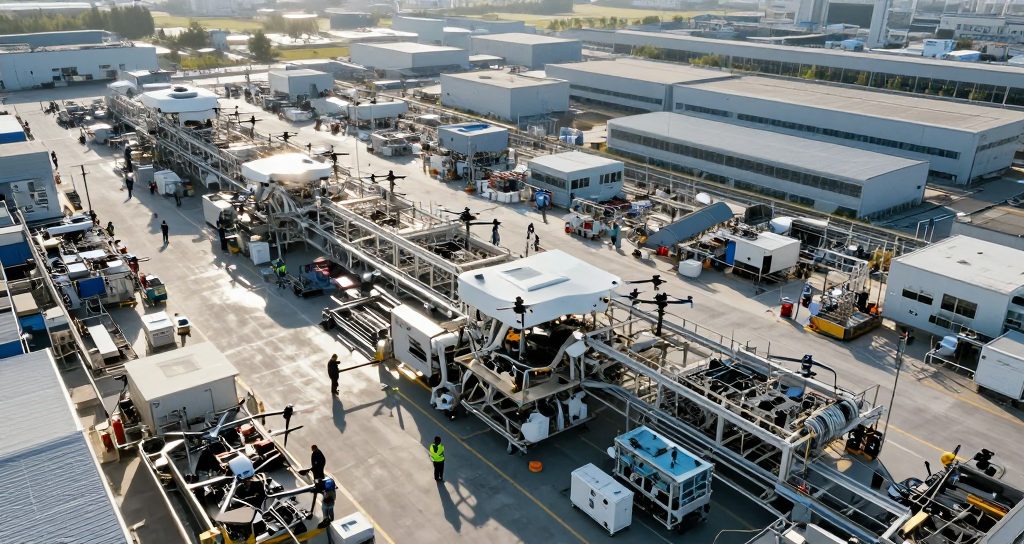
- Trump signed an order adding a 100% tariff on certain imported drones and components
- The stated aim is cutting dependence on China and national security risk
- The measure covers drones and related parts
President Trump has signed an order imposing an additional 100% tariff on certain imported drones and related components, citing reduced dependence on China and national security risk. A 100% tariff doubles the landed price — this is not protection, it is a decision to make certain sources price-irrelevant in the US market.
Consider where it lands. Drone supply chains are highly concentrated: motors, flight controllers, batteries and imaging modules are dominated by Chinese makers in the mid and low price bands. American buyers — agriculture, surveying, construction, public safety — cannot find equivalents at the same price in the near term, so costs rise. For non-Chinese suppliers a door opens, but catching the opportunity requires capacity and certification already in place.
For Taiwan the implication is direct. The island has an existing base in drone components and assembly, and order reallocation of this kind flows first to whoever is not Chinese and can ship now. The window closes, though: once the tariff structure settles, US and other capacity fills in and price competition returns. Orders stay only with firms that clear certification and enter long-term supplier lists.
For Japan the angle differs — its strength sits upstream in motors, sensors and precision parts, which may benefit from the reshuffle.
Watch the scope of the covered list, any exemptions or transition periods, and how fast US domestic capacity actually arrives.