Japanese Seasonings Push Into Texas Supermarkets With In-Store TastingsA · FULL TRANSLATION
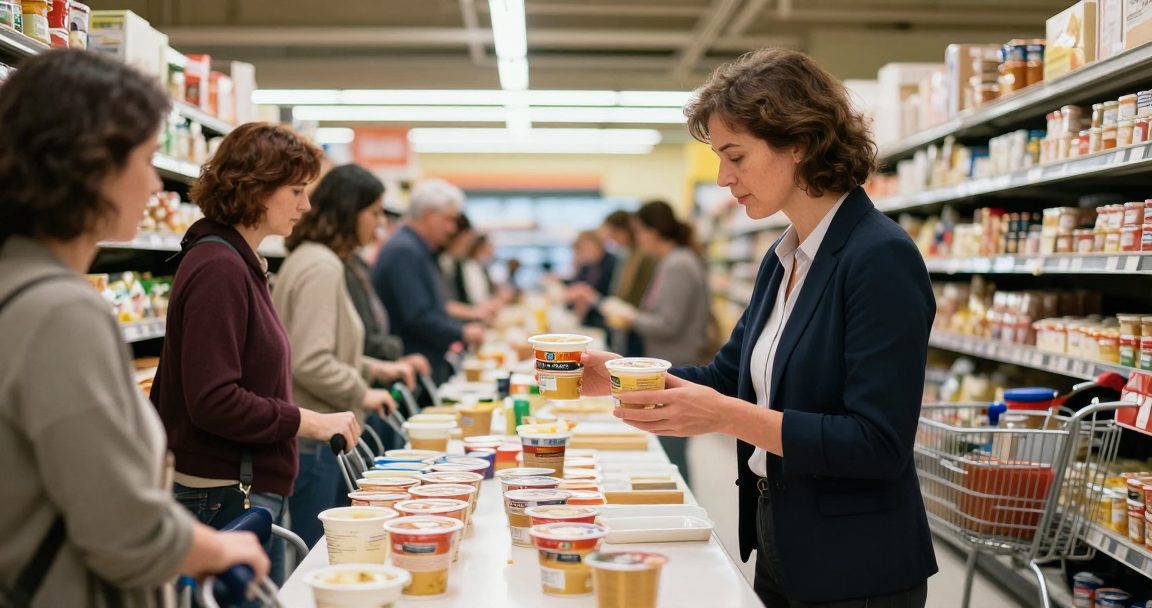
- Japanese seasonings ran in-store promotions in Texas.
- Tastings and shelf placement are used to introduce umami to everyday cooking.
- The aim is to move from Japanese-cuisine niche to household staple.
For food exporters, the lesson here is the tactic rather than the news. Japanese seasonings ran in-store tastings in Texas to introduce umami to local shoppers — the standard move for shifting a product out of the Asian foods aisle and onto general shelves, and precisely where most exporters stall.
Seasonings are not ready-to-eat. Shoppers must know what to do with them. In the Asian aisle, buyers already do. To reach the main shelf, someone who has never cooked Japanese food has to believe the bottle belongs in their own soup. That is what tasting buys: not awareness, but a use case. It explains why in-store promotion stays expensive and hard to skip.
Umami as a concept is a long-accumulated asset for Japanese food exports. Once a flavour idea is accepted locally, shelf space expands for the whole category, not one brand.
Set the promotion goal as usage rather than brand recall, and judge results on repeat purchase rather than day-one sales. Then watch whether temporary displays convert into permanent listings.
At a supermarket near Houston, Texas, Moe Yamada — known as Kimono Mom, who introduces Japanese home cooking to audiences abroad — held a tasting and sales promotion for "UMAMI SAUCE." Working with a food maker that has long operated in the United States, she positions the product as a seasoning that lets people easily recreate Japanese home cooking. The promotion tour has taken her to retailers on the East Coast, in Hawaii and in California, with Texas as the final stop, held at one of the state's leading supermarket chains.
What set the event apart, JETRO notes, was that the product was not simply placed on the shelf as "a Japanese seasoning." Instead, cooking demonstrations and tastings showed American shoppers how to use it in everyday meals at home. A queue formed when the promotion opened, and shoppers continued to stop by, taste the food and ask about the product's features and uses.
When selling Japanese food products in the United States, background such as "long loved in Japan" or "made by traditional methods" matters. But for shoppers seeing a product for the first time, answering plainer questions — what is it, and how do I use it in my own cooking — matters just as much. UMAMI SAUCE was presented not only as a topping for hot rice but also for stir-fries, meat dishes, noodles and marinades.
Even in a market as large as the United States, JETRO concludes, a single shelf or a single tasting can be where a shopper first meets a product; for those opening new channels through mainstream U.S. retail, the key is communicating the product's appeal on the ground, including labeling and everyday uses at home. (The article notes the partner maker traces its roots to Sanjirushi Jozo, a soy sauce and miso producer founded in Mie Prefecture in 1804, which sells mainly tamari soy sauce in the U.S.)