Lawson and KDDI Rebuild an Ageing Housing Estate From Inside a Convenience Store
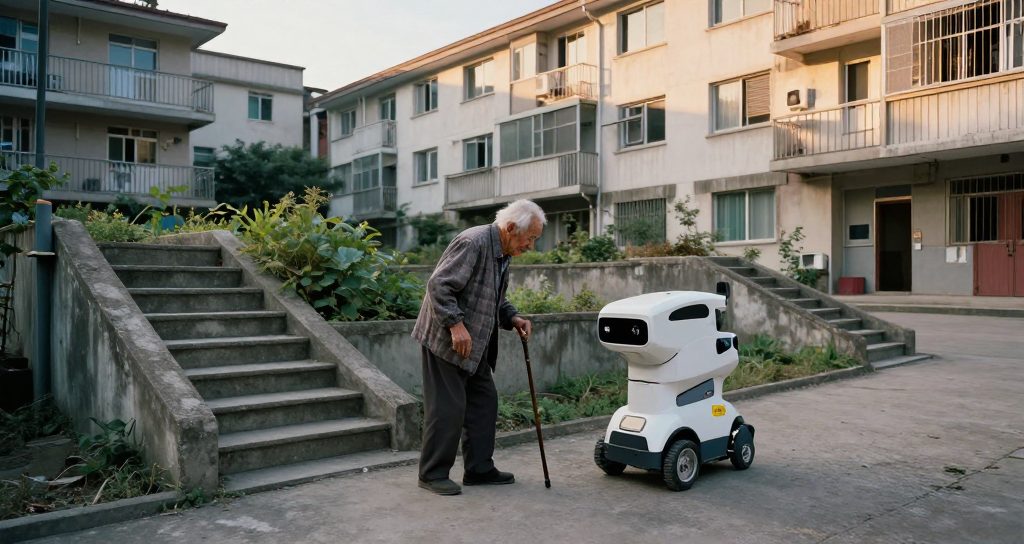
- Lawson and KDDI introduce a new convenience store model in Tama Hills.
- The store integrates shopping, medical, and administrative services.
- KDDI's communication technology and delivery robots are deployed to enhance service.
- Aims to address aging population and declining occupancy rates in the area.
If you own a suburban second-hand property in Japan, or are eyeing a danchi-type unit at what looks like a bargain price, this story is about the next decade of that asset. Lawson and KDDI have opened a new store format at the Takahatadai danchi in the Tama Hills, combining shopping, medical access and administrative services in one place, with delivery robots added.
The underlying problem is structural. Japan's large housing estates were planned for young families with cars and a nearby shopping street. Residents aged together, children moved out, occupancy fell, local shops and clinics closed for lack of customers — and the remaining residents, now less mobile, need exactly the services that disappeared. The building is fine; the life around it is not.
What is different here is where the intervention lands. Conventional regeneration means demolition or major refurbishment: expensive, slow, and dependent on unanimous owner consent. This approach leaves the buildings alone and reinstalls the missing functions through a single store, using connectivity and robotics to cover the last stretch to each door. A convenience store becomes community infrastructure.
Whether it works depends on unit economics. Such sites cost more to run than a standard store, while ageing estates offer neither high basket sizes nor high footfall.
For buyers: check walking-distance shopping, clinic proximity and bus frequency. None of it appears in the listing.