Three Michelin Stars Down a Stone Alley, a 400-Year-Old Temple at the Top: Ten Stops in Kagurazaka, Tokyo's Geisha Quarter and French Village on One Slope
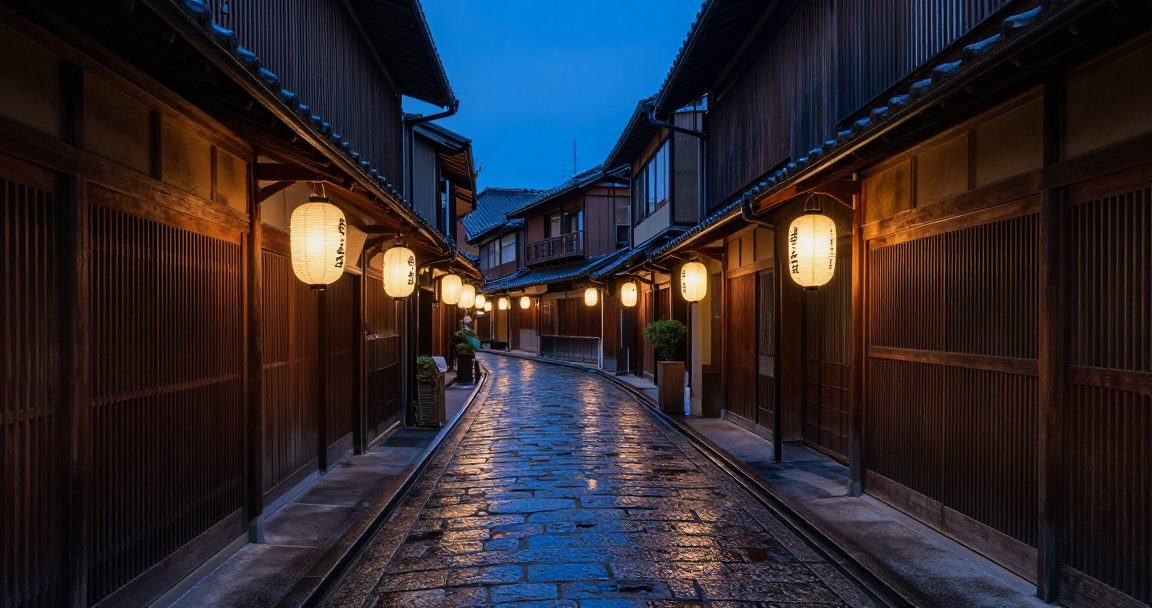
- Pre-war Kagurazaka was one of Tokyo's leading geisha districts, and its stone lanes were made narrow and bent so guests were not visible from the main street; Hyogo Yokocho is the best preserved, Kakurenbo Yokocho the clearest mix of old and new
- The slope centres on Zenkokuji, founded in 1595 and ranked with Shobo-ji in Asakusa and Shoden-ji in Shiba as one of Edo's three Bishamonten temples; stone tigers replace guardian dogs because Bishamonten is said to have descended in the hour of the tiger
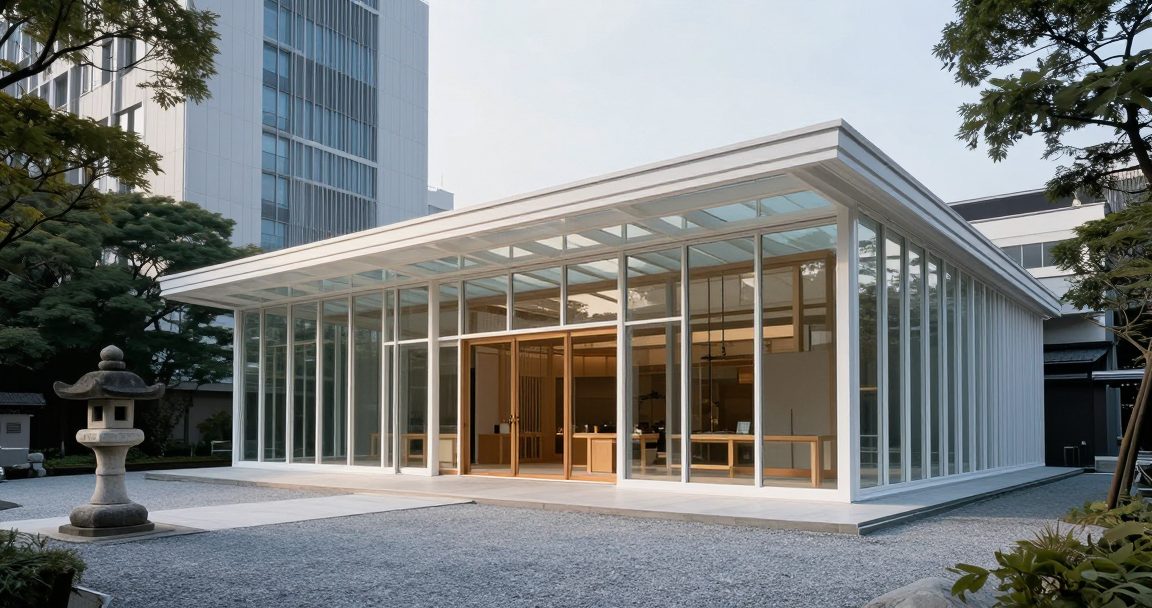
- Akagi Shrine ranked with Hie Shrine and Kanda Myojin among Edo's three great shrines and was rebuilt in 2010 under Kengo Kuma; the scheme included an adjacent apartment building whose income supports the shrine
- The French village has concrete causes: the Institut Franco-Japonais of 1952, now the Institut Francais du Japon, plus the long-standing French school nearby; the school moved to Takinogawa in May 2012 and was renamed, but the shops remained
- The landmark la kagu was a 1960s Shinchosha book warehouse, converted by Kengo Kuma and opened in October 2014; it closed on 31 January 2019 and AKOMEYA TOKYO reopened the space on 30 March 2019, keeping the design
- The price spread defines the street: a ¥500 pork bun at Gojuban, alley bistros with lunch around ¥1,500, and three-star Ishikawa from ¥30,000 a head in the Michelin Guide Tokyo 2025, all within five minutes of each other
- Calendar: the 52nd Kagurazaka Festival ran 22-25 July 2026, with the lantern-plant market at Zenkokuji 17:00-21:00 on the 22nd and 23rd and Awa dancing 19:00-21:00 on the 24th and 25th; the next is in late July a year from now
- Worth adding at the foot of the slope: Tokyo Daijingu, founded in 1880, where Shinto wedding ceremonies began and now known for matchmaking, drawing about 50,000 New Year visitors; weekday mornings are the quiet slot
Kagurazaka rarely makes a Taiwanese visitor's top ten, for a simple reason: it has no landmark. No tower, no mall, no single photograph everyone recognises. But once you have done Asakusa and Shibuya, this slope deserves half a day — it is one of the few places in Tokyo where a fifteen-minute walk takes in an Edo geisha quarter, a postwar French community and contemporary architecture at once.
How the street formed comes first. Pre-war Kagurazaka was among Tokyo's leading geisha districts, where geisha houses, ryotei and waiting rooms formed one trade, and the stone lanes were deliberately narrow and bent so guests were not seen from the main street. Hyogo Yokocho and Kakurenbo Yokocho are what that spatial logic left behind. The slope's centre of gravity is Zenkokuji, founded in 1595, around whose fair days the commerce of the whole street grew.
The second layer is France. Kagurazaka is called Tokyo's French village for concrete reasons: the Institut Franco-Japonais founded in 1952, now the Institut Francais du Japon, stands nearby, and the French school was long located close by, so staff and families settled and bakeries, cheesemongers and bistros followed. The school itself moved to Takinogawa in Kita City in May 2012 and was renamed the Lycee Francais International de Tokyo, but the shops stayed. Even the landmark building la kagu takes its name from French residents who could not pronounce Kagurazaka.
Three practical notes. First, walk it correctly: the main street is only a corridor, and everything worth seeing is in the stone lanes on either side. Second, the price range is enormous — one slope holds a ¥500 pork bun, a ¥1,500 French lunch and three-Michelin-star kaiseki from ¥30,000 a head in the Michelin Guide Tokyo 2025 — so decide your price band before you arrive. Third, lunch is the value hour here: the same chef in the same room often costs a third of dinner.
On timing, the street's biggest moment is the Kagurazaka Festival in late July. The 52nd edition ran from 22 to 25 July 2026, two days of the lantern-plant market at Zenkokuji followed by two nights of Awa dancing, and the next is a year away. August is quieter, which suits alley walking.
[1. Why one slope holds both a geisha quarter and French cooking] Kagurazaka's terrain is simple: from Iidabashi Station the main street climbs northwest for less than 800 metres, ten minutes end to end. Its density comes from two historical layers, and without them the walk registers as nothing more than a pleasant shopping street.
The first layer is the geisha quarter that ran from Edo into the pre-war years. Geisha houses, ryotei and waiting rooms formed a single trade, and that decided how the street looks today: the stone lanes were made narrow, bent and impossible to see down, because clients did not want to be seen from the main road, and the ryotei entrances face into the alleys rather than the street. You can verify the logic on foot — the widths and turns of Hyogo Yokocho and Kakurenbo Yokocho are about privacy, not romance.
The second layer is postwar France. The reasons Kagurazaka is called Tokyo's French village are concrete: the Institut Franco-Japonais, founded in 1952 and now the Institut Francais du Japon, stands in this area, and the French school was long located nearby, so teaching staff and families moved in and bakeries, cheesemongers and bistros followed. The school moved to Takinogawa in Kita City in May 2012 and became the Lycee Francais International de Tokyo, but the neighbourhood it created stayed. The clearest evidence is the name of the landmark building: French residents could not pronounce Kagurazaka and shortened it to la kagu, which later became a shop name. Sources: [Kagurazaka guide (GO TOKYO)](https://www.gotokyo.org/jp/destinations/central-tokyo/kagurazaka/index.html), [Kagurazaka, an oasis with a French air (TOKYO UPDATES, Tokyo Metropolitan Government)](https://www.tokyoupdates.metro.tokyo.lg.jp/post-1003/), [Lycee Francais International de Tokyo history](https://www.lfitokyo.org/index.php/ja/etablissement/historique-lfit)
[2. The slope's centre: a temple from 1595 and two stone tigers] To understand why this street and not the next one is the busy one, look at Zenkokuji.
Founded in 1595, it ranks with Shobo-ji in Asakusa and Shoden-ji in Shiba as one of Edo's three Bishamonten temples, and locals still call it Bishamon-sama. Almost every old Japanese shopping street grew this way: a temple has fair days, fair days draw crowds, crowds support stalls, and the stalls settle into shops. The position and direction of Kagurazaka-dori is, in essence, the temple's approach road.
The detail worth seeing is the pair of stone tigers before the main hall. Most shrines have guardian dogs; here there are tigers, because Bishamonten is said to have descended in the year, month, day and hour of the tiger.
The other one to see is Akagi Shrine, on the Yaraicho side at the top. The shogunate counted it among Edo's three great shrines with Hie Shrine and Kanda Myojin, but its fame today comes from the 2010 rebuild under architect Kengo Kuma into glass, timber and white steel, with a glass-walled café in the grounds.
That deserves a sentence for readers who follow Japanese property. The hard problem for small inner-city shrines is income: without tourists or a major festival, parishioners' offerings alone cannot maintain the buildings. The Akagi scheme built an apartment block beside the shrine and uses its returns to support operations — a concrete case of a religious corporation staying solvent through land use. Sources: [Three shrine and temple power spots in Kagurazaka (enjoytokyo)](https://www.enjoytokyo.jp/article/105039/), [What kind of town is Kagurazaka (Santatsu)](https://san-tatsu.jp/towns/207227/)
[3. Price bands: ¥500 and ¥30,000 less than five minutes apart] What to know before arriving is not which shop is best but how the street's prices are structured.
At the low end is street food: a Gojuban pork bun runs about ¥500 to ¥700 and is noticeably larger than the convenience-store kind, enough for two to share. Set expectations first — Japanese nikuman have thick, soft, faintly sweet dough and sweet filling, a different logic from Taiwanese buns or xiaolongbao. The company changed its written name to Kagurazaka Gojuban in May 2023.
The middle is the alley restaurants. Around Kakurenbo Yokocho, French bistros, Italian kitchens and Japanese kappo counters sit together; dinner mostly starts around ¥6,000 while lunch sets around ¥1,500 are common — the same chef in the same room at up to a third of the price. Eat your main meal here at midday and walk the lanes for the lanterns at night.
The top end is Ishikawa, holding three stars in the Michelin Guide Tokyo 2025 at roughly ¥30,000 a head, hidden down a stone lane behind a lamp and a small wooden sign. Bookings normally need one to two months' notice and often depend on regulars or a hotel concierge; if you want the table, ask your hotel to request it and keep your dates as flexible as possible.
Wagashi are the best thing to carry out. Baikatei, founded in 1935, runs its main shop as takeaway only, so there is no wait for a table. Eat one or two seasonal fresh sweets on the spot, since summer items do not keep, and choose longer-lasting baked sweets such as monaka or dorayaki for the journey home. Sources: [Michelin Guide Tokyo 2025 selection announcement (Michelin Japan)](https://news.michelin.co.jp/articles/20241017-michelin-guide-tokyo-2025-selection-release), [Kagurazaka Baikatei official site](https://www.baikatei.co.jp/), [Kagurazaka Gojuban official site](https://www.50ban.jp/)
[4. How to string the ten stops: downhill, ending at water] The gradient is the key to the route. Enter at the top, from the Yarai exit of Kagurazaka Station, and walk down toward Iidabashi; it is downhill the whole way and finishes at the water.
Section one, the top at Yaraicho: Akagi Shrine, then a minute's walk to AKOMEYA TOKYO in la kagū. Both are Kuma buildings and interesting together — one modernises a shrine, the other converts a warehouse. Buy your gifts here: rice at the centre, plus rice accompaniments, seasonings and kitchen tools, better labelled and more useful than the souvenir stock on the main street.
Section two, the slope and the stone lanes: walk down Kagurazaka-dori but do not stay on it. The main street is a corridor; the content is in the lanes — Hyogo Yokocho for looking, Kakurenbo Yokocho for eating at midday. Stop at Baikatei for wagashi and Gojuban for a bun. The alleys really do disorient; the rule is that walking uphill returns you to the main street.
Section three, mid-slope: Zenkokuji sits beside the main street and takes ten minutes. Ishikawa is in the lanes nearby if you have the budget and the booking.
Section four, the foot and the water: at the bottom you reach Iidabashi and two ways to finish. Canal Cafe sits on the bank of Edo Castle's outer moat with an open deck at the waterline, opening up the view after two hours of narrow lanes; or Tokyo Daijingu, five minutes away, founded in 1880, where Shinto weddings began and now known for matchmaking.
The full walk takes three to four hours including a meal and a coffee. With only two hours, skip the top section and climb from Iidabashi to the temple and the two alleys before returning to the water. Sources: [Five back lanes to walk in Kagurazaka (enjoytokyo)](https://www.enjoytokyo.jp/article/108638/), [AKOMEYA TOKYO in la kagū store information](https://www.akomeya.jp/store_info/store/sinlakagu/)
[5. When to come, and what not to expect] The street's biggest date is the Kagurazaka Festival in late July. The 52nd edition ran from 22 to 25 July 2026: the lantern-plant market on the 22nd and 23rd from 17:00 to 21:00, with a children's fair in the Zenkokuji grounds and about fifty stalls in front of the gate, then Awa dancing on the 24th and 25th from 19:00 to 21:00 across two sites on Kagurazaka-dori and in 6-chome, with children's Awa dancing from 18:00 to 19:00 on the 25th. The next edition is a year away.
August's advantage is quiet — the content here is lanes and shops rather than large attractions, so fewer people makes for better walking. In cherry season from late March into early April, head to the foot of the slope: the outer moat is a known viewing spot with blossom reflected in the water, though Canal Cafe queues then.
Three things not to expect. First, there is no major attraction — no tower, no observation deck, no mall — so a checklist style of travel will find this empty; the substance is the density of the lanes and the layering of the shops. Second, prices sit in the upper band for central Tokyo, above Asakusa or Ueno, so read menus before sitting down. Third, daytime Kagurazaka is quiet, with ryotei and many restaurants open only at night; mornings show you shutters. The street's real hour begins after half past five, when the lanterns come on. Sources: [52nd Kagurazaka Festival (Kagurazaka-dori Shopping Association)](https://www.kagurazaka.in/kagurazaka_festival/52th/), [Kagurazaka Festival (GO TOKYO)](https://www.gotokyo.org/jp/spot/ev038/index.html), [Tokyo Daijingu (Visit Chiyoda)](https://visit-chiyoda.tokyo/app/spot/detail/152)
 Scan for map
 Scan for map
 Scan for map
 Scan for map
 Scan for map
 Scan for map
 Scan for map
 Scan for map
 Scan for map
 Scan for map