Taiwan's Wheel Cake Traces Back to a Kanda Junction: Ten Tokyo Taiyaki and Imagawayaki Shops, From 1909 One-at-a-Time Baking to Black Sugar Batter
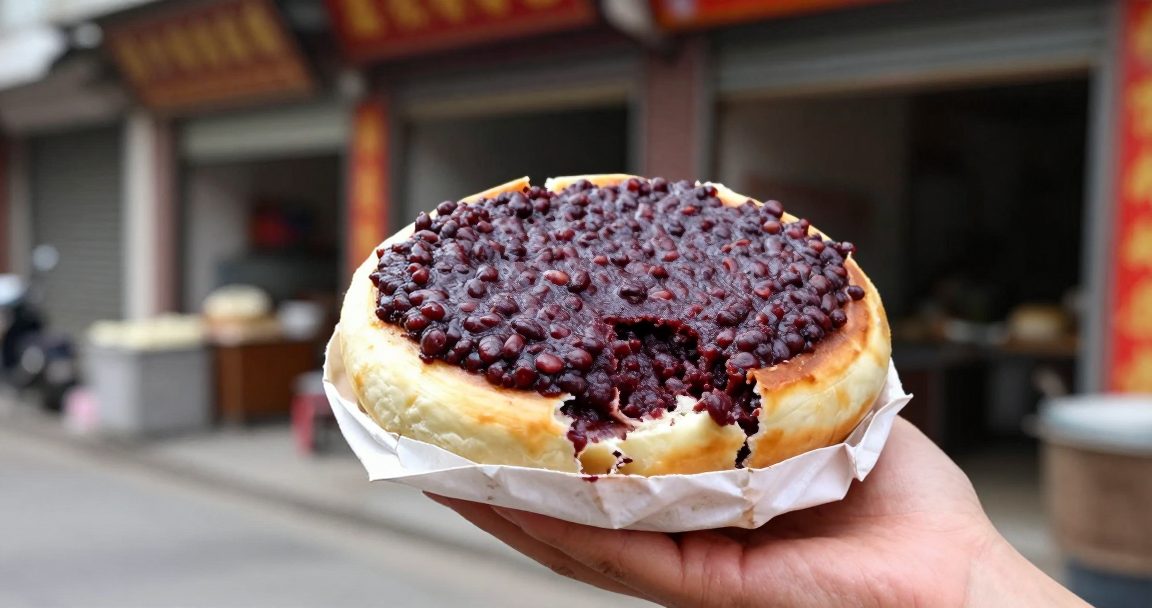
- Name lineage: imagawayaki is the Kanto term, traced to the An'ei era (1772-1780) and the Imagawa Bridge built by ward headman Imagawa Zen'emon; most of Japan says obanyaki, Kansai also kaitenyaki, and Taiwan's red bean wheel cake belongs to the same line
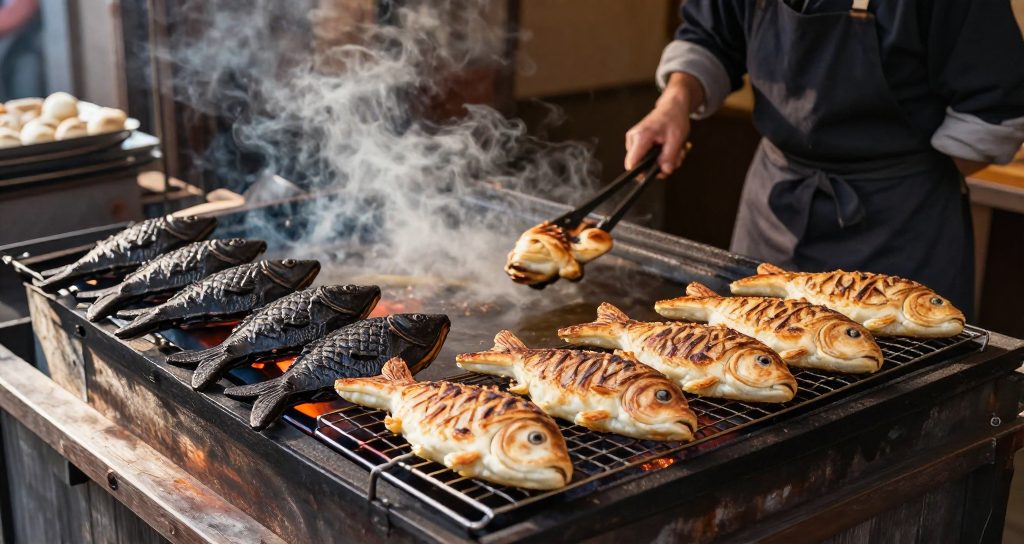
- Two techniques: ippocho-yaki bakes one fish per cast-iron clamp for a thin skin and crisp edges, while continuous moulds bake five or six at once with a thicker, softer skin; the trade calls the first wild and the second farmed, and some shops print wild taiyaki on the sign
- Tokyo's taiyaki big three: Naniwaya Sohonten (founded 1909, Azabu-Juban), Yanagiya (1916, Ningyocho) and Taiyaki Wakaba (1953, Yotsuya), all baking one fish at a time
- Naniwaya Sohonten is the shop behind the 1975 song Oyoge! Taiyaki-kun; its noren-wake offshoot Asakusa Naniwaya sits about a minute from the Tsukuba Express Asakusa station and diverts you from the Kaminarimon crowds
- Nezu no Taiyaki descends from Yanagiya by noren-wake, with the owner doing everything alone and selling out around early afternoon — a concrete illustration of the capacity limits of one-at-a-time baking, so go before noon
- Hane-tsuki, with wings, is the other line: batter spills past the mould into a crisp sheet, a different texture from classic taiyaki; Kanda Daruma built its name on it, with branches including Tsukiji, Ueno, Akihabara and Shimbashi
- Imagawayaki Honpo at 1-7-11 Kajicho, Kanda, open 11:00-20:30 (last order 20:00), stands near the Imagawa Bridge junction that gave the sweet its name
- Local and variant versions: Kashiwaya at Sangenjaya (station-connected, 11:00-20:00) sells a white imagawayaki only on Wednesdays and the second and fourth Sundays; Tsukishimaya in Azabu-Juban, founded 1951, uses black sugar in the batter and also makes a lotus-root success inari
Taiyaki and imagawayaki are the cheapest cultural experience in Tokyo: about ¥200, eaten standing up, and behind them sit two centuries of lineage, a split in craft technique, and something Taiwanese people have in fact been eating since childhood.
Settle the names first. Imagawayaki is the Kanto term, generally traced to the An'ei era of the mid-Edo period, 1772 to 1780, when stalls beside the Imagawa Bridge — built by the ward headman Imagawa Zen'emon — sold the sweet, which took the bridge's name; most of Japan calls the same thing obanyaki, and Kansai also says kaitenyaki. In Taiwan it is the red bean wheel cake. The wheel cakes Taiwanese grow up with trace back to a junction in what is now Kanda. Taiyaki takes the same batter and bean paste and bakes it in a sea bream mould — tai puns on medetai, meaning auspicious, so selling a cheap snack in the shape of a celebratory fish was itself a piece of Meiji-era marketing.
Then the split in technique, which decides what you actually eat. The traditional method is ippocho-yaki: one cast-iron clamp bakes one fish, the baker turning each by hand, giving a thin skin and crisp scorched edges. Against it stand the continuous moulds that bake five or six at a time, thicker-skinned and softer. The trade jokingly calls the first wild and the second farmed, an old enough joke that some shops print wild taiyaki on the sign. Neither is superior, but they are different foods, and worth trying both before deciding.
Three practical notes on ordering. First, eat it hot: ten minutes in a closed paper bag softens the skin, and the crisp wings of hane-tsuki taiyaki go faster still. Second, make the first one red bean — it is the fundamental, and skin thickness, whether the filling reaches the tail and whether the sweetness is controlled all show in one bite; save custard or cheese for the second. Third, old shops are usually cash-only and stop when they sell out, and one-person operations often go by early afternoon, so go before noon.
The ten here fall into three lines: the big three and their noren-wake offshoots, the winged and chain newcomers, and the imagawayaki lineage from the shop at the origin of the name to a black-sugar variant.
[1. Three names to separate first: taiyaki, imagawayaki, wheel cake] These three are used interchangeably in Taiwan but sit at different levels in Japan, and separating them makes the eating clearer.
Imagawayaki is the round one, two halves closed around a filling. The name is generally traced to the mid-Edo An'ei era, 1772 to 1780, when stalls near the Imagawa Bridge — built by the ward headman Imagawa Zen'emon — sold the freshly baked sweet, which took the bridge's name. That is the Kanto term; most of Japan says obanyaki and Kansai also uses kaitenyaki. Carried across to Taiwan, it became the red bean wheel cake, so the snack Taiwanese grow up with traces back to a junction in what is now Kanda.
Taiyaki applies the same logic through a different mould: the batter and bean paste are unchanged, the shape becomes a sea bream. Why a bream? Because tai puns on medetai, auspicious. Bream is the fish of celebrations in Japan and expensive enough that ordinary people rarely ate it, so shaping a cheap snack like one sold a lucky form for a couple of hundred yen. It was Meiji-era marketing, and it still works.
Taiwanese visitors notice one difference immediately: Japanese taiyaki skin is thin, close to a biscuit, while Taiwanese wheel cakes are thick and soft, closer to cake. The batter ratios differ by design. Neither is better; they are two roads. Sources: [Imagawayaki Honpo official site](https://imagawayaki.jp/), [Ten recommended imagawayaki shops in Tokyo (VOKKA)](https://vokka.jp/12469/)
[2. One-at-a-time baking, and how a joke became trade language] If you remember one thing, remember this: Japanese taiyaki comes in two methods that eat as two foods.
The traditional method is ippocho-yaki. One cast-iron clamp is one fish; the baker lines several over the flame and works through them, pouring batter, adding filling, closing, turning, lifting out. The skin is thin with crisp scorched edges because each fish meets the fire directly over a small area. The cost is speed: one person can only tend so many.
The other is the continuous mould, five or six or more at once, efficient, thicker-skinned and softer. The trade jokingly calls the first wild and the second farmed — classifying pastry as though it were fish — and the joke has lasted long enough that some shops print wild taiyaki on the sign.
This has a practical corollary: the capacity limit of one-at-a-time baking decides how old shops operate. Nezu no Taiyaki in this guide is the clearest case — the owner does everything alone, quantities are limited, and it usually sells out by early afternoon. That genuine ippocho-yaki shops are almost all small and often sell out early is not coincidence but physics. Hence the most useful rule for visitors: for the old shops, go before noon.
The third line is hane-tsuki, with wings, where batter is deliberately allowed past the mould and bakes into a thin crisp sheet attached to the fish — crisp wing first, soft body after, unlike the uniform thin crispness of ippocho-yaki. Kanda Daruma built its name on this using domestic wheat, with the Kanda-Ogawamachi main shop and branches including Tsukiji, Ueno, Akihabara and Shimbashi. The wing softens fast, so this style must be eaten where you buy it. Sources: [Tasting Tokyo's three great taiyaki (Tokyo Shimbun)](https://www.tokyo-np.co.jp/article/309405), [Taiyaki Kanda Daruma official site](https://taiyaki.root-s.com/)
[3. The big three and noren-wake: a family tree] Tokyo taiyaki has a recurring list called the big three: Naniwaya Sohonten in Azabu-Juban, Yanagiya in Ningyocho and Taiyaki Wakaba in Yotsuya. All three bake one fish at a time; they differ in vintage and in the character of their locations.
Naniwaya Sohonten, founded in 1909, is the oldest and the shop behind the 1975 song Oyoge! Taiyaki-kun, in which a taiyaki escapes the griddle for the sea. The song's reach in Japan is such that the shop functions as a physical piece of shared memory.
Yanagiya, founded in 1916, has an open front where you watch the baker work a row of clamps in rotation — the most watchable of the three, and almost always with a queue.
Taiyaki Wakaba, founded in 1953, sits on a residential lane behind Yotsuya Station, and fills the fish all the way into the tail. Whether the tail should be filled is a real dividing line in Japan, and Wakaba is firmly on the yes side.
Then the institution of noren-wake, which explains how the list spreads: a craftsman trained in a shop who, with the original's blessing, opens independently using the same method and part of the name. Nezu no Taiyaki came from Yanagiya and Asakusa Naniwaya from Naniwaya Sohonten. For itineraries this is useful — when the original's queue is too long or its location inconvenient, the noren-wake shop is usually an acceptable substitute with far fewer people. Sources: [Taiyaki across Tokyo including the big three (Tabelog Matome)](https://tabelog.com/matome/28179/), [Five recommended Tokyo taiyaki shops (Jalan News)](https://www.jalan.net/news/article/197704/)
[4. The imagawayaki side: the origin shop, a local limited edition, black sugar batter] Imagawayaki is less visible in Tokyo than taiyaki, yet it is the shape Taiwanese know best, and it deserves its own walk.
Imagawayaki Honpo stands at 1-7-11 Kajicho, Chiyoda City, open 11:00 to 20:30 with last orders at 20:00, near the Imagawa Bridge junction that named the sweet. Its value is not only flavour but the chance to walk the line from imagawayaki to obanyaki to wheel cake on the ground where it starts.
Kashiwaya in Sangenjaya is connected to the station and open 11:00 to 20:00. Its signature is the white imagawayaki sold only on Wednesdays and the second and fourth Sundays, with uncoloured, snow-white batter. Items that appear only on set days are common in old Japanese neighbourhood shops and serve to give regulars a fixed reason to return; check the date before making the trip. Sangenjaya itself is worth pairing — a classic residential district with no major sight, but the triangle beside the station preserves a dense block of postwar alley shops.
Tsukishimaya on the Azabu-Juban shopping street opened in 1951 and sells imagawayaki, inari sushi and onigiri, sweet and savoury together. The combination is rare in Taiwan but a standard survival model for old Japanese shops: customers from breakfast through to the afternoon, rather than depending on one part of the day. Its batter uses black sugar for a faintly caramel sweetness, and the red bean, custard and cheese versions each carry their own branded mark. The other signature is the success inari made with lotus root, whose holes carry the sense of seeing the road ahead. Sources: [Tsukishimaya (Azabu-Juban Shopping Street official site)](https://www.azabujuban.or.jp/shop/shop_category/eat/297/), [Imagawayaki Kashiwaya (Hitosara)](https://hitosara.com/0031130877/)
[5. How to route it, how to eat it, and what not to expect] You do not need all ten. Three practical routes by trip shape.
Half a day, efficient (Azabu-Juban): Naniwaya Sohonten and Tsukishimaya sit on the same shopping street, so two minutes' walk covers both lineages — the best value stretch in this guide. Azabu-Juban is a low-rise old shopping street one stop from Roppongi, which suits an evening view itinerary.
A full day, old town (Ningyocho and Yanaka): start at Nezu no Taiyaki before noon or it will be gone, walk Yanaka Ginza and Nezu Shrine, then cross to Ningyocho in the afternoon for Yanagiya and the old shops around it. The theme of this line is the downtown Tokyo that still exists.
As an Asakusa insert: Asakusa Naniwaya, a minute from the Tsukuba Express station, and Naruto Taiyaki Honpo in the Shin-Nakamise arcade differ in character — one is the old lineage, the other a chain that still bakes one at a time and moves fast. With elderly relatives or children and a full schedule, take the latter rather than queueing thirty minutes for one fish.
Three points on eating bear repeating: eat it hot, since ten minutes in a bag softens the skin; make the first one red bean, because the fundamentals show in a single bite; and old shops are mostly cash-only and stop when they sell out.
Two things not to expect. First, this is not a queue-for-famous-shops itinerary. A fish costs around ¥200 and takes three minutes standing up, so a forty-minute queue builds expectations it cannot meet — treat it as a stop on a walk and the experience lands correctly. Second, do not expect large differences between shops. What separates the old houses is skin thickness, whether the sweetness is controlled, whether the tail is filled — detail you can only taste by eating two or three on the same day. If you are only visiting one, take the one nearest your route. Sources: [Ten taiyaki in Tokyo (Time Out Tokyo)](https://www.timeout.jp/tokyo/ja/restaurant/taiyaki), [Nezu no Taiyaki (Rurubu & more)](https://rurubu.jp/andmore/spot/80011293)
 Scan for map
 Scan for map
 Scan for map
 Scan for map
 Scan for map
 Scan for map
 Scan for map
 Scan for map
 Scan for map
 Scan for map