Japan Logged 47.65M Guest Nights in February; Tokyo's 76.8% Occupancy Leads the NationA · FULL TRANSLATION
- Japan recorded 47.65 million guest nights in February 2026; foreign guests accounted for 14.04 million, or 29.5%
- National room occupancy averaged 59.6%, with Tokyo at 76.8%, Fukuoka 73.2% and Osaka 70.1%
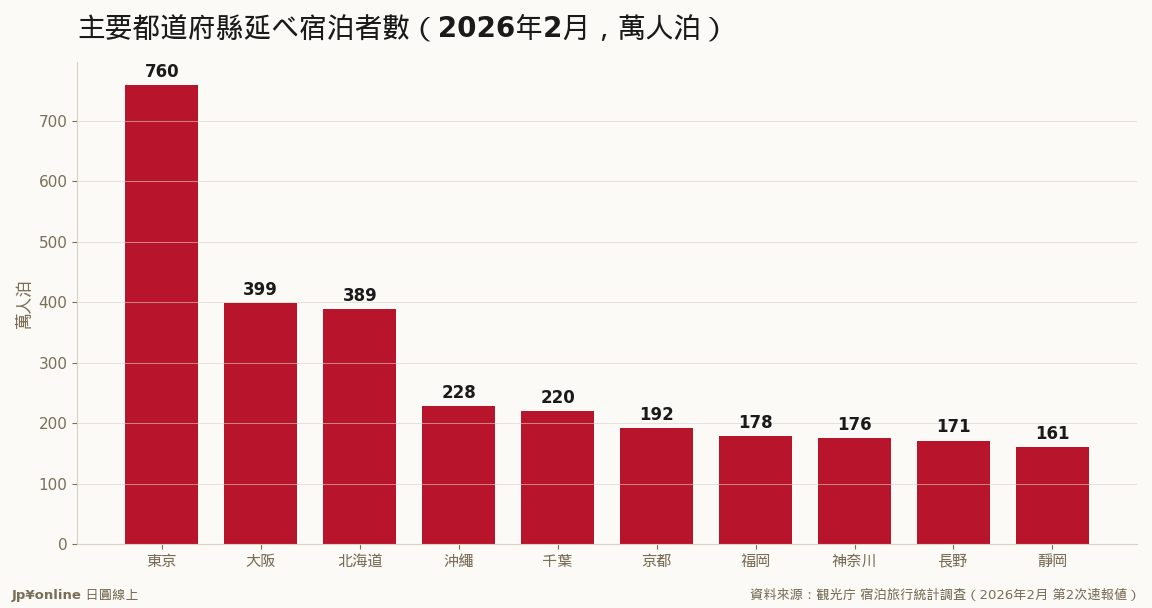
- Tokyo's 7.60 million guest nights nearly doubled second-place Osaka's 3.99 million
- Nagano's 44.1% occupancy shows how oversupply dilutes even peak ski-season demand
The Japan Tourism Agency's February accommodation survey (second preliminary figures) hands hotel investors two rankings worth reading together. On volume, Tokyo's 7.60 million guest nights dwarf Osaka's 3.99 million and Hokkaido's 3.89 million. On efficiency, room occupancy averaged 59.6% nationwide, but Tokyo reached 76.8%, Fukuoka 73.2% and Osaka 70.1% — the three cities where rooms sell both in quantity and at scale. Foreign guests contributed 14.04 million of the nation's 47.65 million guest nights, or 29.5%, in a month boosted by the Lunar New Year holidays. The cautionary tales sit at the other end of the table. Nagano generated a respectable 1.71 million guest nights yet filled only 44.1% of its rooms, as ski-season demand spread across a vast stock of ryokan and lodges. Kyoto's occupancy of 59.1% hugs the national average, evidence that years of new hotel openings have ended the era of impossible-to-book Kyoto. For buyers, the lesson is that city selection precedes property selection: markets holding above 70% occupancy carry low vacancy risk at premium prices, while cheap assets in sub-50% prefectures need stress-testing against off-season months when cash flow can approach zero.
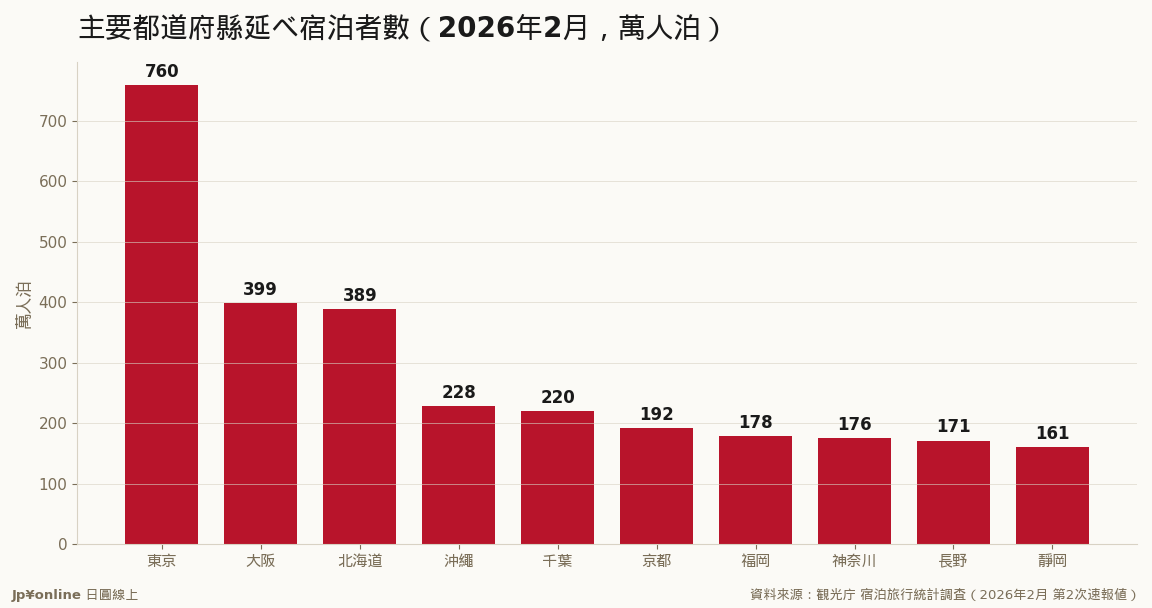
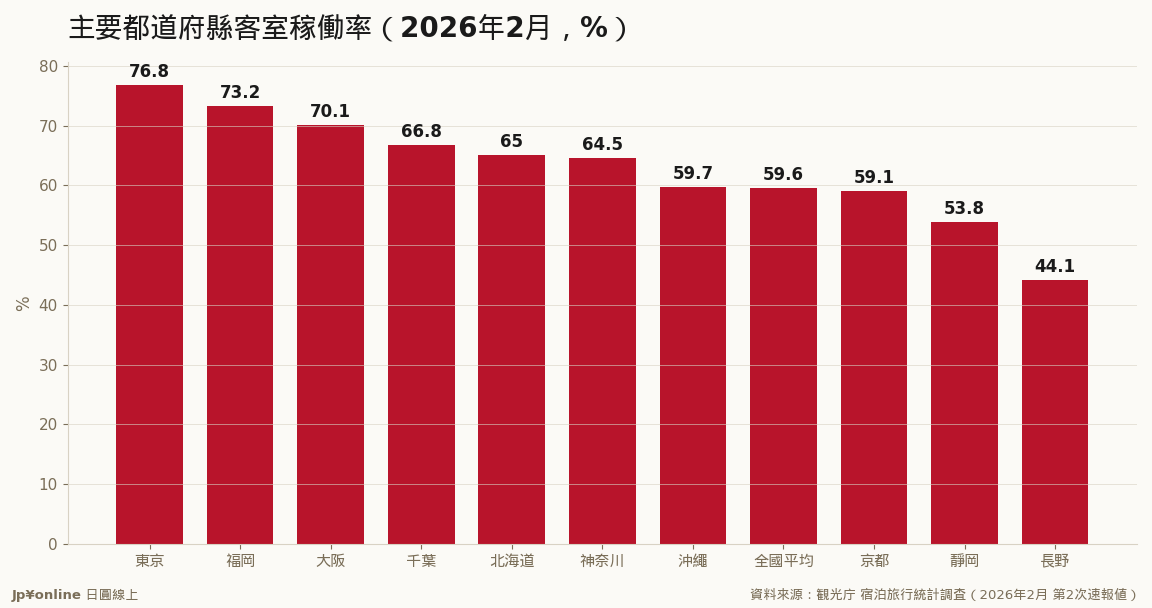
(Key figures from the Japan Tourism Agency's Accommodation Survey, February 2026, second preliminary report.) Total guest nights nationwide reached 47,653,070, of which foreign visitors accounted for 14,037,770 (29.5%). Actual unique guests numbered 33,097,460, including 7,695,600 foreign guests. By prefecture, Tokyo led with 7,595,750 guest nights, followed by Osaka (3,988,830), Hokkaido (3,889,220), Okinawa (2,277,380) and Chiba (2,203,560). Room occupancy averaged 59.6% nationally: Tokyo 76.8%, Fukuoka 73.2%, Osaka 70.1%, Chiba 66.8%, Hokkaido 65.0%, Kanagawa 64.5%, Okinawa 59.7%, Kyoto 59.1%, Shizuoka 53.8%, Nagano 44.1%. Occupancy rose with facility size: properties with 200+ rooms ran at 73.4% and 100-199 rooms at 72.1%, versus 26.2% for facilities with fewer than 20 rooms. Figures are expanded estimates rounded per survey methodology; component sums may not match totals. The full release includes breakdowns by facility type, guest nationality and municipality.