Tokyo Decelerates, Osaka Accelerates: A Turning Point in Population Mobility Report 2025A · FULL TRANSLATION
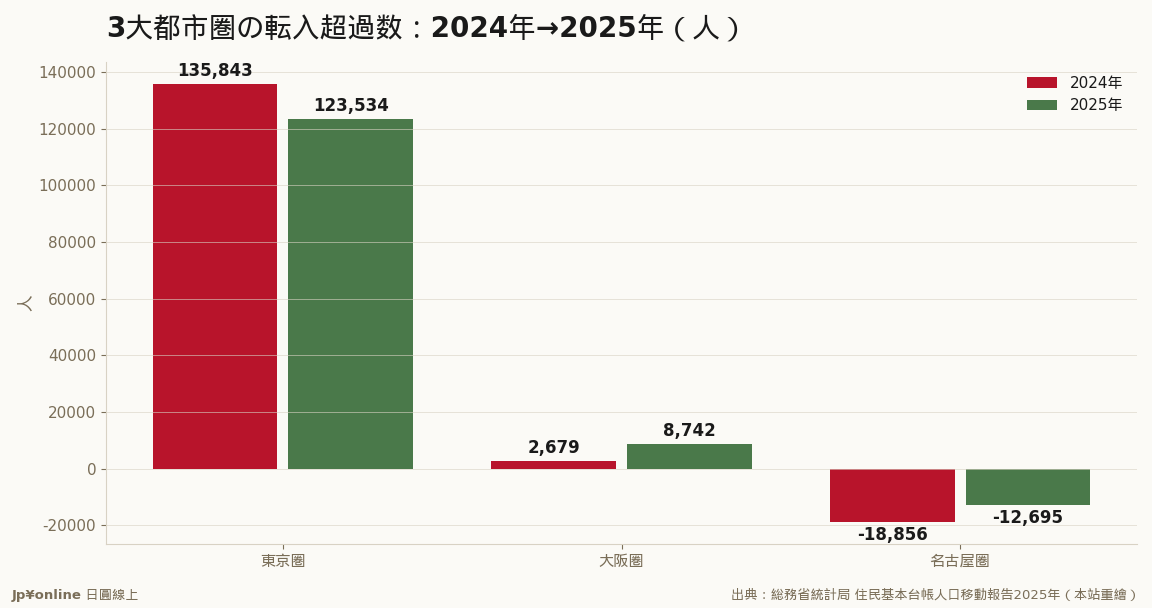
- Tokyo's inflow exceeded 123,534 people (down by 12,309) vs. Osaka's 8,742 (up by 6,063)
- Osaka saw a steady increase with Japanese and foreigner inflows
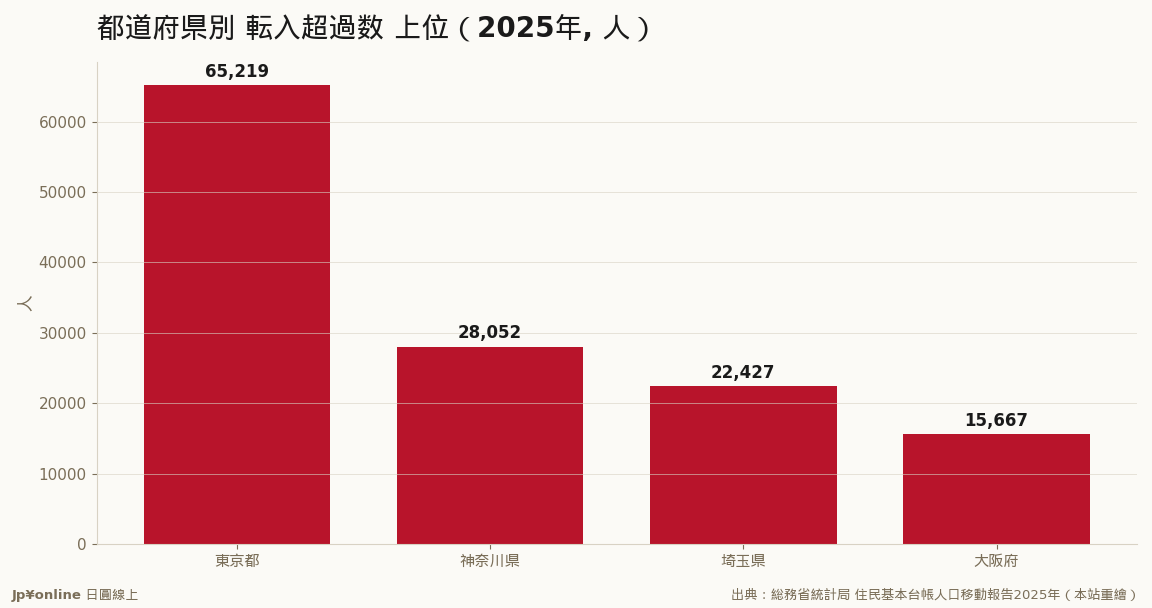
- Only 7 prefectures had positive inflow: Tokyo (65,219), Kanagawa (28,052), Saitama (22,427), Osaka (15,667); Hyogo saw a turnaround
- Tokyo's reduction has a one-time factor due to post-pandemic recovery; Osaka depends on Expo events and their impact is uncertain after 2026
- Foreign inflows are crucial for Japan’s real estate market, with Osaka outperforming Tokyo
The 2025 population mobility report from the Ministry of Internal Affairs and Communications highlights a turning point. Tokyo’s inflow exceeded 123,534 people, down by 12,309 compared to the previous year; Osaka’s exceeded 8,742, an increase of 6,063—a deceleration and acceleration simultaneously. The report is significant for anyone monitoring Japan's real estate market.
**Conclusion:** The Ministry of Internal Affairs and Communications published the resident register population mobility report on February 3, 2026, marking a turning point in Japanese population flow. Tokyo’s inflow exceeded 123,534 people, down by 12,309 compared to the previous year; Osaka's exceeded 8,742, an increase of 6,063—both sides applying brakes and throttles simultaneously.
**Demystifying the Statistics:** The report counts 'registration changes'—residential relocations reported to municipalities. It is the most authoritative official data on population flow in Japan, published annually in February for the previous year's results. Positive numbers indicate magnetism; negative numbers indicate loss. Defined areas: Greater Tokyo=Tokyo, Kanagawa, Saitama, Chiba; Greater Osaka=Osaka, Hyogo, Kyoto, Nara; Greater Nagoya=Aichi, Gifu, Mie. In 2025, there were 5,195,480 inter-municipal relocations nationwide, a minor reduction for the third year in a row.
**Tokyo's Deceleration Factors:** Despite being Japan’s largest magnet: Tokyo saw an inflow of over 65,219 people, the highest but down by 14,066 compared to the previous year—most significant decrease among prefectures. Reasons include intra-circle migration—Kanagawa (up by 1,089, most expanded) and Saitama (up by 22,427); and inter-circle migration—Osaka saw an inflow of over 15,667 people, firmly fourth nationally.
**Why Osaka Can Catch the Ball:** Three engines: post-Osaka Expo momentum and development pipelines; foreigner influx potential; cost-of-living arbitrage. The report shows that for young adults aged 20-29, job creation from the 2025 Osaka World Expo and infrastructure investment, combined with large-scale projects like Umekita and IR sites, significantly influenced inflows.
**Counterarguments:** While the figures indicate movement, the scale difference remains massive—Tokyo’s influx was 15 times larger than Osaka’s. The reduction in Tokyo is partly due to post-pandemic recovery, and structural changes are unlikely soon. Osaka's expansion depends on Expo events; the long-term sustainability after these effects fade will be crucial.
**Historical Context:** Osaka saw its last stable inflow period in the 1960s. Now, three consecutive years of positive inflow with increasing numbers suggest a historic shift. Foreign inflows to Japan remain crucial, and Osaka outperformed Tokyo in this regard.
**Operational Implications for Taiwan:** Adjust your property investment criteria: focus on circle-specific younger population and foreigner inflows which support rental demand; monitor the 2026 figures closely as they will indicate structural changes. For Tokyo, look at suburban areas like Kanagawa and Saitama where inflows have expanded.
**Next Steps to Watch:** Focus on detailed city-level data for 2026, tracking the balance between Osaka and Tokyo’s inflows; monitor foreigner movements in Tokyo closely; watch corporate headquarters relocation patterns as they reflect broader economic shifts.