Is Inflation Cooling Down? April Core CPI in Japan Stalls at +1.4%A · FULL TRANSLATION

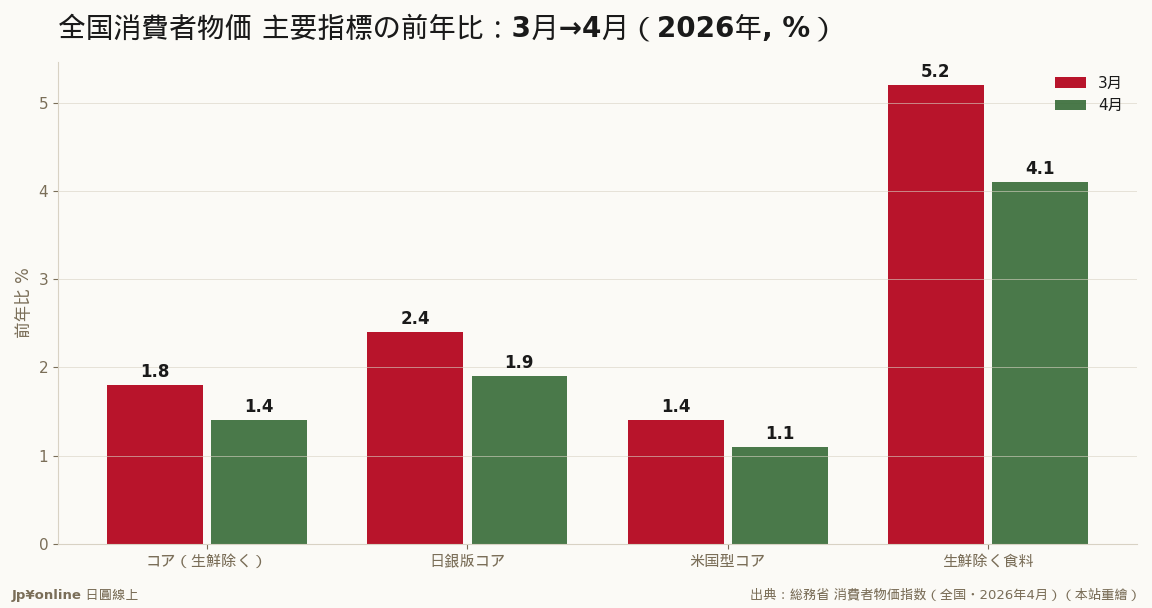
- Core CPI (excluding fresh food) at +1.4% for April (March: +1.8%, Market Expectations: +1.7%)
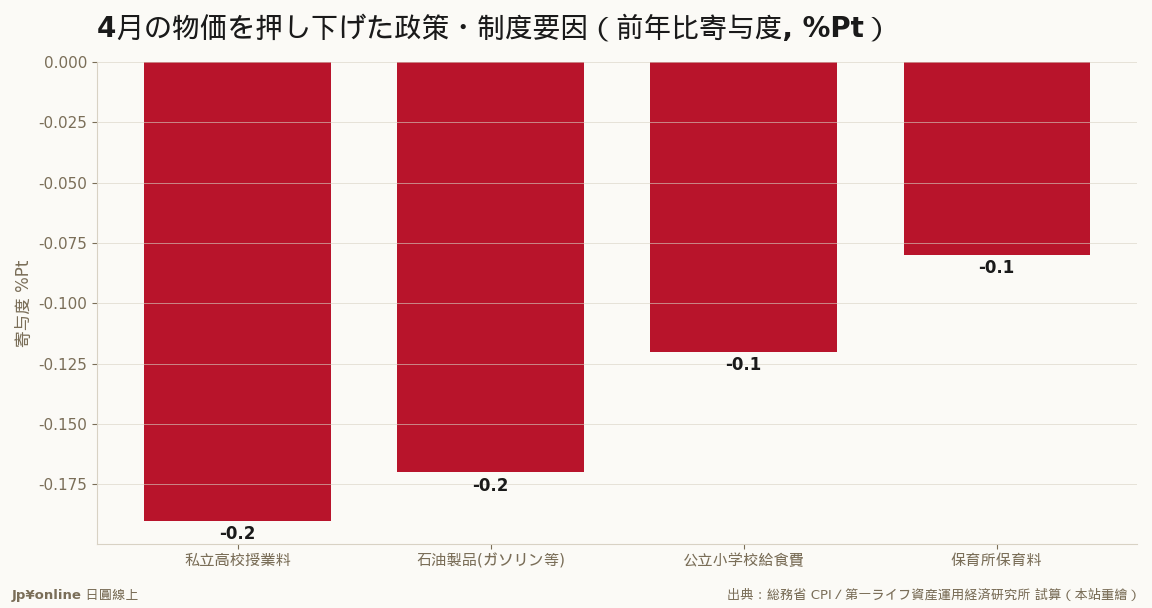
- Significant policy-driven pressures: Free high school education expansion, fuel subsidies, and free lunch programs
- Impact on yen and mortgage rates: Weaker yen expectations, delayed interest rate hikes beneficial for variable-rate mortgages
- Counter-arguments: Base effects from last year's high levels, potential subsidy withdrawal in winter/spring, uncertainties with Middle Eastern resources
- Practical tips for Taiwanese readers: Weak yen window may persist but keep an eye on energy subsidies and Middle East
The April nationwide core CPI (excluding fresh food) in Japan fell to +1.4% year-over-year, lower than the March reading of +1.8% and market expectations of +1.7%. The Bank of Japan's core inflation excluding energy also dropped sharply from +2.4% to +1.9%, breaching its 2% target. This signals a slowdown in inflation, but much is due to policy measures. For Taiwanese readers, this affects both the outlook for interest rates and your Japanese mortgage. While it might not be a material argument for early rate hikes as some experts suggest, weak yen expectations and lower mortgage rates are positive signs. However, don't assume we've seen the peak: high base effects from last year, fading subsidies, and risks from Middle Eastern resource prices still loom.
**Conclusion:** The May 2026 data on Japan's nationwide consumer price index (CPI) has doused the hopes of those betting on a rate hike by the Bank of Japan. Excluding fresh food, the core CPI (+1.4%) is lower than March's reading (+1.8%) and market expectations (+1.7%). More critically, even after removing energy prices, the Bank of Japan's core inflation also dropped to +1.9%, breaching its 2% target line. This has significant implications for both the Japanese yen and mortgage holders. The real question is whether this slowdown is genuine or merely an artificial suppression by policy measures.
**Breaking Down the Numbers:** The four key metrics—total CPI, core CPI (excluding fresh food), Bank of Japan's core inflation (excluding energy), and US-style core inflation (excluding food and energy)—all showed a slowdown. This indicates that price pressures are truly easing rather than just one-off factors.
**Policy-driven Pressures:** A significant portion of this drop is due to policy measures such as the expansion of free high school education, subsidies on fuel prices, and free lunch programs for elementary schools. Removing these factors still shows a slowdown in core inflation.
**Impact on Yen and Mortgages:** The sole justifiable reason for interest rate hikes is stable 2% inflation. With core inflation dropping below 2%, the urgency to raise rates has diminished. Experts argue that this is not material evidence for early rate hikes. Weaker yen expectations are positive for short-term currency traders, but good news for mortgage holders as variable-rate mortgages tie to policy rates.
**Counter-arguments:** Don't assume we've seen the peak of inflation yet. Firstly, this is a base effect from high levels last year. Secondly, subsidies can be double-edged swords—once they are phased out in winter and spring, energy prices could spike. Thirdly, uncertainties lie in Middle Eastern resource prices, which could drive up costs if passed on to consumers.
**Historical Context:** Japan's core CPI peaked at +4.2% in early 2023 before easing due to government subsidies and base effects. The April 2026 reading of +1.4% is a rare low point, aligning with the Bank of Japan's pause on rate hikes.
**Practical Tips for Taiwanese Readers:** Weak yen conditions may persist but keep an eye on energy subsidies and Middle Eastern developments. For mortgage holders, lower rates are positive, but don't assume they'll remain low forever. Tokyo's CPI is a leading indicator, showing +1.3% in May 2026 compared to April's +1.5%.
**What to Watch:** Focus on May national CPI data, timing of energy subsidies, and the transmission of Middle Eastern price increases.