2025 Land White Paper: Ownerless Lands Bigger Than Kyushu and the Inheritance Registration ObligationA · FULL TRANSLATION
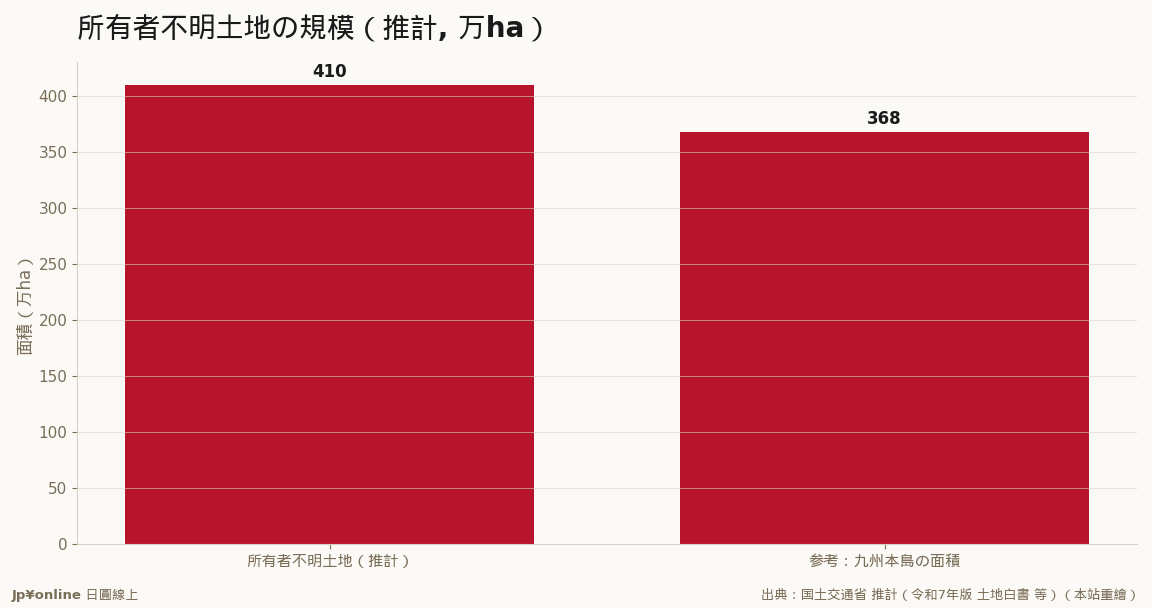
- Approximately 410,000 hectares of ownerless land in Japan—bigger than Kyushu Island
- 66.7% due to unresolved inheritances over generations
- Starting April 1, 2024: mandatory inheritance registration with fines up to 100,000 yen
- Government take-over system for unused inherited properties (planned 2026)
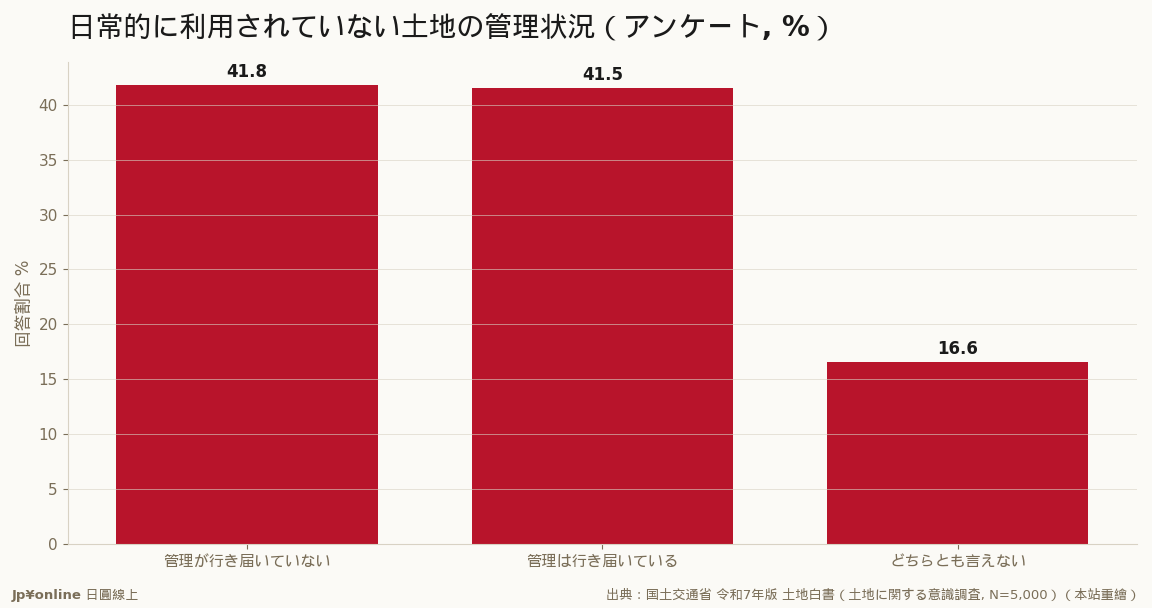
- Survey shows poor management of unused land at 41.8% vs 41.5% well-managed
The 2025 Land White Paper and accompanying legal reforms aim to address a critical issue for property owners in Japan, especially those inheriting assets: ownerless lands. There are approximately 410,000 hectares of land across Japan that cannot be traced back to an owner or where registration details do not match the records—more than the area of Kyushu Island (about 368,000 ha). The primary cause is the failure to register inheritances over many generations. Starting April 1, 2024, the inheritance registration obligation will be enforced: a maximum fine of 100,000 yen for non-compliance within three years, even for past inheritances. This new law impacts all property owners in Japan.
**Conclusion:** The 2025 Land White Paper and related legal reforms focus on a critical issue for foreign property owners in Japan: ownerless lands. Approximately 410,000 hectares of land nationwide are unclaimed or have incorrect registration—larger than the area of Kyushu Island. The main reason is the failure to register inheritances over many generations. To address this, the inheritance registration obligation will be enforced starting April 1, 2024, with fines up to 100,000 yen for non-compliance within three years. This affects both current and past inheritances.
**Clarifying the Issue:** Ownerless lands refer to registered lands where the owner cannot be found or contact is lost. The primary cause is not natural disasters but a long-standing neglect of inheritance registration. Government data shows that 66.7% of such lands are due to unresolved inheritances, meaning two-thirds of these issues stem from not registering inheritances.
**Why It's a National Problem:** Ownerless lands hinder various public works and development projects. For instance, government land acquisitions, agricultural consolidation, forest management, disaster recovery efforts, and regular maintenance are often stalled due to the lack of clear ownership. An analysis by the Land White Paper found that 41.8% of unused lands are poorly managed, compared to 41.5% well-managed.
**Historical Context:** Japan has long treated registration as a 'right' rather than an 'obligation.' In the past, this system worked because land was valuable and sought-after; however, with population decline and less-valued rural lands, the number of unclaimed or poorly managed properties has grown significantly. The legal reforms began in 2018 with special measures for ownerless lands, followed by major amendments to civil law and real estate registration laws.
**Government Solutions:** To enforce these changes, Japan implemented a series of reforms including mandatory inheritance registration, a government take-over system for unused inherited properties, and compulsory residence change registration. These measures aim to re-allocate unclaimed or underutilized lands to productive uses.
**Counterarguments:** The enforcement is strict but the extent remains to be seen. Fines are relatively mild, so their effectiveness in driving millions of registrations could vary. The government's take-over system has stringent conditions and not all properties will qualify for it. Lastly, managing overseas inheritance cases can be complex and time-consuming.
**The Link with Vacant Houses:** Ownerless lands often become vacant houses. Neglected inherited homes turn into both ownerless lands and vacant houses, exacerbating both issues simultaneously. Japan is dealing with a record number of vacant houses, which increase costs for property owners if left unmanaged. This highlights the need to manage inherited properties properly.