Guests Are Back, But We Can't Hire Staff — The 2025 Tourism White Paper Unveils the True Ceiling of the Accommodation Industry: Productivity Is Only 55% of the Nation's AverageA · FULL TRANSLATION
- Record inbound tourism demand in 2024 (36.87 million visitors, ¥812.57 billion spent, 650 million room-nights)
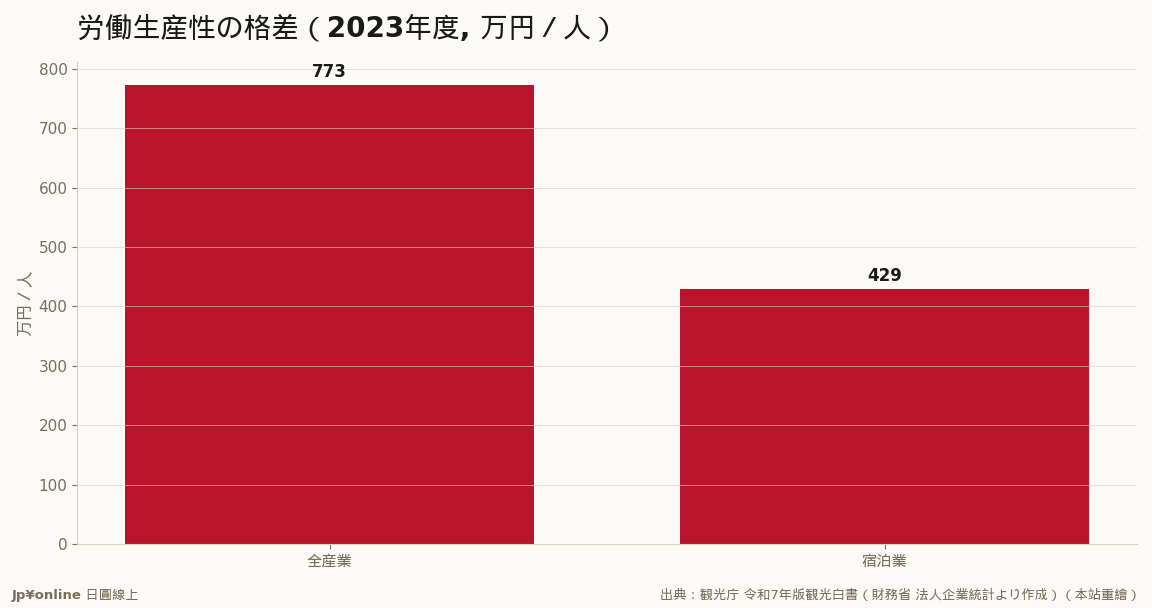
- Hotel sector productivity in FY2023 at only ¥4.29 million, 55% of the national average
- Long-term labor shortages and extreme negative employment sentiment index (-60) in accommodation and food services
- Government's strategy: sustainable tourism region development with emphasis on workforce, foreign talent, and digital technology
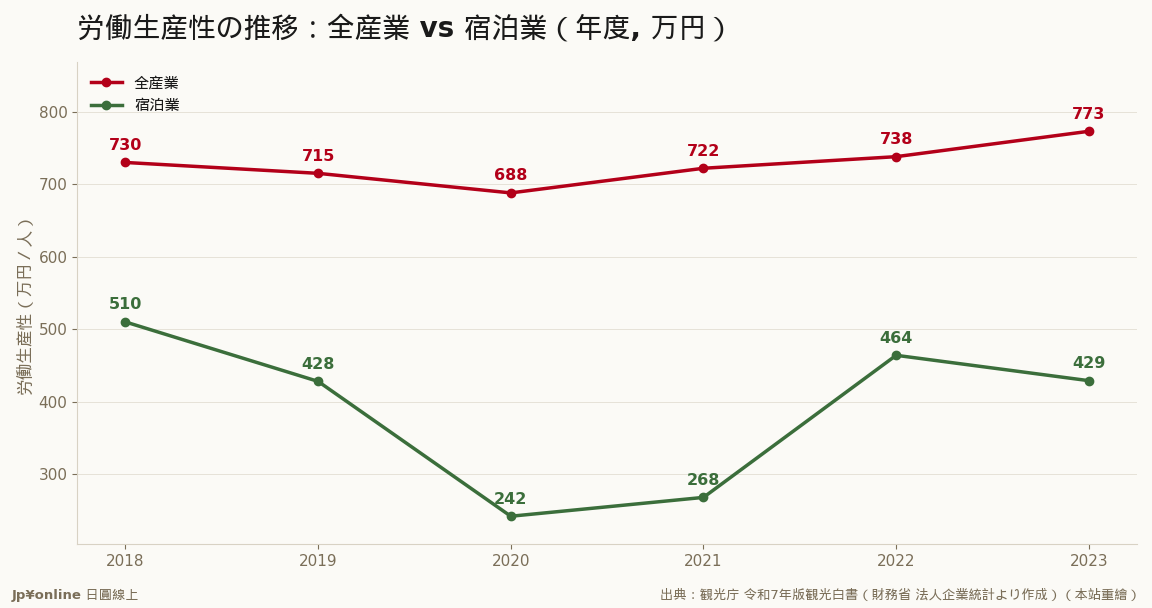
The 2025 Japan Tourism White Paper reveals a crucial fact for those wishing to operate in the accommodation business: inbound tourism demand is at an all-time high (36.87 million visitors, ¥812.57 billion spent, and 650 million room-nights — all past records), but supply-side constraints are evident — labor shortages and low productivity have become true bottlenecks in the industry. The white paper uses two key data points to illustrate this: accommodation sector labor productivity was just ¥4.29 million in FY2023, only 55% of the national average at ¥7.73 million; it has not returned to its peak from FY2017 at ¥5.4 million. Hotel occupancy rates are full, but staff are stretched to their limits with no corresponding rise in added value.
This white paper clearly states that despite record tourism demand, the accommodation sector faces a real productivity ceiling due to labor shortages and low efficiency. The key data points are stark: accommodation industry productivity was just ¥4.29 million in FY2023, only 55% of the national average at ¥7.73 million; it has not recovered from its high point of ¥5.4 million in FY2017. With visitor numbers back, but employee productivity lower than pre-pandemic levels, the sector faces a labor crisis.
[Unpacking Key Metrics] 'Productivity' refers to the added value generated by an enterprise per average worker — essentially how much value each employee contributes annually. The white paper cites data from Japan's Ministry of Finance showing that while national industry productivity has steadily increased since FY2018, the accommodation sector has stagnated and even declined in recent years.
[The Productivity Gap at 55%] In FY2023, hotel sector productivity was only 55% of the national average. This gap means two things: one, the labor-intensive nature of the hospitality industry; and two, post-pandemic demand surges and staffing shortages have exacerbated these issues.
[Severe Labor Shortages] Another key data point is the Bank of Japan's 'Employment Personnel Sentiment Index' (EPMI) for the accommodation and food service industries. This index shows a long-term shortage of labor, with an extreme negative reading close to -60. This structural staff shortage is not a short-term workforce issue but a chronic problem due to aging and low wages.
[The Demand-Supply Divide] The white paper's data also highlight the growing gap between demand and supply. In 2024, occupancy rates returned to 60.5%, foreign guest room-nights surged to 163.6 million (up 41.5% from 2019), and overall room-nights hit a record 650 million — demand is well above pre-pandemic levels. However, supply has not expanded proportionally: occupancy rates are high while the same overworked staff struggle to keep up.
[Government's Prescription: People, Talent, Technology] The white paper proposes strategies under the 'Sustainable Tourism Region Development' framework. Key points include ensuring and training personnel, attracting foreign talent, and boosting productivity through digital technology like cashless payments and self-check-in systems with expert support.