Japanese Trade Surplus Turns Deficit in May, Up 17% in ExportsA · FULL TRANSLATION

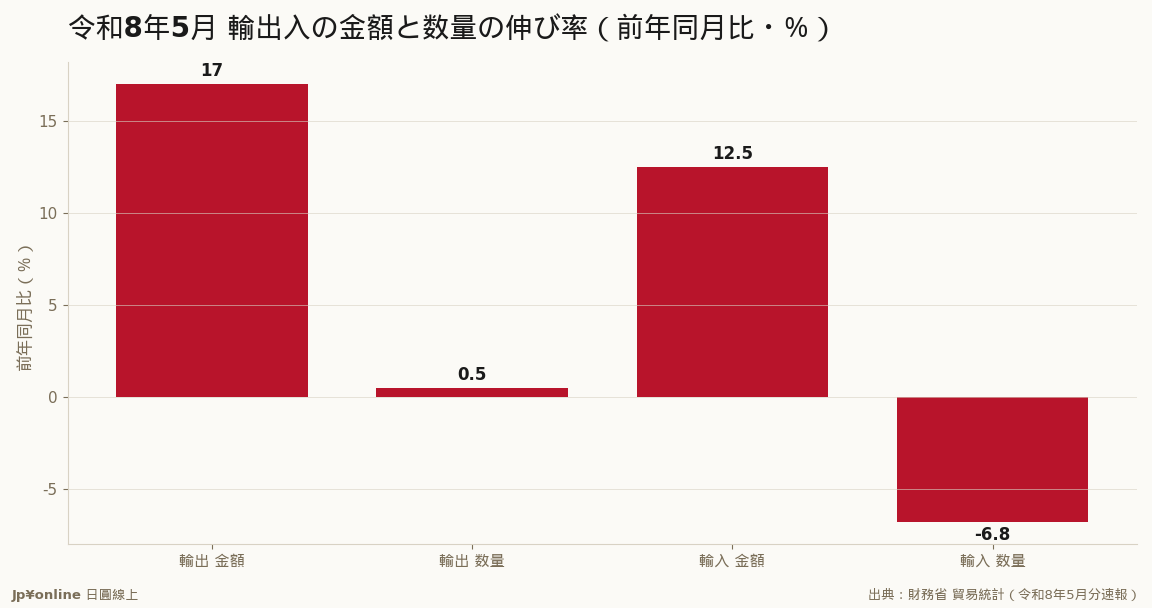
- May 2026 trade statistics: exports up 17%, imports up 12.5%, resulting in a deficit of ¥378.6 billion
- The apparent increase is driven by weak yen and price hikes, with actual export quantities barely growing (up only 0.5%)
- US exports up 12.5% but US trade surplus down 19.9% for six consecutive months
- Exclusive insight: break the data into two layers - amounts vs. quantity index, and focus on US trade surpluses’ shrinking trend
- Counterpoint: nine-month export growth in all major regions, seasonal factors affecting monthly results
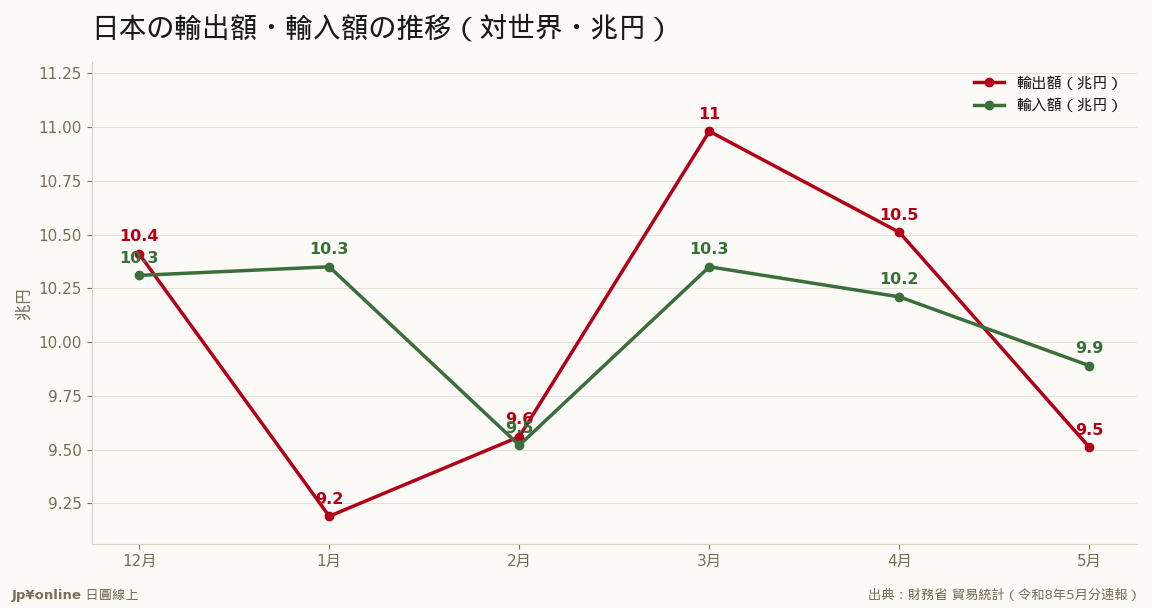
The Ministry of Finance released the trade statistics for May 2026 on June 17: exports rose by 17.0% to ¥951.16 billion, continuing a nine-month increase; however, there was a deficit of ¥378.6 billion, marking a four-month reversal.
The data shows a surface-level increase in exports but a trade deficit, which can be understood by breaking it down: export values increased 17% while the quantity index only rose 0.5%, indicating a significant impact from the weak yen and price hikes. Imports saw a stronger increase due to energy prices and the weaker yen, but also suffered from strong competition in the US market.
For Taiwanese readers, this news is crucial because many Taiwanese manufacturers are part of Japan’s export supply chain. The 'amounts bright, quantities dim' dynamic, along with the yen's weakness, will directly impact order rhythms and exchange rate assessments between Taiwan, Japan, and the US.
Key figures reveal that after adjusting for seasonal factors, there was still a deficit: adjusted exports stood at ¥105.148 trillion, while imports were higher at ¥106.052 trillion, leading to a deficit of ¥904 billion. This indicates the trade balance is not just seasonally driven.
A unique perspective is provided by analyzing two layers: 1) Amounts over quantities (the real economy’s quantity index barely moved in May), and 2) The direction of US trade surpluses, which have been shrinking for six consecutive months at an accelerating rate. This signals potential tariff effects post-implementation.
For those holding yen or expecting its appreciation, the data suggests a mixed outlook: while exports continue to grow, any strengthening could quickly reduce the nominal growth rates.