Japan's Trade Surpassed Historical High in 2025: The Real Driver was Cheaper Energy BillsA · FULL TRANSLATION

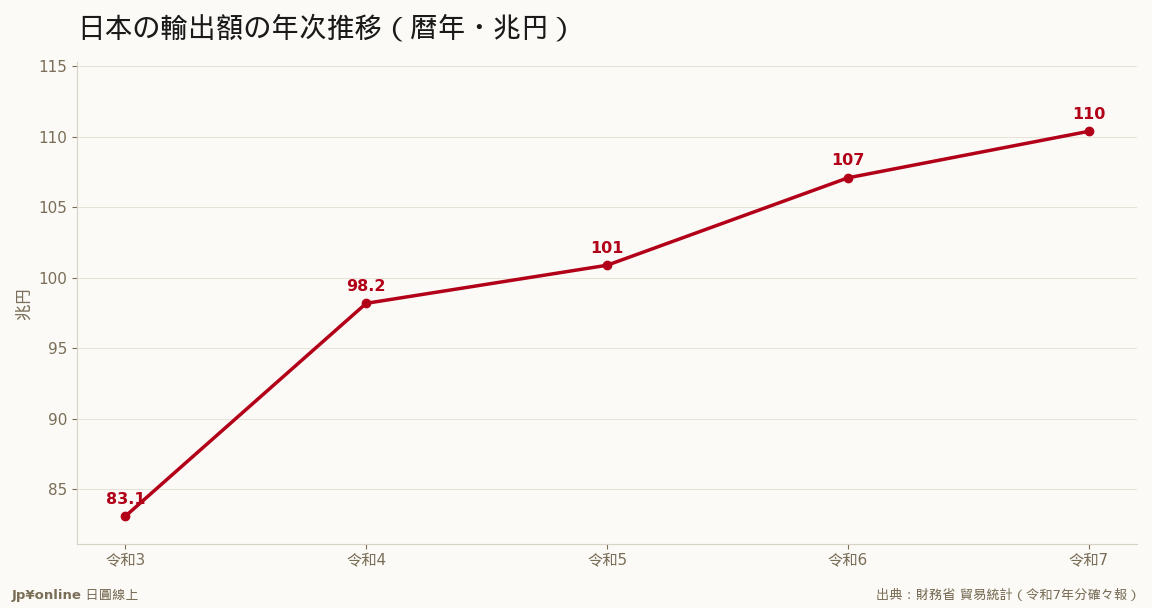
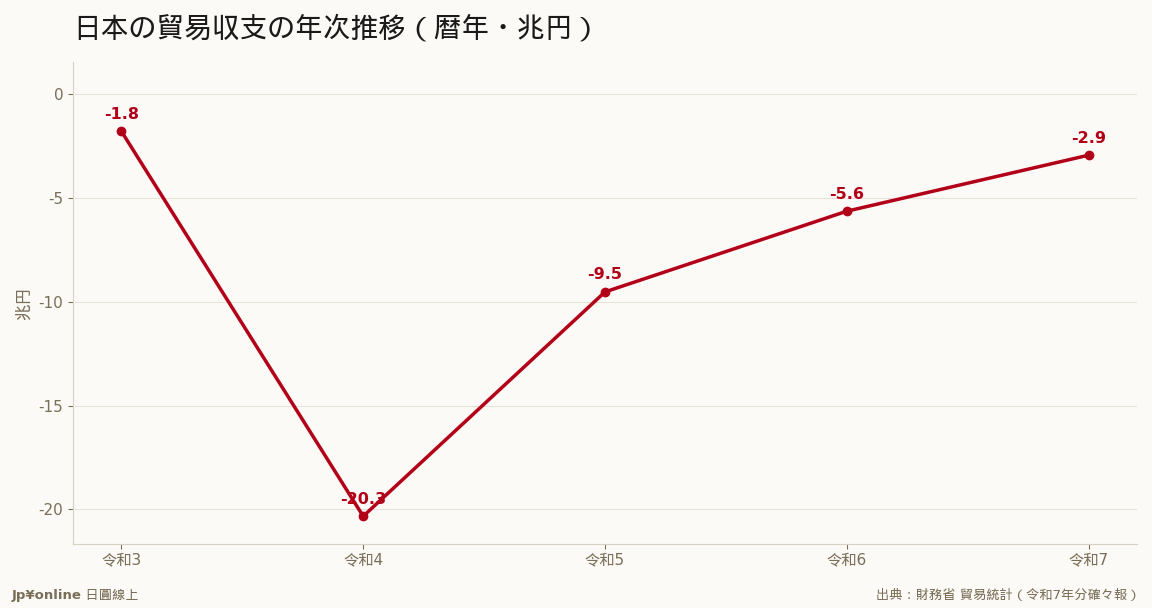
The Ministry of Finance announced the trade statistics for Heisei 7 (2025 calendar year): exports reached 110.4 trillion yen, up 3.1% from the previous year (a new historical high and a fifth consecutive increase); imports were 113.3301 trillion yen, up 0.5%. The trade deficit narrowed to -2.9296 trillion yen, still in the red but reduced by 47.9% compared to last year's -5.635 trillion yen (a near halving). In one sentence: Japan’s exports reached a historical high, but the improvement in the trade balance was driven not by higher export earnings, but cheaper energy bills—mineral fuels imports dropped 13.2% (-3.0 percentage points), mainly due to oil and gas prices dropping 11.5% and LNG down 8.5%, coal down 26.2%. The momentum in exports has shifted from automobiles to semiconductors: while semiconductor-related electronics and manufacturing equipment exports rose by 8.4%, auto exports fell by 1.7%. For Taiwan-based investors, understanding the true driver of reduced deficits is crucial.
【Conclusion】In Heisei 7 (2025 calendar year), the Ministry of Finance announced trade statistics: export sales hit a record high of 110.4 trillion yen (+3.1%), marking the fifth consecutive annual increase; imports were 113.3301 trillion yen, up 0.5%; and the trade deficit was -2.9296 trillion yen, still negative but reduced by 47.9% from last year's -5.635 trillion yen (a near halving). In short: Japan’s exports hit a historical high, but the improvement in the trade balance was driven not by higher export earnings, but cheaper energy bills.
【Indicator Plain Language Explanation】Trade deficit is calculated as exports minus imports. A deficit indicates that more goods are imported than exported, and this often poses a structural headwind for the yen. Japan has had a trade deficit since 2021 due to soaring energy prices and a weaker yen in 2022, which pushed up import costs dramatically (the deficit peaked at -20.33 trillion yen in Heisei 4). Therefore, when analyzing Japanese trade figures, it’s crucial to distinguish whether the improvement is due to stronger export performance or cheaper imports (particularly energy)—each has vastly different implications for the yen and monetary policy.
【Number Breakdown: Earnings from Exports, Improvement from Imports】On the export side, the new historical high was driven by semiconductors and other electronic components: exports of these parts increased 8.4% to 6.588 trillion yen; while manufacturing equipment for semiconductors rose to 4.5471 trillion yen, supporting overall growth. However, traditional automotive exports fell 1.7% to 17.612 trillion yen. This shows a shift in export momentum from 'cars' to the 'semiconductor chain'. On the import side, this is the true driver of deficit reduction: mineral fuel imports (oil, natural gas, coal) declined by 13.2%, contributing -3.0 percentage points to the deficit—oil and crude oil fell 11.5%, LNG dropped 8.5%, and coal was down 26.2%. Cheaper energy bills and a 11.1% decline in Middle Eastern imports brought overall imports up by only 0.5%, shrinking the deficit from -5.635 trillion to -2.93 trillion.
【A Unique Methodology: Analyzing Annual Trade Balances, Ask 'Is Improvement Due to the Numerator or the Denominator'】Improvements in trade balance can come from two sources: stronger export performance (competitiveness), or cheaper imports due to falling resource prices (luck). The deficit reduction in Heisei 7 was mainly driven by the denominator—energy prices fell, contributing significantly. However, export growth also benefited from a weaker yen (up 3.1% overall, but this includes inflation and exchange rate effects). Separating these factors is critical: improvements due to resource pricing are temporary—they can be reversed if energy prices rise again or the yen depreciates.
【Opportunities and Risks】For Taiwan-based companies in the semiconductor supply chain (including many Taiwanese firms), a shift in export momentum towards semiconductors is a structural tailwind; for Japanese automakers, falling automobile exports under US tariffs pose a significant risk. For those holding yen assets, while reduced deficits theoretically provide some support to the yen, this improvement is unstable and should not be overinterpreted as a fundamental strengthening of the yen.
【Counterargument】While it’s important to avoid overly pessimistic readings, five consecutive years of export increases, reaching new highs, indicate expanding absolute demand. The growth in semiconductor-related sectors reflects real industrial trends rather than just exchange rate effects. Four consecutive years of deficit reduction also point to the right direction—while resource price drops are a stroke of luck, Japan is simultaneously shifting its export basket towards higher-value-added semiconductors.
【What is the Kakukakuhō (Final Revised Report)?】These figures are from the final, most-revised release