Analysis: Japan’s 2025 Exports to the US Down 4.3% - Only Major Market DecliningA · FULL TRANSLATION

- Fiscal Year 2025 (Reiwa 7) Japanese exports to the US fell by 4.3% to ¥20.37 trillion - only major market experiencing decline (Asia +5.3%, Europe +1.3%, global total +3.1%)
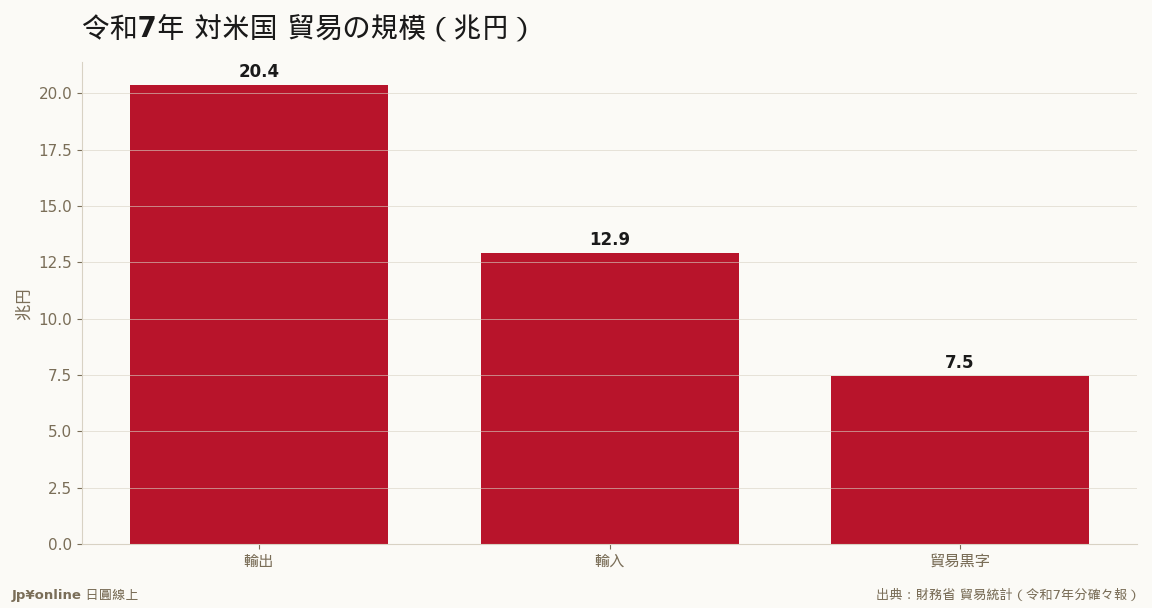
- Trade surplus of ¥7.46 trillion remains large but down 13.3% (exports down, imports up 1.8% squeezing both sides)
- Unique perspective: The reduction in trade surplus speaks louder than its absolute value - consecutive reductions and specific product declines indicate early signs of cost implications from tariffs
- Risk for Japanese car makers and supply chains, US tariff impact may worsen in fiscal 2026 (Reiwa 8); semiconductor equipment decline hints at cyclical vs policy factors, affects East Asia orders
- Practical tips: Monitor year-over-year trade surplus reduction and leading indicators like automotive and semiconductor exports rather than focusing on absolute values
In the fiscal year 2025 (Reiwa 7), Japanese exports to the United States decreased by 4.3% to ¥20.37 trillion, marking a decline in Japan’s key export market for that period (Asia +5.3%, Europe +1.3%, global total +3.1%). The trade surplus remained substantial at ¥7.46 trillion, but fell by 13.3%. The downturn was primarily driven by a double-digit decline in automobiles and semiconductor manufacturing equipment due to US tariffs. For Taiwanese readers, this trend highlights the importance of monitoring the reduction in trade surpluses for automobiles and semiconductor equipment as early indicators of the cost implications from US tariffs. This year’s report serves as both an analysis and a warning sign.
Why Should Taiwanese Readers Care? In fiscal 2025 (Reiwa 7), Japanese exports to the United States stand out as the weakest sector: a decline of 4.3% to ¥20.37 trillion – while all other major markets saw growth. The trade surplus still stands at ¥7.46 trillion, but this figure fell by 13.3%. This downturn is mainly due to double-digit declines in automobiles and semiconductor manufacturing equipment under the direct shadow of US tariffs. For Taiwanese manufacturers tied to Japan’s automotive supply chain, this trend provides early signals on when and how much tariff costs will materialize.
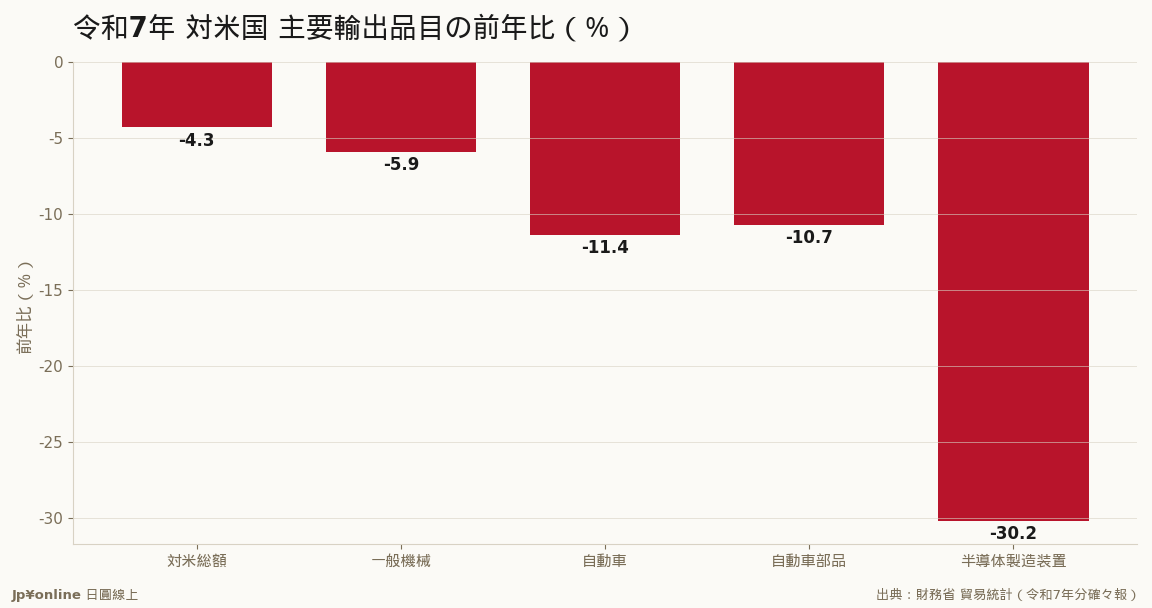
Breaking Down the Numbers: Why Are Exports So Weak? The biggest drag was motor vehicles with a 11.4% year-over-year decline in output at ¥5.3409 trillion (a reduction of 3.2 percentage points), driven by a -10.8% drop in passenger cars; automotive parts also declined by 10.7%. The second factor was general machinery, down 5.9%, with semiconductor manufacturing equipment suffering a staggering 30.2% decline – representing a significant cut. Japan’s biggest export earnings come from automobiles and machinery, so their simultaneous decline dragged overall US exports down 4.3%.
A Unique Methodological Perspective: The Decline in the Trade Surplus Speaks Louder Than Its Absolute Value. Many focus on ‘how much the Japanese-US trade surplus is’ but the leading signal is the direction of change. In fiscal 2025, Japan’s trade surplus with the US was ¥7.46 trillion and fell by 13.3%, underpinned by two opposing forces: a decline in exports due to tariffs and demand concerns (automobiles and semiconductor manufacturing equipment saw double-digit declines), and rising imports. A long-standing, steady trade surplus shrinking annually is often an early sign of trade friction moving from the agenda to real costs – tariffs won’t suddenly appear on the overall trade balance but will first be felt through specific product categories like automobiles and semiconductors.
Who Is at Risk? For Japanese car manufacturers and their supply chains, a 11.4% decline in US automotive exports is a clear headwind; if tariffs fully take effect, the impact could amplify in fiscal 2026 (Reiwa 8). For semiconductor equipment manufacturers, a 30.2% decline represents a significant cut that warrants attention to whether it’s cyclical or policy-driven. For Taiwanese companies, Japanese exports of cars and equipment will affect order flows throughout East Asia.
Practical Tips for Taiwanese Readers: One, monitor the year-over-year reduction in trade surpluses with the US and leading indicators like automobile and semiconductor equipment exports rather than focusing solely on absolute surplus values. Two, a 11.4% decline in automobiles is a major pain point for Japan’s export basket; investors or supply chain managers focused on Japanese cars should continue tracking this trend. Three, this is an end-of-year analysis, and the next monthly report (including May data which has seen six consecutive months of contraction) will extend this trend forward, so both need to be considered together.
What to Watch Next? One, monitor whether US tariffs further deteriorate Japanese automotive exports in fiscal 2026; two, assess if the semiconductor manufacturing equipment decline is a bottoming out or deeper cut; three, watch the pace of trade surplus reduction – is it slowing down or accelerating?