Analysis: Inbound Spending Hits 9.45 Trillion Yen in 2025, but Average Spend Per Person StagnatesA · FULL TRANSLATION

- 2025 inbound spending reached ¥9.45 trillion, up 16.4% from the previous year (¥8.1257 trillion in 2024)
- Average spend per person was only ¥229,000, up just 0.9% — growth primarily due to more visitors
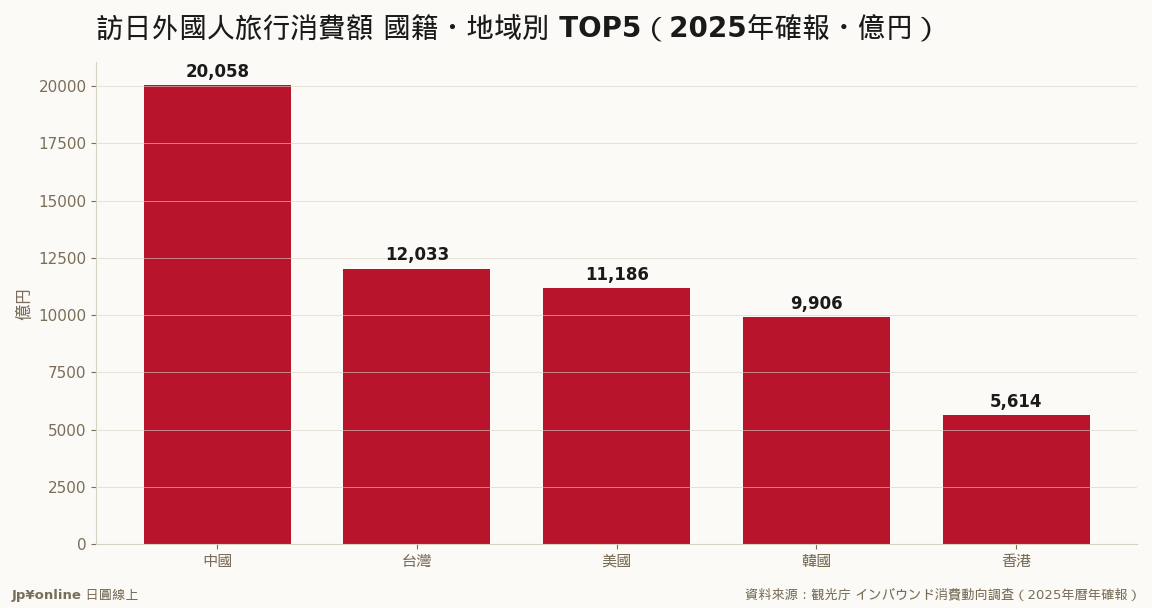
- Taiwan's second-largest market: contributed over ¥1.2 trillion in spending; top five nationalities accounted for 62.2%
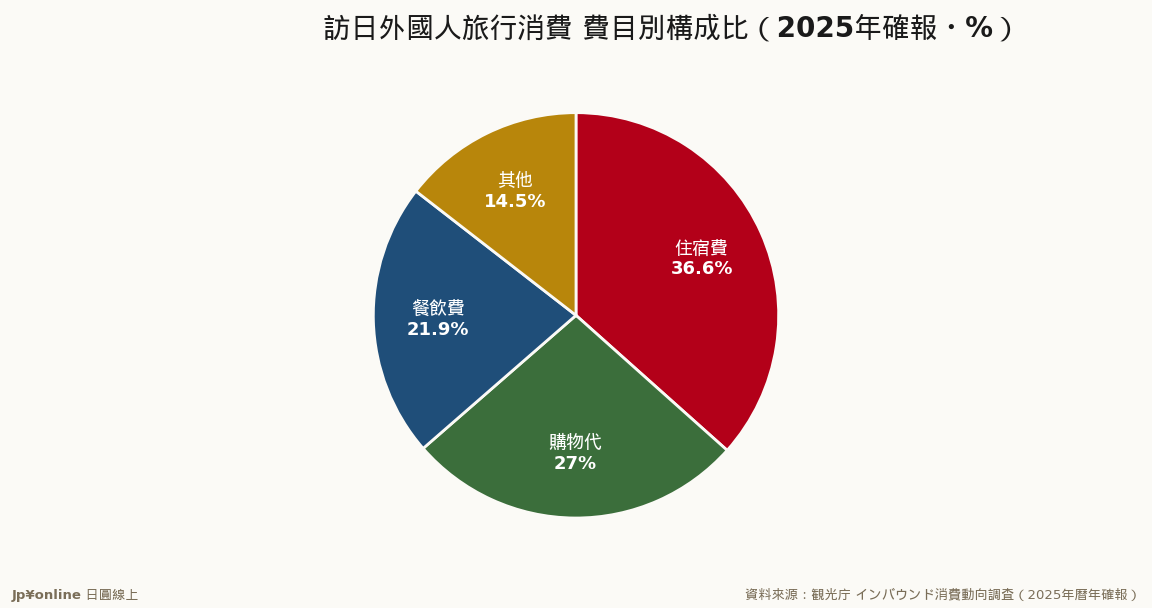
- Accommodation was the largest category at 36.6%, followed by shopping (27.0%) and dining (21.9%) — a shift from past heavy reliance on 'shop-till-you-drop' spending
- Next phase of Japanese tourism hinges on increasing average spend per person rather than just visitor numbers
The Ministry of Tourism reported that inbound foreign tourist spending for 2025 reached ¥9.45 trillion, up 16.4% from the previous year (¥8.1257 trillion in 2024) and setting a new record. However, when broken down into 'number of visitors times average spend', growth was almost entirely due to an increase in visitor numbers — each general tourist spent ¥229,000 on average, up only 0.9% from the previous year. In comparison with the 5th Basic Plan for a Tourism-Based Nation's target of ¥250,000 per person by 2030, the current figure is still lagging and has hardly moved. The top five nationalities accounted for 62.2% of total spending: China (¥200.58 billion or 21.2%), Taiwan (¥120.33 billion or 12.7%), USA (¥111.86 billion), South Korea (¥99.06 billion), and Hong Kong (¥56.14 billion; second largest source of tourists, contributing over ¥1.2 trillion). Spending categories saw accommodation as the largest at 36.6%, followed by shopping at 27.0% and dining at 21.9%. Accommodation is now the top category, marking a shift from past heavy reliance on ‘shop-till-you-drop’ spending.
Conclusion: The Ministry of Tourism reported that inbound foreign tourist spending for 2025 hit ¥9.45 trillion, up 16.4% from the previous year (¥8.1257 trillion in 2024) and setting a new record. However, when broken down into 'number of visitors times average spend', growth was almost entirely due to an increase in visitor numbers — each general tourist spent ¥229,000 on average, up only 0.9% from the previous year. The next phase of Japanese tourism revenue hinges on this gap: while numbers are still increasing, the average spending per person is stuck.
Breaking it down further, the top five nationalities accounted for 62.2% of total spending: China (¥200.58 billion or 21.2%), Taiwan (¥120.33 billion or 12.7%), USA (¥111.86 billion), South Korea (¥99.06 billion), and Hong Kong (¥56.14 billion; second largest source of tourists, contributing over ¥1.2 trillion). In spending categories, accommodation was the largest at 36.6%, followed by shopping at 27.0% and dining at 21.9%. Accommodation is now the top category, indicating a shift away from past heavy reliance on ‘shop-till-you-drop’ spending. Additionally, domestic tourism spending for Japan in 2025 was approximately ¥37.6 trillion, up by nearly 10%, with inbound spending of ¥9.5 trillion serving as an additional engine driving this larger market.
Practical Tips for Taiwanese Readers: First, businesses involved in Japanese accommodation and tourism should understand that the key to this year's success lies in 'visitor numbers'. The next competitive edge will be in average spend per person — those who can increase the cost per customer for lodging, experiences, and dining are aligning with national policy. Second, as accommodation is now the largest category of spending, it represents the most direct benefit for businesses focusing on this sector (including upscale, long-term stays, and bundled experiences). Third, due to Taiwan's significant contribution (second largest source of tourists), products and channels targeting the Taiwanese market remain a stable base. Keep an eye out: whether average spend will approach ¥250,000 by 2030, if accommodation spending continues to rise, and how weak yen conditions might impact high-spending segments relying on currency fluctuations (data source: Ministry of Tourism's Inbound Consumption Trend Survey 2025 annual report).