Japan Producer Prices Jump 7.1%, Fastest in Three Years, as Upstream Costs Queue Up for Your WalletA · FULL TRANSLATION

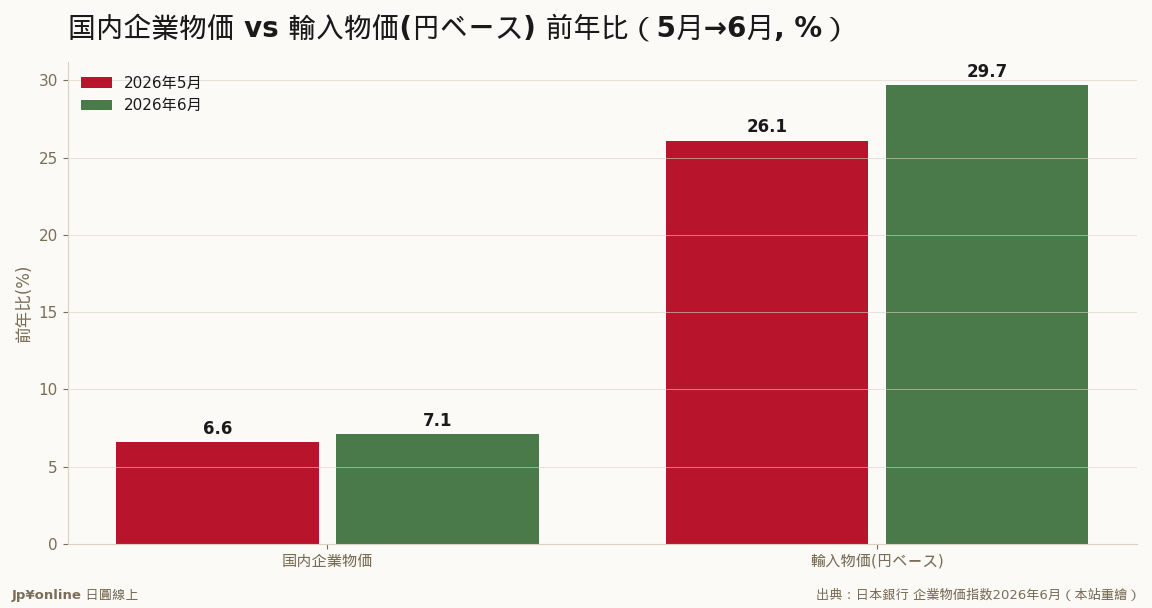
- June domestic PPI +7.1% YoY (May +6.6), fastest since March 2023; monthly +0.4% (May +1.1) cooling
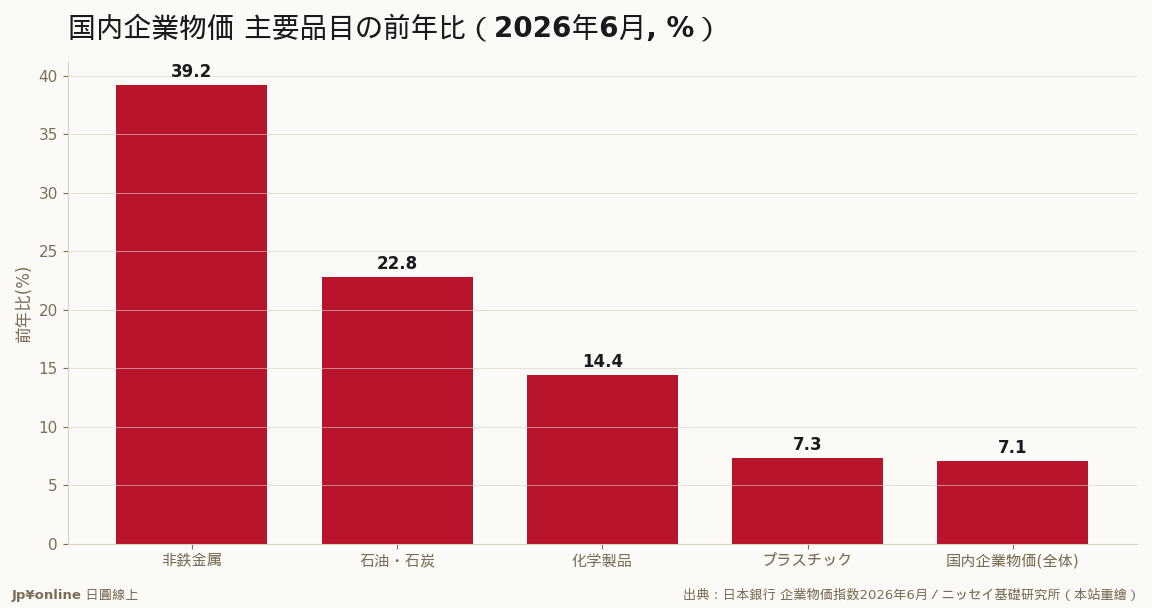
- Top contributors: nonferrous metals +1.50pt (+39.2% YoY), oil/coal +1.45pt (+22.8%), chemicals +1.12pt (+14.4%)
- Middle East tensions lifted oil/coal, spilling into plastics (May +5.6 to June +7.3%)
- Yen-based import prices +29.7% (May +26.1), most since Oct 2022; USD/JPY weak near 161
- Upstream +7.1% vs sub-2% consumer CPI = pass-through queued with a lag; BOJ sees PPI staying elevated
- Wallet hook: sticky upstream + surging import prices raise BOJ hike pressure—watch CGPI ahead of CPI for mortgage rates and the yen
The Bank of Japan reported that the Corporate Price Index (CGPI) for June was up 7.1% year-over-year, expanding by 0.5 percentage points from May's 6.6%. This is the highest since March 2023 when it reached 7.4%. The gap between upstream CGPI and downstream core CPI around 1%, indicates potential future inflation pressure on consumers. Key contributors include non-ferrous metals, petroleum and coal products, and chemicals.
This report from the Bank of Japan on the Corporate Price Index (CGPI) for June shows a significant signal: domestic corporate price increases reached 7.1% year-over-year, expanding by 0.5 percentage points from May's 6.6%, the highest since March 2023 when it was at 7.4%. For Taiwanese readers interested in making money or investing in Japan, this number tells you that cost pressures are not yet peaking and upstream price increases are still working their way down to consumers.
Firstly, understand the difference between two types of prices: consumer price index (CPI) is what we pay at retail stores—downstream. Corporate Price Index (CGPI) measures the prices companies charge each other for intermediate goods like steel, copper, oil, chemicals, and components—upstream. Upstream increases precede downstream ones with a time lag as businesses absorb costs before passing them on to consumers.
The main contributors were non-ferrous metals (contributing +1.50 percentage points, year-on-year growth of 39.2%), petroleum and coal products (contributing +1.45 percentage points, year-on-year growth of 22.8%, significantly higher than May's 13.7%), and chemicals (contributing +1.12 percentage points, year-on-year growth of 14.4%). The Middle East situation pushed up oil and petrochemical raw materials, which then spread to plastic products (growth from 5.6% in May to 7.3% in June). Metal markets and geopolitical tensions contributed significantly this month.
The real fireworks are at the import end. Input prices in yen terms were up 29.7% year-on-year, expanding further from May's 26.1%, highest since October 2022 (up 42.3%). The reasons for this are twofold: rising foreign currency prices of oil and metals, coupled with a weaker yen that amplifies import costs—currently the US dollar to Japanese yen rate is in the weak 161 yen range. A weaker yen makes the same barrel of oil or ton of copper more expensive when converted into yen. With input price increases consistently over 20% year-on-year for three consecutive months, this will continue to push through to domestic corporate prices, leading the Bank of Japan to forecast that future domestic corporate price increases will remain high.
This is the second wave: while the previous peak in imported inflation was from October 2022 when input prices hit a 42.3% year-on-year increase, this time it's driven by rising oil and metal prices due to Middle East tensions, coupled with an even weaker yen at around 161 yen. The same batch of imports will have higher costs in yen compared to the first wave.
Why upstream price increases matter: they are a leading indicator for consumer prices (CPI). Companies won't pass on all cost increases immediately—they'll absorb them through inventory and watch competitors before raising prices. This usually takes several months. The Bank of Japan specifically highlighted food products: while their year-on-year increase has slowed from 5.1% in January 2026 to a lower rate, future price hikes are still possible due to ongoing increases in raw material costs driven by input price inflation.
On the flip side, the high numbers show signs of easing pressure. The month-over-month increase was only 0.4%, down from May's 1.1%. This suggests that while year-on-year growth is high, the momentum has slowed. For those concerned about mortgage rates or property in Japan, CGPI and input prices should be watched more closely than CPI as indicators of potential interest rate hikes.