Japan Department Store Duty-Free Sales Hit ¥50.9bn in June 2026, Up 29.8% for a Fourth Straight Monthly Gain
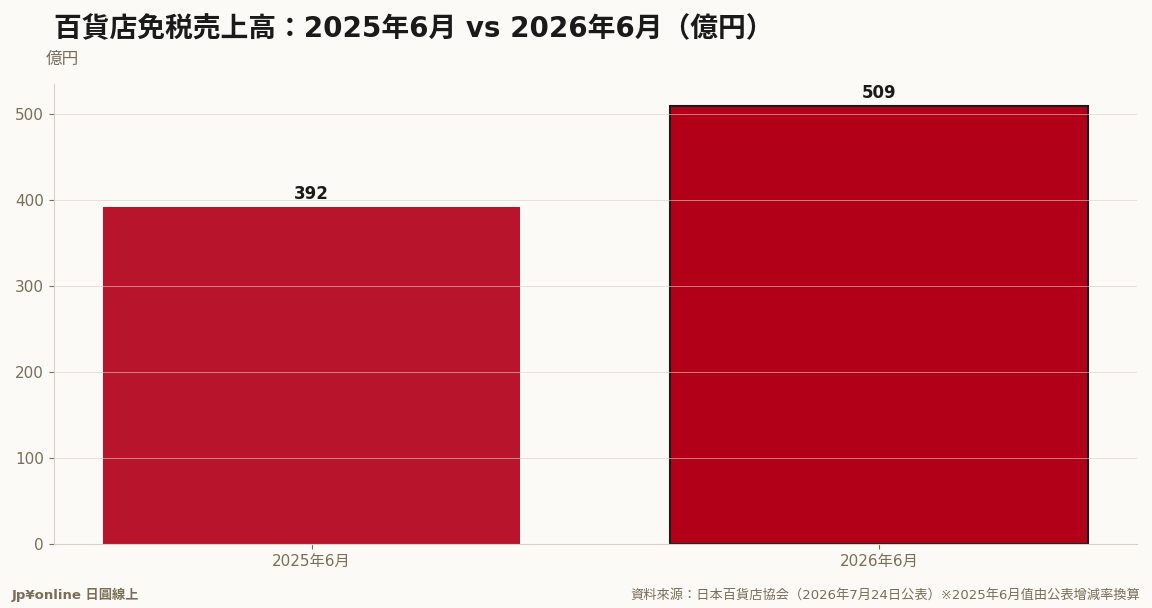
- June duty-free sales at Japanese department stores reached ¥50.9bn, up 29.8% y/y (store-adjusted), a fourth straight monthly gain and 10.9% of nationwide sales
- Duty-free shopper count was 498,000, down 0.5% y/y — an eighth straight decline, but the drop narrowed by 5.8 points from May
- Chinese shoppers fell about 25% in number while their spending rose about 16%, the first positive reading in seven months; Southeast Asian and Western visitors grew on both counts
- Nationwide department store sales rose 2.3% to ¥468.7bn, but domestic (non-duty-free) sales fell 0.2%, the first decline in 11 months — June's growth was carried by inbound demand
This is the first instalment of our fixed monthly series tracking duty-free sales at Japanese department stores, published by the Japan Department Stores Association in the last week of each month. The June 2026 skeleton: duty-free sales of ¥50.9bn rose 29.8% y/y (store-adjusted), a fourth consecutive monthly gain, accounting for 10.9% of nationwide department store sales. Shopper numbers, at 498,000, fell 0.5% — an eighth straight decline, though the drop narrowed sharply from May. The gap between surging sales and flat traffic is spend per head, up 30.4%, driven by watches, jewellery and luxury goods. The control group in the same release is telling: domestic (non-duty-free) sales fell 0.2%, the first decline in 11 months, which means June's headline 2.3% growth for the sector was carried entirely by inbound demand. The customer mix is also shifting — Chinese shopper numbers fell about 25% while their spending rose about 16%, the first positive print in seven months, and Southeast Asian and Western visitors grew on both counts. For retail and tourism operators, the two numbers to watch each month are when shopper counts stop falling and how long the spend-per-head boom lasts; both track the weak yen more than raw visitor flows. Next instalment: July data, due late August.
Starting this issue, Jp¥online will regularly track tax-free sales data from the Japan Department Store Association, presenting the same set of indicators each month for direct comparison against the previous period. For June: tax-free sales reached 50,900,000,000 yen, a year-over-year increase of 29.8%, marking four consecutive months of positive growth; visitor numbers decreased by 0.5% to 498,000, continuing an eight-month decline but showing improvement from the previous month’s decrease of 5.8 percentage points. On one hand, sales are growing in double digits, while on the other, visitor numbers continue to fall—this gap is filled by higher average transaction values, with high-value items like watches and jewelry leading the trend.
This report also provides a comparison: domestic sales excluding tax-free decreased by 0.2% year-over-year for the first negative month in eleven months. The association attributes this to weather (rainy season and typhoons reducing store visits by 6.7%) and fewer holidays, but the structural message is clear—June’s overall department store growth of 2.3%, excluding tax-free sales, was negative. Now, foreign visitors are driving the performance of department stores. Visitor demographics are changing: Chinese visitor numbers dropped by about 25% while sales increased by approximately 16%, marking a seven-month turnaround in positive growth; Southeast Asian and European markets saw both visitor and sales increases.
For those involved in tourism retail or tax-free channels, this line should be monitored monthly for two key figures: when visitor numbers stop falling (the decrease has narrowed to 5.8 percentage points from the previous month) and how long the trend of rising average transaction values will continue. The performance of high-value items is more closely linked to exchange rates than foot traffic itself, determining revenue in tax-free counters.