Thinking of Moving to the Countryside? Aim for a City of 300,000 Instead
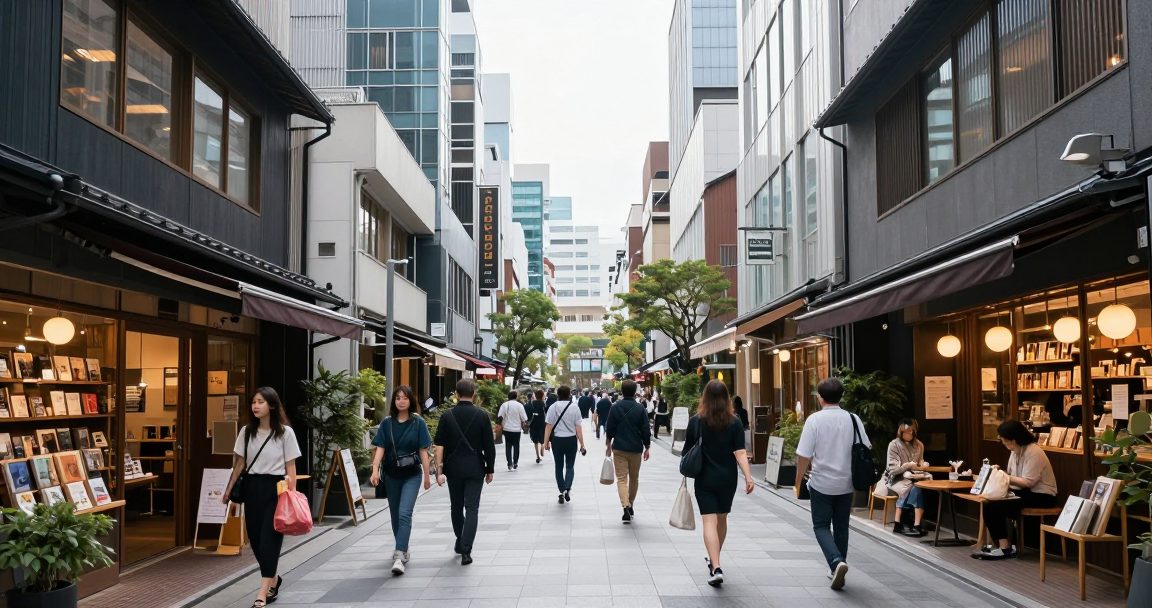
- Editorial advice: start with a city of 300,000 to 500,000 people before moving to rural areas.
- Cultural facilities like bookstores, cinemas, and cafes are increasingly available.
- Nagano City, Matsumoto City, and others are typical examples with access to nature and the sea.
- Suggests a gradual transition to rural life after adapting to a mid-sized city.
- Failure is acceptable; the key is understanding personal lifestyle preferences.
The most common mistake among foreigners buying property in Japan is choosing the house before choosing the city. In this SUUMO interview, editor Kakijiro Tokutani — who has reported from all 47 prefectures — offers a counterintuitive rule: do not move straight to the countryside. Start in a city of 300,000 to 500,000 people.
His reasoning is infrastructure density. At that scale, bookshops, cinemas and cafes remain viable, and independent shops have actually multiplied over the past decade. From there you can see the gradations of rural Japan and work out which distance suits you. His own path ran Tokyo-Nagano dual residence from 2017, relocation to Nagano City in 2019, and buying a house in Shinanomachi in 2023. His examples include Nagano (about 360,000), Matsumoto (230,000), Ueda (150,000), the Kosei area of Shiga, Itoshima in Fukuoka, and Naganuma near Sapporo.
The usable frame: live in a mid-sized city, forty minutes by car to mountains, another forty to the sea. Know whether you are a mountain person or a sea person. And treat the move as reversible.
The market context matters. Japan's 2023 housing survey counted roughly nine million vacant homes, a 13.8% vacancy rate. Cheap houses are abundant; buyers for them are not. Mid-sized cities are the sweet spot because a resale market still exists.
Three additional costs for overseas buyers: harder mortgage terms, annual fixed asset tax on idle property, and the fact that buying confers no residence status.