Bank of Japan, June 2026 Meeting: Policy Rate to 1.0% by Seven Votes to One, and Bond Purchase Tapering Stops in April 2027A · FULL TRANSLATION
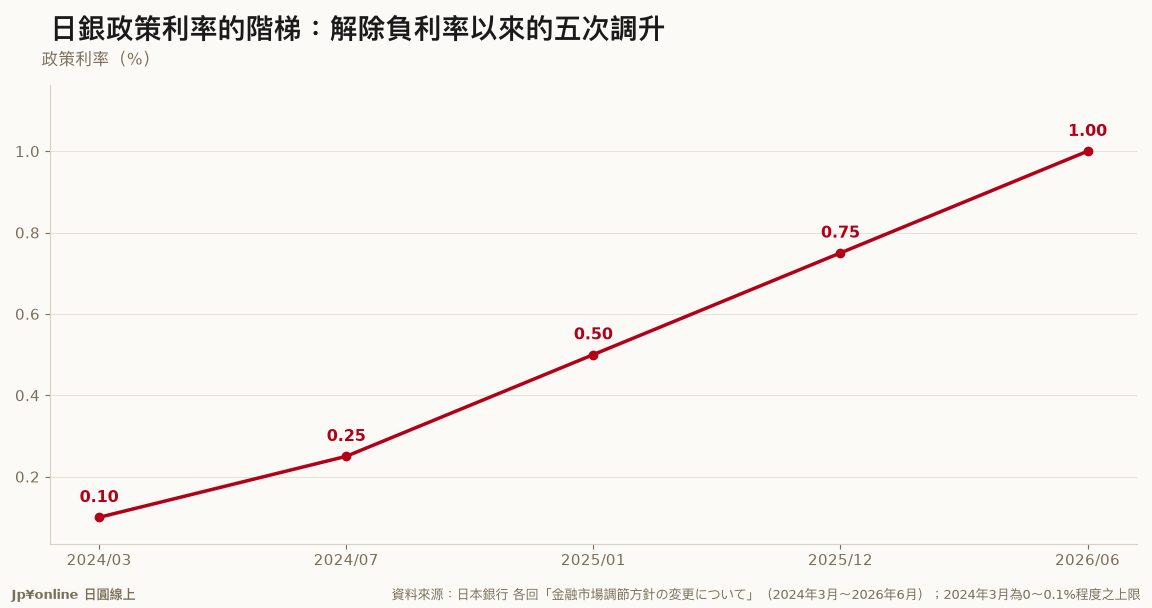
- This is the first entry in our standing coverage of this series. On 16 June 2026 the Bank of Japan raised its uncollateralised overnight call rate target by 0.25 points to around 1.0%, by seven votes to one. Asada dissented. Governor Ueda was absent and Deputy Governor Himino chaired.
- The complementary deposit facility rate moved to 1.0% and the basic loan rate to 1.25%, both effective 17 June. This is the fifth increase since negative rates ended in March 2024, a cumulative one percentage point.
- The minutes released at 08:50 on 5 August show most members judging that underlying inflation risks overshooting the 2% target, as oil-driven cost pass-through moves faster than expected. Asada argued that Middle East tensions posed a larger downside risk to output and employment.
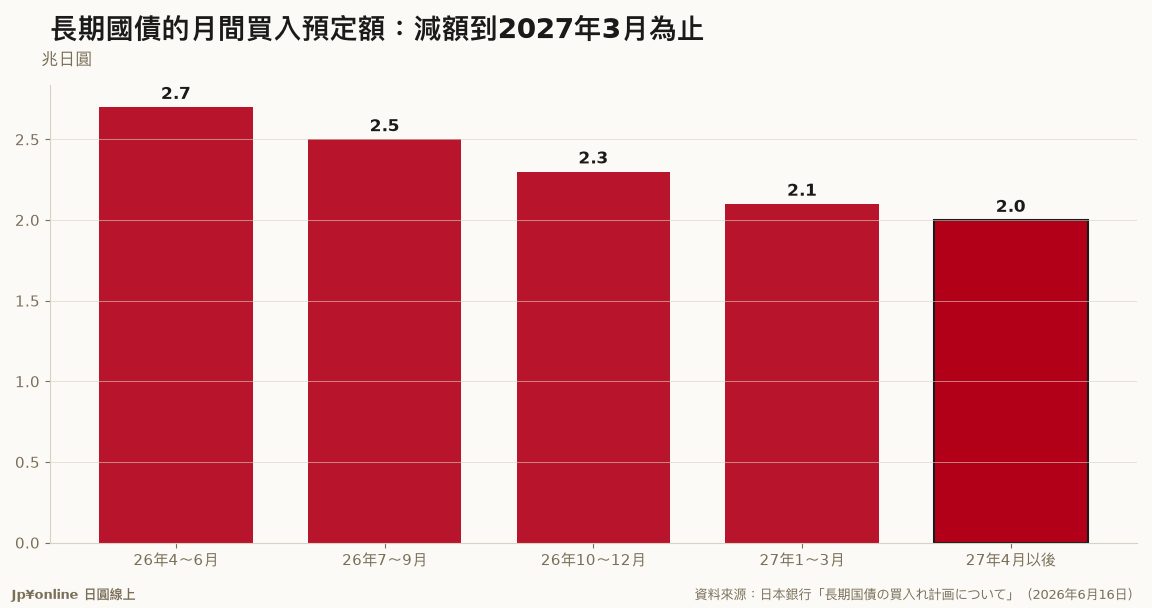
- The genuinely new content is the bond plan: quarterly reductions of about 200 billion yen continue to the January-March 2027 quarter, then stop, holding purchases at about 2 trillion yen a month from April 2027. Tamura's amendment to keep tapering into 2028 was defeated one to seven.
- On the rate path, one member put Japan's neutral rate at about 2% and favoured reviewing hikes every few months. The statement's language shifted from real rates being extremely low to the financial environment being accommodative.
This is the first entry in our standing coverage of Bank of Japan policy meetings. Every edition will carry the same two charts and the same indicators: where the policy rate stands, how the vote split, and what the bond purchase schedule looks like. The first entry happens to cover the most consequential meeting in three years.
The sequence matters. The rate rise was decided on 16 June and took effect on 17 June. What was published at 08:50 today, 5 August, is the minutes of that meeting: the reasoning and the disagreement, not a new decision.
The target for the uncollateralised overnight call rate went from 0.75% to around 1.0%, by seven votes to one. The complementary deposit facility rate is now 1.0% and the basic loan rate 1.25%. Governor Ueda was absent and submitted his view in writing; Deputy Governor Himino chaired. Counting from the end of negative rates in March 2024, this is the fifth increase and a full percentage point in total.
The majority argued that underlying inflation risks overshooting 2%, because oil-driven pass-through between firms is moving faster than expected while medium-term inflation expectations keep rising. Asada, the lone dissenter, weighed Middle East tensions as a bigger downside risk to output and employment.
The more durable news is the bond plan. Quarterly cuts of about 200 billion yen run to the January-March 2027 quarter, then stop, leaving purchases at about 2 trillion yen a month from April 2027. Tamura's amendment to keep cutting into 2028 lost one to seven. The Bank's own projection puts its holdings at about 480 trillion yen in March 2027 and 350 to 370 trillion by March 2030.
For readers: 1.0% is the new floor under variable mortgage rates; a member putting neutral at about 2% and favouring reviews every few months is a support signal for the yen; and the halt to tapering should keep the rise in long-term funding costs gentler than the policy rate alone would suggest.
The following is a full translation of the Bank of Japan's statement of 16 June 2026, Change in the Guideline for Money Market Operations.
1. At the Monetary Policy Meeting held today, the Bank decided to set the guideline for money market operations until the next meeting as follows, by seven votes to one: the Bank will encourage the uncollateralised overnight call rate to remain at around 1.0%. The new guideline applies from the following business day, 17 June.
2. In line with this change, the Bank decided the following changes in applied interest rates, by seven votes to one. (1) The interest rate applied under the Complementary Deposit Facility, that is the rate on current account balances at the Bank excluding required reserves, will be 1.0%. (2) The basic loan rate under the Complementary Lending Facility will be 1.25%. Both apply from 17 June, and the basic discount rate is also set at 1.25%, though bill discounting is currently suspended.
3. Japan's economy has recovered moderately, although some weakness is seen partly due to Middle East developments. Higher oil prices weigh on activity, but high corporate profits and improving employment and income conditions support the economy. Government measures to ease energy costs are expected to continue having an effect, and alternative sourcing of materials with high Middle East dependence has progressed, so the risk of a large downturn has fallen from earlier. The economy is broadly in line with the baseline view of continued moderate growth at a reduced pace.
On prices, the year-on-year rate of consumer prices excluding fresh food is currently below 2%, reflecting government energy measures. However, cost pass-through between firms, driven by higher oil prices, is proceeding somewhat faster than expected and may spread to a wide range of consumer items. With medium- to long-term inflation expectations continuing to rise, there is a risk that underlying inflation overshoots the 2% price stability target.
Financial conditions remain accommodative. Real interest rates are negative, mainly in the short to medium zone. Corporate funding demand is increasing, and issuance conditions in the CP and corporate bond markets remain favourable.
Given these developments, the Bank judged it appropriate to adjust the degree of monetary accommodation from the perspective of achieving the 2% target in a sustainable and stable manner. Even after the change, financial conditions remain accommodative and will continue to support economic activity firmly.
4. As for future policy, with underlying inflation approaching 2% and current financial conditions accommodative, the Bank expects to continue raising the policy rate and adjusting the degree of accommodation in line with economic, price and financial developments. The timing and pace will be considered while monitoring the effects of Middle East developments on Japan's economy and prices, and while examining the likelihood of the baseline outlook being realised and the risks around it.
Note: Voting for: Himino, Uchida, Nakagawa, Takata, Tamura, Koeda, Masu. Voting against: Asada. Absent: Ueda. Mr Asada dissented on the grounds that, regarding the effects of Middle East developments, downside risks to production and employment exceeded upside risks to prices, and that the guideline should be left unchanged.
(Source: Bank of Japan, published 16 June 2026; reproduced as Attachment 1 of the minutes released on 5 August 2026)