Japanese Outbound July 2026: 1.191M, -1.2% YoY, Just 71.8% of 2019A · FULL TRANSLATION
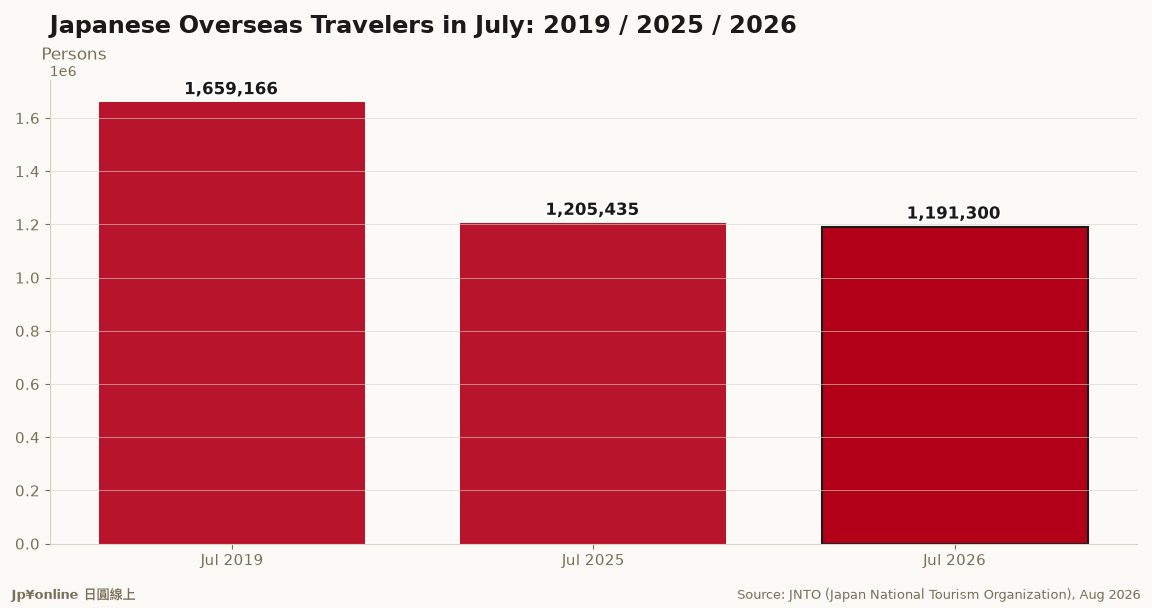
- June (1.090M, +3.4%) → July (1.191M, -1.2% YoY): back in decline
- Only 71.8% recovered vs pre-pandemic July 2019 (1.659M), the slowest travel metric
- Inbound-to-outbound ratio 2.89:1, a widening weak-yen deficit
- Cumulative Jan-Jul outbound 8.136M, +4.1% YoY, still far below pre-pandemic
- Grounded Japanese keep budgets onshore, propping up domestic tourism
The outbound line slipped back into decline: June was 1.090M (+3.4% YoY), and July came in at 1.191M (-1.2% YoY), still only 71.8% recovered versus July 2019. A weak yen keeps Japanese travel abroad suppressed, widening the inbound-to-outbound ratio to 2.89 to 1.
Previous → current: June 2026 outbound was 1.090M (+3.4% YoY); July was 1.191M, down 1.2% versus last July (1.205M) — back in the red. Up 91k on June, a seasonal summer lift, but negative year on year.
Four benchmarks: (1) vs last July, -1.2%; (2) vs June, lifted by summer; (3) vs pre-pandemic July 2019 (1.659M), only 71.8% recovered — the slowest of any travel metric; (4) cumulative Jan-Jul 8.136M, +4.1% YoY but far below pre-pandemic.
Set inbound against outbound and the gap keeps widening: July's 3.442M inbound versus 1.191M outbound is 2.89 to 1 — nearly three foreigners arrive for every Japanese who leaves. That deficit is the clearest signature of the weak yen: it makes Japan cheap for foreigners and expensive for the Japanese to leave.
Slow outbound recovery is actually a plus for domestic lodging and spending — Japanese who stay home keep their travel budgets onshore (see the domestic-consumption series). But for airlines and outbound operators, this line is still stuck near 70% of pre-pandemic. Previous: 'Japanese Outbound June 2026: 1.090M, +3.4%'.