Business Hotels Run at 74%, Ryokan at Just 40%: Japan's Two-Speed Lodging MarketA · FULL TRANSLATION
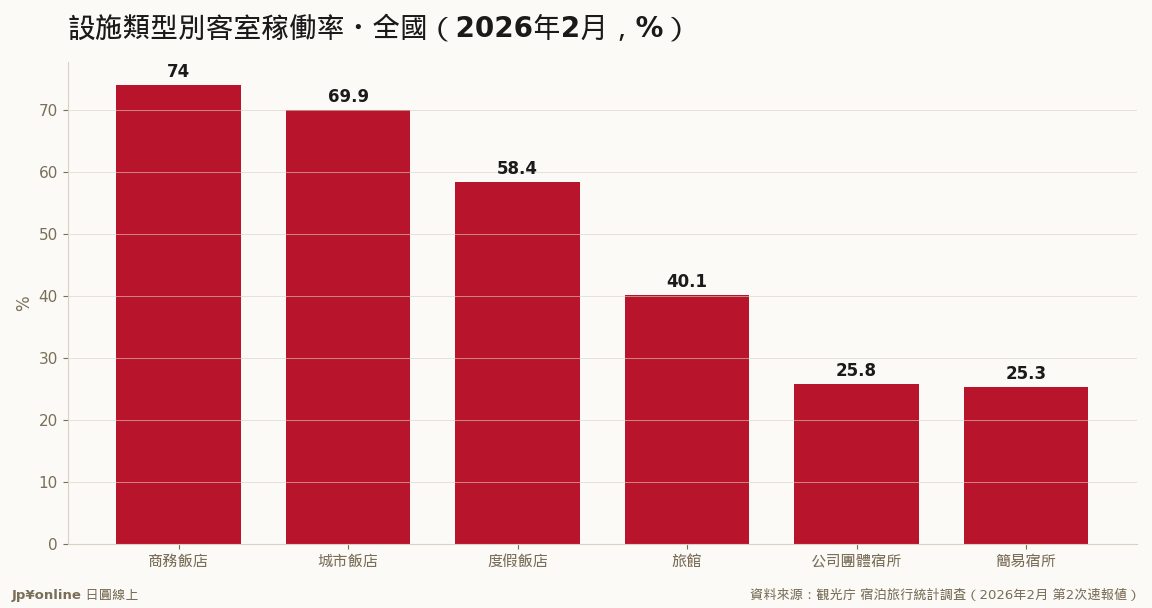
- February 2026 occupancy by type: business hotels 74.0%, city hotels 69.9%, resort hotels 58.4%, ryokan 40.1%, hostels 25.3%
- Tokyo amplifies the gap — business hotels hit 83.4% and even hostels reached 56.6%, more than double the national rate
- Scale wins: facilities with 200+ rooms ran at 73.4% occupancy versus 26.2% for those under 20 rooms
- Ryokan weakness reflects location, labor structure and distribution — standardized urban rooms remain the cash-flow play
Japan's lodging market is running at two speeds, and the Tourism Agency's February occupancy data measures the gap precisely. Business hotels filled 74.0% of rooms nationwide and city hotels 69.9%, while traditional ryokan managed just 40.1% and budget hostels 25.3%. Resort hotels sat between at 58.4%. Tokyo stretches the spread further: business hotels reached 83.4%, and even hostels — the weakest category nationally — achieved 56.6% in the capital, where backpacker density creates demand that simply does not exist elsewhere. Scale tells the same story: properties with 200-plus rooms ran at 73.4% occupancy against 26.2% for those under 20 rooms, an almost linear relationship between size and efficiency. The ryokan number deserves fair reading rather than nostalgia: most sit in onsen towns with near-zero weekday business demand, and the labor-heavy dinner-and-breakfast model narrows their customer base while raising prices. For investors the data writes its own playbook. Standardized urban business hotels of 100-plus rooms remain the dependable cash-flow asset. Discounted ryokan are only worth touching with a credible plan to convert 40% occupancy into high-rate experiential stays. And for capsule or hostel plays, city choice is the life-or-death decision — the same format is a different business in Tokyo than anywhere else.
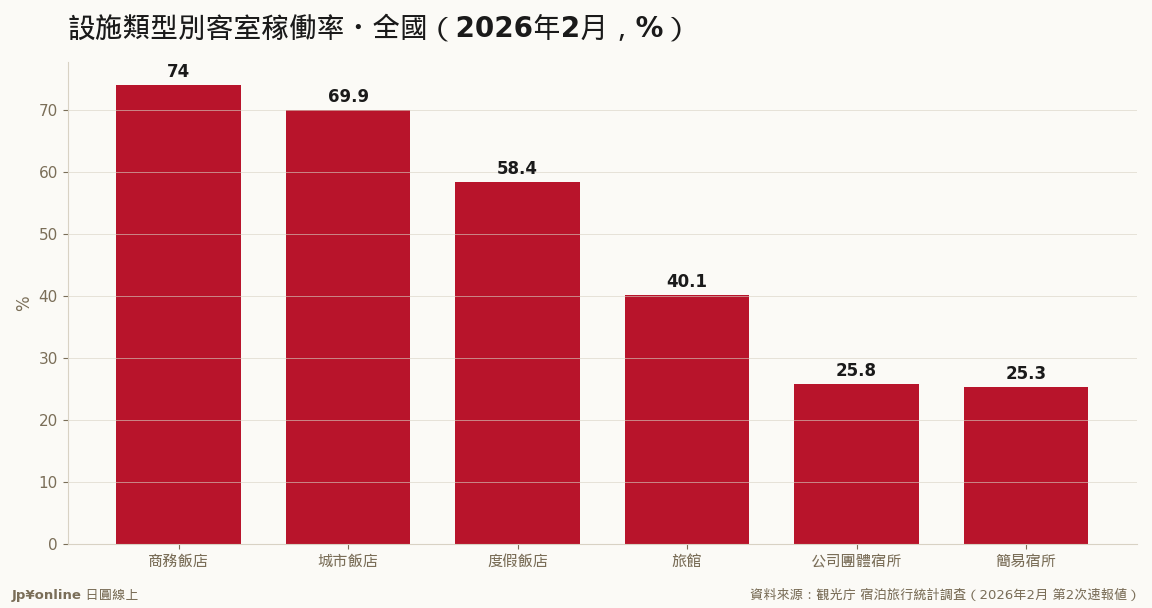
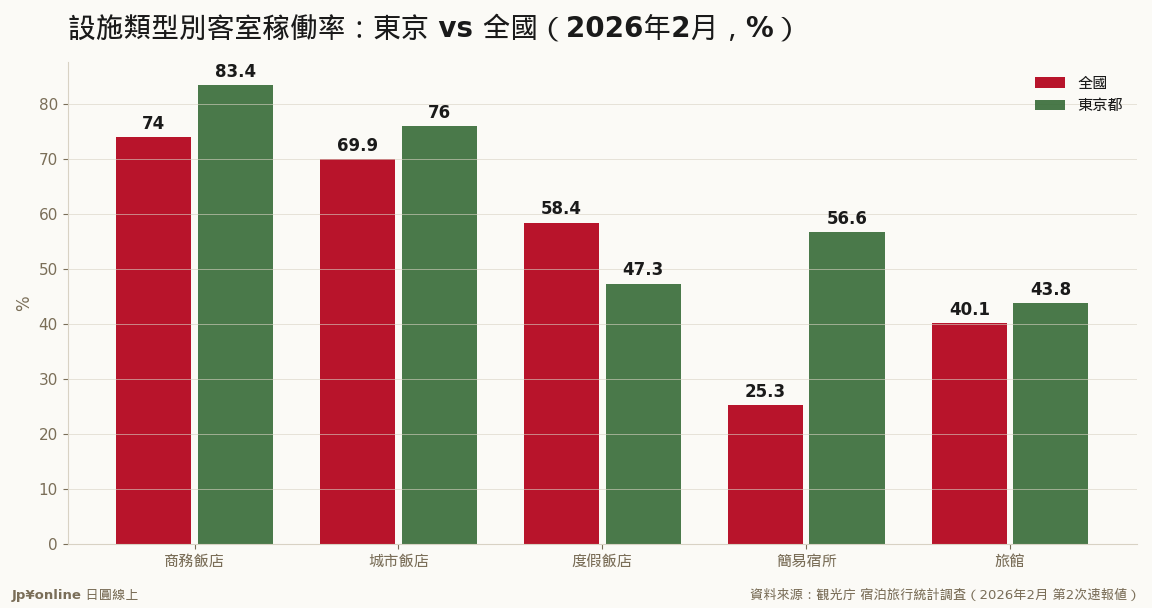
(Occupancy by facility type and scale, JTA Accommodation Survey, February 2026, second preliminary figures.) National room occupancy by type: business hotels 74.0%; city hotels 69.9%; resort hotels 58.4%; ryokan 40.1%; corporate/group lodges 25.8%; simple lodgings (hostels, capsule hotels) 25.3%. Tokyo: business hotels 83.4%; city hotels 76.0%; simple lodgings 56.6%; resort hotels 47.3%; ryokan 43.8%. By scale (national): 200+ rooms 73.4%; 100-199 rooms 72.1%; 40-99 rooms 61.2%; 20-39 rooms 44.8%; 1-19 rooms 26.2%. Guest nights by type: business hotels 21,140,180 (foreign guests 2,846,920); city hotels 7,669,700 (809,910); ryokan 6,436,640 (1,217,270); resort hotels 6,596,940 (642,640); simple lodgings 2,275,700 (360,900). Estimated facility population: 75,665 nationwide, including 18,040 ryokan, 22,540 simple lodgings and 7,720 business hotels. Figures are expanded estimates; rounded components may not sum to totals.