Tokyo CBD Office Vacancy Falls to 2.07% as Rents Rise for a 28th Straight Month
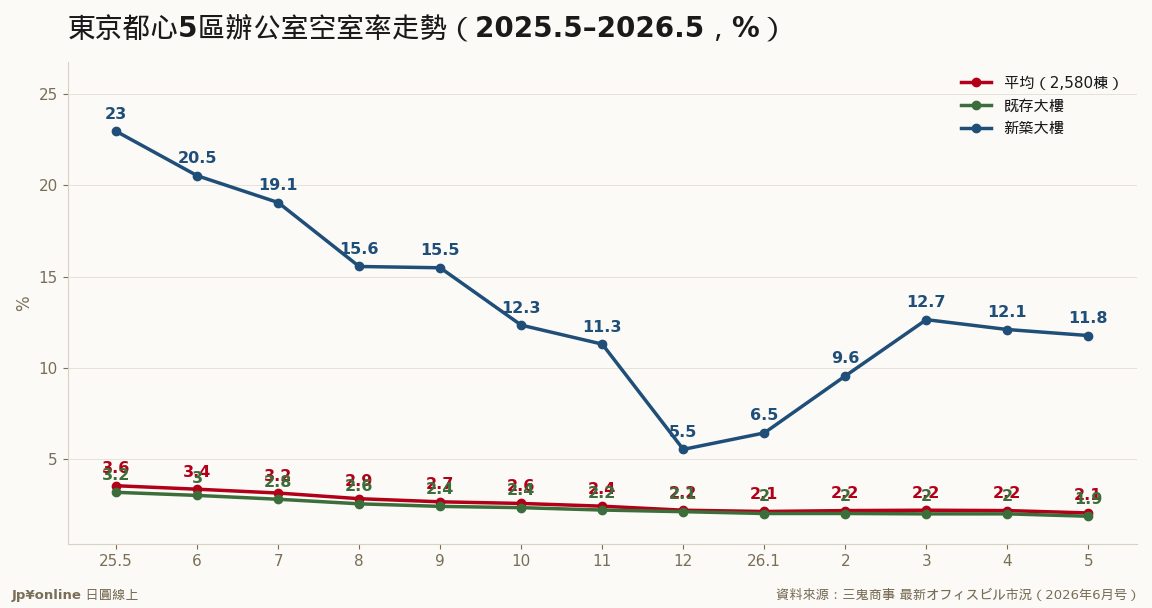
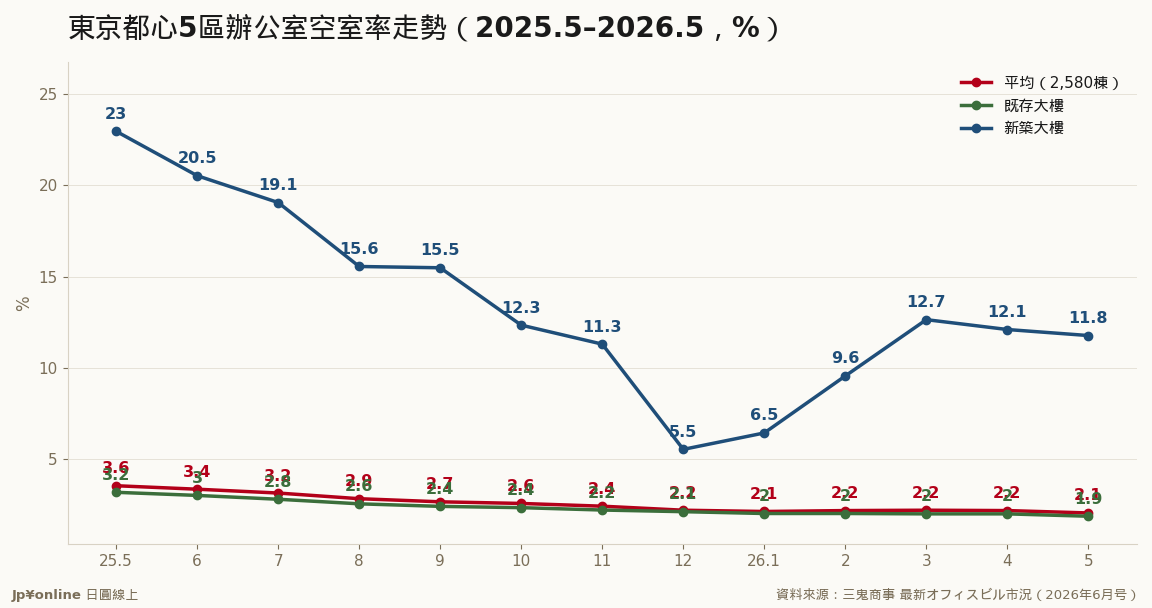
- Miki Shoji reports central Tokyo's five-ward office vacancy at 2.07% in May 2026, down 1.49 points year-on-year
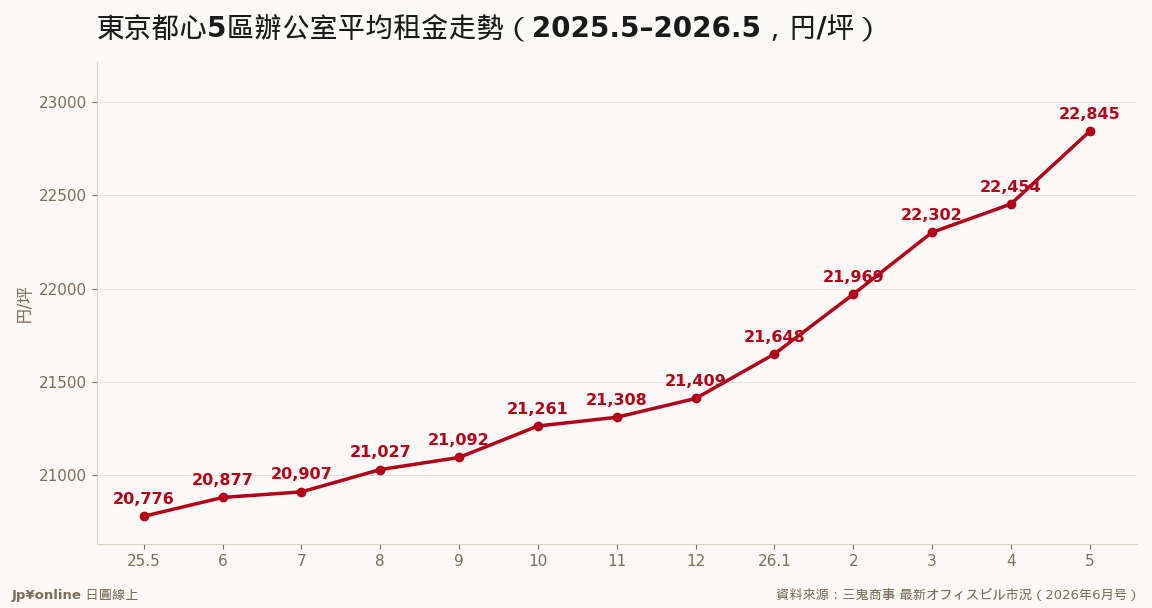
- Average rent reached 22,845 yen per tsubo, up 9.96% from a year earlier — the 28th consecutive monthly increase
- Existing buildings show just 1.89% vacancy; new buildings at 11.78%, half the level of a year ago
- Sub-2% vacancy in mature stock leaves tenants with minimal leverage, supporting further NOI growth for landlords
Miki Shoji's June office market report quantifies how tight central Tokyo has become. Average vacancy across the five core wards (Chiyoda, Chuo, Minato, Shinjuku, Shibuya) fell to 2.07% in May, the second consecutive monthly decline and 1.49 points below a year earlier. Average rent climbed to 22,845 yen per tsubo — a 28th straight monthly rise and a 9.96% annual gain that approaches double digits. Context makes the number striking: 5% vacancy is the conventional threshold where pricing power shifts to landlords, and existing buildings now sit at just 1.89%, close to frictional-vacancy territory. New buildings read 11.78%, but that is half the 22.96% of a year ago, and of two towers completed in May, one opened fully leased. New-build rents average 36,495 yen per tsubo, a 60% premium over existing stock that tenants keep paying for seismic standards, energy performance and talent appeal. For investors the 28-month rent streak cuts both ways: owners enjoy rising NOI and asset values, while new entrants must underwrite at elevated rent assumptions with cap rates compressed to historic lows. Foreign buyers add a currency dimension — yen-denominated rent growth plus any yen recovery would compound returns, while further depreciation erodes them. Figures cited from Miki Shoji's published report; consult the original for full data.